A quiet revolution started the moment digital casinos ditched mechanical reels for algorithms. Random Number Generators—RNGs—took center stage, deciding outcomes across slots, roulette wheels, and even scratch cards.

Fast‑forward to 2025, and RNG tech is no longer a niche back‑end component; it’s the beating heart of every legally compliant iGaming platform. If you influence acquisition budgets, retention KPIs, or regulatory strategy, ignoring the mechanics of randomness is risky business.
Let’s face it, a marginal flaw in the RNG pipeline can nuke player trust overnight.
The Core Idea, Stripped Down
At its simplest, an RNG is an engine that spits out unpredictable sequences of numbers on demand. Those numbers translate to reel positions, card deals, or roulette outcomes.
The trick?
Ensuring unpredictability without compromising speed or auditability.
PRNG vs TRNG—Two Roads to Random
| Attribute | Pseudo‑Random (PRNG) | True Random (TRNG) |
|---|---|---|
| Source of Entropy | Mathematical algorithm & seed | Physical phenomena (thermal noise, photon fluctuation) |
| Speed | Blazingly fast | Slower, hardware‑dependent |
| Reproducibility | Yes, if seed known | No |
| Cost to Implement | Low‑moderate | High |
| Typical Use in iGaming | Slots, virtual table games | High‑stakes cryptographic systems |
Most iGaming operators default to PRNG because a modern Mersenne Twister or Xoshiro algorithm delivers billions of values per second. Yet, there’s a growing push toward hybrid architectures—TRNG entropy fed into a PRNG to refresh seeds in real time. Have you considered how refreshing seeds every micro‑epoch might dampen pattern‑hunting bots?
Inside the Algorithm: Seeding, Cycling, and Decorrelation
PRNGs live or die by their seed.
Too predictable and you open a door for advantage players. To be frank, seeding randomness from server timestamps stopped being robust a decade ago. Today’s best practice folds in multiple entropy sources: high‑resolution timers, disk seek noise, even atmospheric data feeds.
Varying them, sometimes redundantly, is critical—absolutely critical—to avoid statistical leakage.
- Cycle Length: The Mersenne Twister boasts a period of 2^19937−1; practically infinite in gameplay terms. Yet a long period means nothing if local correlations sneak in.
- Decorrelation Layers: Post‑processing functions like SHA‑3 hashing scramble sequential bias, delivering uniform output even under intense Monte Carlo testing.
Rhetorical Pause
Have you run NIST SP 800‑22 on your live production RNG lately? It’s surprising how often minor firmware updates nudge a once‑perfect distribution off kilter.
Regulatory Heat: Certification Labs and Ongoing Audits
| Jurisdiction | Primary Lab Standards | Typical Retest Cadence |
|---|---|---|
| Spain (DGOJ) | GLI‑19, ISO 17025 | Annual + after code changes |
| Malta (MGA) | BMM Testlabs, eCOGRA | Bi‑annual |
| UK (GC) | UKGC Annex T | Quarterly data submissions |
Regulators aren’t just ticking boxes; they demand empirical proofs—diehard tests, Chi‑square, spectral analysis. Fail one slice of the test battery, and the whole certificate stalls. It’s frustrating, but the alternative—players suspecting rigged odds—is worse.
Affiliate Perspective: Why RNG Integrity Drives EPC
Let’s connect the dots.
When RTP volatility matches published specs, high‑value players stay longer. Longer average session time inflates lifetime value, and in a rev‑share model that spells higher EPC for affiliates. Real randomness isn’t just a compliance checkbox; it’s a revenue multiplier.
Hypothetical Scenario
A tier‑one affiliate funnels traffic to two operators. Operator A’s RNG passes independent audits quarterly; Operator B delays recertification. Six months in, Operator A reports 18 % higher re‑deposit frequency. Coincidence? Unlikely.
Advanced Trends Shaping RNG in 2025
Quantum‑Seed Infusion
Start‑ups now harness quantum entropy via cloud APIs. Latency remains a hurdle, yet micro‑batch seeding every few seconds balances unpredictability with throughput.
Federated RNG Monitoring
Think of it as DevOps for randomness. Edge nodes produce real‑time hash proofs, broadcasting to a consortium ledger. Stakeholders—regulators, affiliates, even players—verify fairness independently. Transparent, tamper‑evident, borderline game‑changing.
Machine‑Learning Anomaly Detection
ML models track output streams for subtle drift. If the K‑L divergence spikes, alerts fire before statistical failure touches gameplay. Frankly, relying solely on periodic lab audits feels medieval by comparison.
Integrating RNG Streams with Wider Tech Stack
- Realtime Data Attribution: Tag every spin outcome with RNG version ID and seed timestamp. Downstream BI tools can correlate hot streak chatter with actual math.
- Player Experience Tweaks: Dynamic pay‑table adjustment algorithms need live randomness that remains provably fair under rapid rule changes.
- Fraud Prevention: Correlate suspicious bet sizing with RNG draw order; bots often betray themselves by pattern chasing.
Scaleo: Transforming RNG Integrity into Measurable Growth
Randomness alone doesn’t pay invoices; actionable data does. Scaleo bridges that gap. By funneling hashed RNG proofs directly into its attribution engine, the platform lets operators marry game‑outcome certainty with granular performance metrics—no extra middleware, no blind spots.
Why does that matter?
Because compliance departments crave provable fairness, while affiliate teams demand real‑time LTV projections, Scaleo delivers both through a single, customizable dashboard. The result: fewer disputes, tighter fraud controls, and immediate visibility into which traffic sources align with top‑tier RNG standards.
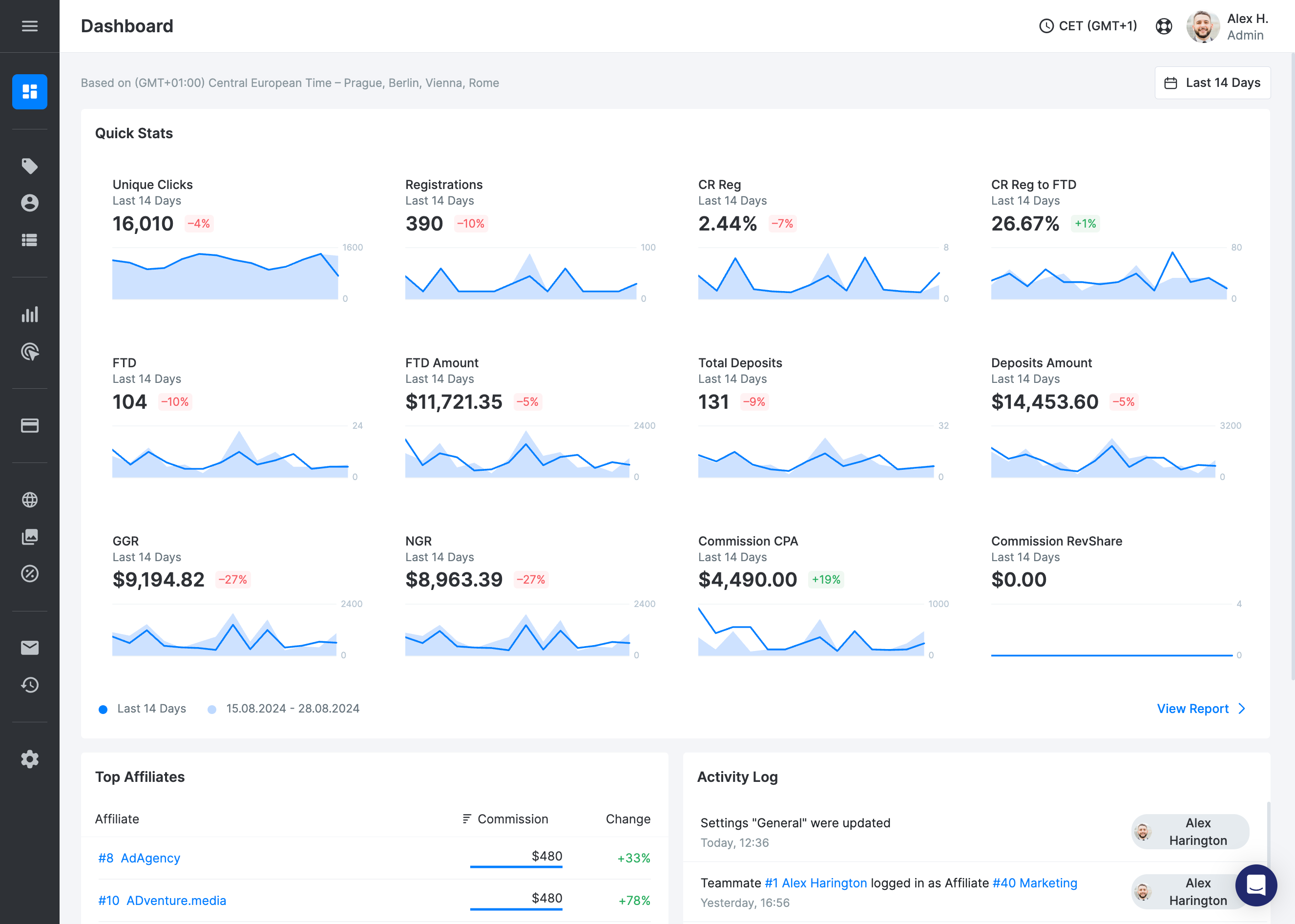
Picture this: A high‑roller segment triggers suspicion after an unlikely win streak. Scaleo cross‑checks the session’s RNG hash, verifies lab‑grade randomness, and clears the payout queue automatically. No manual ticket escalation, no sleepless night for the risk team.
Could you stitch together point solutions for the same effect? Possibly—but at the cost of technical debt and missed market windows. Operators who prefer scaling revenue over maintaining ad‑hoc scripts know the smarter answer.
Practical Checklist for Operators Rolling Out a New RNG Module
- Entropy Inventory: Catalog all sources—thermal, system, user—rank by unpredictability.
- Seed Rotation Policy: Automate refresh intervals; manual triggers are error‑prone.
- Multi‑Lab Pre‑Cert: Submit to two labs in parallel; variance in feedback spots edge‑case flaws.
- Edge Hash Beacon: Publish cryptographic commitments of output streams; transparency buys goodwill.
- Affiliate Comms: Provide RTP‑variance dashboards; affiliates armed with data craft marketing angles that resonate.
A Brief Word on Player Psychology
Players don’t read GLI whitepapers, yet they quickly sniff out inconsistency. A run of improbable outcomes triggers Reddit threads before your support team can draft a statement. Investing in gold‑standard randomness mitigates reputational shockwaves that even the savviest PR budget struggles to contain.
Conclusion
Quantum entropy feeds, federated monitoring, AI‑guarded drift alarms—the technical frontier keeps expanding. Staying ahead means architecting flexibility.
Are you confident your current RNG pipeline can accommodate the next seismic shift, or will you scramble once regulators tighten the screws again?
Ready to Future‑Proof Your Affiliate Operations?
Book a personalized Scaleo walkthrough today and discover how provable fairness and performance analytics converge into a single revenue engine. Your RNG may be random—your growth strategy shouldn’t be.

Experience the effectiveness of Scaleo first-hand by signing up for a free trial.