

In 2026, iGaming affiliate marketing is no longer a side-channel you can run on instinct, spreadsheets, and loose partner terms. For operators, it has become an infrastructure problem: attribution must survive privacy loss, commissions must reconcile cleanly, and partner acquisition must hold up under tighter regulatory and advertising scrutiny.

Key takeaways
- In 2026, the strongest iGaming affiliate programs are built around server-side tracking, audit-ready commission logic, and tighter partner governance.
- Regulation is not just a legal issue anymore. It affects affiliate recruitment, ad approvals, creative control, market entry, and payout workflows.
- AI matters most in fraud detection, player-risk monitoring, segmentation, and faster operational decisions — not as a magic replacement for affiliate managers.
- Mobile remains dominant, but “mobile-first” in 2026 means faster funnels, cleaner attribution, and better conversion visibility across devices.
- Operators that treat affiliate marketing as a measurable revenue system — not a relationship hobby — will widen the gap.
The affiliate channel is still one of the most scalable growth levers in iGaming, but the way operators win with it is changing. The winners in 2026 are not the brands with the biggest affiliate rosters. They are the ones with cleaner tracking, clearer commercial terms, faster finance operations, and tighter control over partner quality.
If you run a casino, sportsbook, or multi-brand iGaming operation, this is what is actually changing in affiliate marketing in 2026 — and what deserves your attention.
Comparison of iGaming Affiliate Marketing: 2025 vs. 2026
2025 exposed weak foundations. 2026 is about operational maturity. Here is the practical difference:
| Area | What dominated in 2025 | What matters more in 2026 |
|---|---|---|
| Tracking | Cookie reliance, mixed data sources, manual fixes when attribution broke | Server-to-server tracking, postback verification, cleaner attribution resilience across devices and privacy changes |
| Affiliate growth | Recruit more partners, push more deals, widen the funnel | Recruit fewer but better partners, enforce terms more clearly, optimize quality by source and player value |
| Commission management | Basic CPA or RevShare structures, often reconciled manually | Hybrid logic, granular rules, clearer NGR definitions, stronger dispute prevention and payout governance |
| Compliance | Primarily a legal review issue | Embedded into partner operations, creative approvals, geo restrictions, and responsible gaming workflows |
| Analytics | Dashboard visibility at summary level | Player-level KPI analysis, faster anomaly detection, retention-focused reporting, source-level profitability control |
| AI adoption | Mostly hype and experimentation | Real use in fraud checks, segmentation, partner scoring, and operational prioritization |
| Market expansion | Broad international ambitions | More selective market entry shaped by licensing, taxes, ad rules, and local affiliate realities |
| Operator-affiliate relations | Relationship-driven management | Relationship + enforceable systems: transparent terms, reliable payouts, clear data access, documented policies |
The point is simple: the affiliate channel is becoming less improvisational and more infrastructural. That favors operators with better systems.
Gaming Affiliate Marketing Trends for 2026
| Trend | What it means in practice | Why operators should care |
|---|---|---|
| 1. Server-side attribution becomes non-negotiable | Operators rely less on fragile browser-side tracking and more on S2S postbacks, event validation, and deterministic data flows. | Without reliable attribution, every payout argument becomes a finance problem and every scaling decision becomes guesswork. |
| 2. AI moves from buzzword to operating layer | AI is increasingly used for fraud flags, segmentation, anomaly detection, responsible gaming monitoring, and partner prioritization. | It helps teams act faster, but only if the underlying data is clean. |
| 3. Regulatory pressure keeps rising | Advertising restrictions, responsible gaming obligations, market-specific rules, and documentation demands continue to tighten. | Affiliate programs now need stronger governance, not just better acquisition tactics. |
| 4. Partner quality beats partner quantity | More operators are focusing on source quality, long-term value, retention contribution, and fraud-adjusted profitability. | A bloated affiliate roster is useless if the channel produces compliance headaches or low-value traffic. |
| 5. Commission structures get more sophisticated | CPA, RevShare, Hybrid, caps, deal protections, and negative carryover policies are being handled with more precision. | Better commission design protects margins and reduces affiliate disputes. |
| 6. Mobile performance still drives volume | Mobile-first is now about conversion efficiency, onboarding speed, and tracking continuity — not just responsive design. | Most operators already know mobile matters. Fewer have cleaned up the affiliate funnel around it. |
| 7. Market expansion becomes more selective | New jurisdictions remain attractive, but operators weigh taxes, ad limits, licensing complexity, and affiliate economics more carefully. | Entering the wrong market can destroy partner ROI before the program matures. |
| 8. Data-driven growth | More decisions are being made from player-level and source-level evidence, not partner anecdotes. | The operators who can isolate profitable traffic fast will outperform on both scale and margin. |
| 9. Responsible gaming becomes part of affiliate operations | It is no longer confined to product or compliance teams. Creative, messaging, onboarding, and player journeys are affected too. | This changes how affiliate promotions are structured and approved. |
| 10. Esports and sportsbook-adjacent niches stay relevant | Not every operator should chase them, but for the right brand they remain a growth lever. | The opportunity is real, though it is not a universal shortcut. |
Below is what these trends look like from the operator side rather than the affiliate side.
1. Server-side tracking is no longer a technical luxury
In 2026, affiliate growth depends on attribution stability. Operators that still depend too heavily on browser-based assumptions are exposing themselves to data loss, reconciliation disputes, and false confidence in what is actually working.
This is why affiliate software is being judged less by surface-level dashboards and more by what happens underneath: postback reliability, event validation, latency, and how easily the platform handles attribution across devices, brands, and geographies.
For operators, the practical question is not “Do we have tracking?” It is “Can we trust it enough to pay people on it?”
2. AI is useful when it removes operational blindness
AI is still one of the biggest forces shaping iGaming, but the operator value in 2026 is not in shiny copywriting tricks. It is in pattern recognition and faster intervention.
- Spotting fraud patterns earlier
- Identifying abnormal traffic or conversion shifts faster
- Prioritizing affiliates by real contribution instead of headline volume
- Supporting responsible gaming controls with better monitoring
Used properly, AI helps operators compress reaction time. Used badly, it just automates bad assumptions.
3. Regulation now shapes affiliate program design
Affiliate marketing in iGaming has always lived close to compliance. In 2026, it is sitting right in the middle of it.
Operators must now think harder about how partner deals, messaging, creative approvals, player-protection language, market targeting, and even domain setup interact with regulation. That makes affiliate operations more demanding, especially for brands active across multiple jurisdictions.
If your affiliate program still treats compliance as something to “check at the end,” you are already behind.
4. Commission design becomes a profit-control mechanism
Operators are getting more disciplined about how they structure CPA, RevShare, Hybrid, caps, qualifiers, and carryover rules. That is not just because finance teams like neat spreadsheets. It is because sloppy commission design creates disputes, margin leakage, and affiliate resentment.
The strongest programs in 2026 are not simply more generous. They are more explicit. They define what counts, when it counts, what gets deducted, when resets happen, and which behaviors trigger exceptions.
5. Mobile-first now means conversion-first
The old “make it responsive and call it mobile-first” routine is dead. Mobile pressure in 2026 is about speed, usability, registration flow, wallet friction, and whether attribution survives the journey.
Operators with strong mobile funnels will still beat operators with prettier websites and messier conversion paths.
6. New markets still matter, but bad expansion is expensive
There is still genuine opportunity in new markets and newly regulated environments, but expansion decisions are becoming more strategic. Operators are weighing affiliate economics against licensing complexity, ad restrictions, taxes, local payment behavior, and partner availability.
In other words, growth is still available. It is just less forgiving.
The Financial Future of iGaming Affiliate Marketing
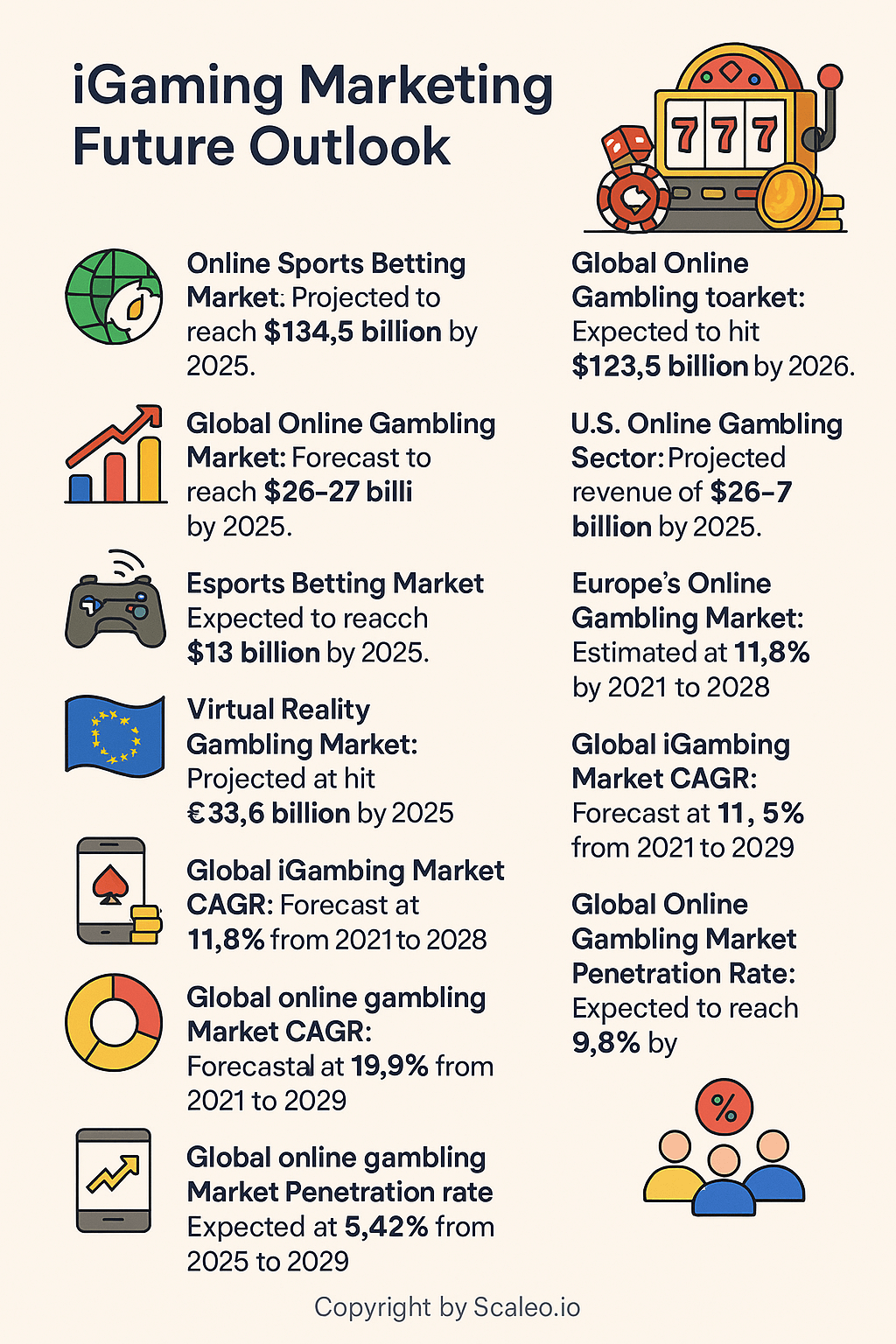
The financial side of affiliate marketing is getting more serious in 2026. Operators are under more pressure to prove partner-channel profitability with cleaner source-level data, faster reconciliation, and less revenue leakage hidden inside vague deal logic.
That is why modern affiliate software is being evaluated less like a marketing tool and more like a commercial control layer.
Emerging technologies that will influence iGaming affiliate marketing in 2026
The last few years were full of futuristic noise. In practice, only a few technologies are having immediate operator impact.
Artificial Intelligence (AI)
AI deserves the attention because it improves decisions, not because it sounds modern. For iGaming operators, its strongest applications are risk detection, segmentation, personalization, and operational prioritization.
- Better player and traffic analysis: AI can help teams detect patterns in affiliate traffic quality, conversion shifts, and retention behavior faster than manual review alone.
- More relevant targeting: AI-powered workflows can improve segmentation and campaign prioritization.
- Lower operational drag: Repetitive analysis, anomaly scanning, and first-pass fraud checks can be automated so teams can focus on partner growth and deal quality.
Virtual Reality (VR)
VR is still more watchlist than mainstream operator priority. It remains interesting, especially for immersive product experiences and brand experimentation, but it is not the core driver of affiliate program performance in 2026.

For most operators, VR belongs in the “monitor, test selectively, do not overbuild around it” category. If you still have unresolved tracking, reconciliation, or partner-governance problems, VR is not your bottleneck.
Blockchain
Blockchain remains relevant where it improves transparency, traceability, or payment logic. But like VR, it should be judged by operational value rather than trend appeal.
| Blockchain application | What it can realistically improve |
|---|---|
| Transparent records | More auditable tracking or payment logic in specific affiliate and transaction workflows |
| Security enhancements | Additional integrity and tamper-resistance in selected systems |
| Smart contracts | Potential automation for certain payout or revenue-sharing processes, where commercially and legally practical |
Useful in some cases? Yes. Universal answer? Not even close.
How SEO & website optimization affect iGaming affiliates and operators
Affiliate SEO in 2026 is not just about ranking a review page. It is about whether your content gets surfaced, trusted, and quoted in an increasingly AI-shaped search environment. For operators, that changes how affiliate-facing and operator-facing content should be built.
The role of NLP and search intent in content strategy
NLP matters because search engines and AI systems are getting better at understanding intent, not just keywords. That means generic content stuffed with broad affiliate marketing language is easier to ignore.
Pages that win in 2026 answer one clear question, use operator-native terminology correctly, and provide enough specificity to be quotable. In iGaming, that means speaking the language of postbacks, FTDs, NGR, deal structures, retention, and compliance rather than hiding behind vague marketing filler.
Advanced SEO tactics for visibility in online gambling
Basic keyword work is still necessary, but it is nowhere near enough.
- Use structured data so search engines understand the page type and key entities clearly.
- Build direct-answer sections that can be quoted in AI overviews and answer engines.
- Improve site speed and mobile performance so users do not bounce before the page proves its value.
- Create content that offers information gain, not recycled affiliate clichés.
Optimizing sites for maximum user engagement
Engagement is not a design vanity metric. In iGaming affiliate operations, it is tightly linked to conversion efficiency.
- Create cleaner navigation so users can move from information to action without friction.
- Use sharper CTAs tied to a real operator need, not generic “contact us” fluff.
- Make mobile journeys faster and easier to complete, especially in registration and verification-heavy funnels.
Conclusion
The future of iGaming affiliate marketing in 2026 is not mysterious. It is stricter, more measurable, and less forgiving.
Operators that keep treating affiliate marketing like a loose partnership channel will spend more time fixing disputes, explaining numbers, and reacting to compliance pressure. Operators that treat it like revenue infrastructure will scale more cleanly.
The real advantage in 2026 is not having more affiliates. It is having better attribution, better partner economics, better governance, and better operational clarity.
That is where the next edge is.
{ “@context”: “https://schema.org”, “@graph”: [ { “@type”: “Organization”, “@id”: “https://www.scaleo.io/#organization”, “name”: “Scaleo”, “url”: “https://www.scaleo.io”, “logo”: { “@type”: “ImageObject”, “url”: “https://www.scaleo.io/wp-content/uploads/2023/05/scaleo-logo.svg” } }, { “@type”: “WebSite”, “@id”: “https://www.scaleo.io/#website”, “url”: “https://www.scaleo.io”, “name”: “Scaleo”, “publisher”: { “@id”: “https://www.scaleo.io/#organization” }, “inLanguage”: “en-US” }, { “@type”: “Person”, “@id”: “https://www.scaleo.io/blog/the-future-of-igaming-affiliate-marketing-trends-and-predictions/#author”, “name”: “Elizabeth Sramek”, “url”: “https://www.scaleo.io/blog/the-future-of-igaming-affiliate-marketing-trends-and-predictions/”, “jobTitle”: “Independent search strategy advisor and technical iGaming architect”, “description”: “Elizabeth Sramek is an independent search strategy advisor and technical iGaming architect based in Prague. She works on server-side attribution, affiliate migration integrity, and revenue-grade demand capture for operators in regulated, high-competition markets.”, “sameAs”: [ “https://www.linkedin.com/” ], “worksFor”: { “@id”: “https://www.scaleo.io/#organization” } }, { “@type”: “BreadcrumbList”, “@id”: “https://www.scaleo.io/blog/the-future-of-igaming-affiliate-marketing-trends-and-predictions/#breadcrumb”, “itemListElement”: [ { “@type”: “ListItem”, “position”: 1, “name”: “Home”, “item”: “https://www.scaleo.io/” }, { “@type”: “ListItem”, “position”: 2, “name”: “Blog”, “item”: “https://www.scaleo.io/blog/” }, { “@type”: “ListItem”, “position”: 3, “name”: “iGaming”, “item”: “https://www.scaleo.io/blog/category/igaming/” }, { “@type”: “ListItem”, “position”: 4, “name”: “The Future of iGaming Affiliate Marketing in 2026”, “item”: “https://www.scaleo.io/blog/the-future-of-igaming-affiliate-marketing-trends-and-predictions/” } ] }, { “@type”: “Article”, “@id”: “https://www.scaleo.io/blog/the-future-of-igaming-affiliate-marketing-trends-and-predictions/#article”, “mainEntityOfPage”: { “@type”: “WebPage”, “@id”: “https://www.scaleo.io/blog/the-future-of-igaming-affiliate-marketing-trends-and-predictions/” }, “headline”: “The Future of iGaming Affiliate Marketing in 2026”, “alternativeHeadline”: “iGaming Affiliate Marketing in 2026: Trends, Risks, and Operator Priorities”, “description”: “See what is changing in iGaming affiliate marketing in 2026, from tracking and compliance to AI, commission models, and operator growth priorities.”, “author”: { “@id”: “https://www.scaleo.io/blog/the-future-of-igaming-affiliate-marketing-trends-and-predictions/#author” }, “publisher”: { “@id”: “https://www.scaleo.io/#organization” }, “datePublished”: “2025-07-31”, “dateModified”: “2026-03-28”, “articleSection”: “iGaming”, “keywords”: [ “iGaming affiliate marketing”, “iGaming affiliate marketing trends”, “casino affiliate marketing”, “affiliate software for operators”, “iGaming trends 2026”, “casino operator affiliate strategy” ], “inLanguage”: “en-US”, “isAccessibleForFree”: true, “breadcrumb”: { “@id”: “https://www.scaleo.io/blog/the-future-of-igaming-affiliate-marketing-trends-and-predictions/#breadcrumb” } }, { “@type”: “FAQPage”, “@id”: “https://www.scaleo.io/blog/the-future-of-igaming-affiliate-marketing-trends-and-predictions/#faq”, “mainEntity”: [ { “@type”: “Question”, “name”: “What is changing most in iGaming affiliate marketing in 2026?”, “acceptedAnswer”: { “@type”: “Answer”, “text”: “The biggest changes in 2026 are stronger compliance pressure, greater reliance on server-side tracking, more disciplined commission structures, and wider use of AI for fraud detection, segmentation, and operational analysis.” } }, { “@type”: “Question”, “name”: “Why is server-side tracking more important for iGaming operators in 2026?”, “acceptedAnswer”: { “@type”: “Answer”, “text”: “Server-side tracking is more important because operators need attribution they can trust for reporting, reconciliation, and affiliate payouts. It is more resilient than fragile browser-side methods and helps reduce disputes over conversion accuracy.” } }, { “@type”: “Question”, “name”: “How is AI affecting iGaming affiliate marketing in 2026?”, “acceptedAnswer”: { “@type”: “Answer”, “text”: “AI is affecting iGaming affiliate marketing through faster fraud detection, better player and traffic segmentation, anomaly monitoring, and more efficient campaign and partner analysis. Its strongest value is operational, not cosmetic.” } }, { “@type”: “Question”, “name”: “Are compliance and responsible gaming now part of affiliate operations?”, “acceptedAnswer”: { “@type”: “Answer”, “text”: “Yes. In 2026, compliance and responsible gaming affect affiliate program design, creative approvals, partner governance, market targeting, and promotional messaging. Operators can no longer treat them as a separate end-stage review.” } }, { “@type”: “Question”, “name”: “What should operators prioritize in affiliate marketing in 2026?”, “acceptedAnswer”: { “@type”: “Answer”, “text”: “Operators should prioritize reliable tracking, clean commission logic, better partner-quality controls, mobile conversion performance, and audit-ready reporting. The strongest affiliate programs are now built as revenue infrastructure rather than loose partnership channels.” } } ] } ] }