

Updated on December 16th, 2025 by Elizabeth Sramek
By 2026, casino marketing is no longer about visibility. Everyone is visible. The real battle is qualification: which players you attract, how fast they verify, whether they deposit twice, and whether they stay profitable after bonuses, fees, and chargebacks.
Operators who still treat “data-driven marketing” as dashboards and reports are already behind. Data is not for observing anymore. It’s for deciding—who gets incentives, which traffic scales, and where money quietly leaks.

This guide breaks down five data-driven strategies casinos actually use to attract new customers without inflating CAC, triggering fraud, or overwhelming operations.
Strategy 1: Predictive Targeting That Filters Before You Pay
Predictive analytics in casino marketing is often misunderstood. It’s not about crystal balls or generic “AI recommendations.” In practice, it’s about ranking probability under constraints: compliance, payments, fraud risk, and margin.
Every visitor emits signals within seconds. Session depth, scroll velocity, payment method curiosity, bonus page behavior. When combined with historical cohort data, these signals tell you who is likely to become a qualified depositor, not just a registrant.
High-performing casinos use predictive scoring to decide:
- Who sees aggressive bonuses?
- Who gets friction-reducing UX?
- Who is quietly routed to stricter verification?
| 🔮 Predictive Signal | What it Actually Indicates | How Operators Use It |
|---|---|---|
| Session depth > 3 pages | Genuine evaluation | Offer value-driven CTA |
| Fast promo click + bounce | Bonus hunter behavior | Cap exposure or delay bonus |
| Payment method hover | Trust & readiness | Surface preferred methods |
| Device + GEO mismatch | Elevated fraud risk | Trigger stepped verification |
| Repeat session within 24h | High intent | Accelerate onboarding |
The goal isn’t personalization for its own sake. The goal is protecting incentive spend by allocating it only where probability supports it.
Strategy 2: Behavioral Segmentation That Reflects Real Money Flow
Traditional segmentation (age, gender, country) is nearly useless in iGaming. Two players in the same GEO can behave radically differently once money enters the system.
Modern segmentation focuses on economic behavior, not identity.
Operators segment by:
- deposit patterns
- wager cadence
- bonus interaction
- cross-vertical movement
| 🎯 Player Segment | Core Behavior | Acquisition Strategy |
|---|---|---|
| 🎰 Casual spinners | Small deposits, high frequency | Low-risk bonuses, simple UX |
| 💎 VIP trajectory | Few sessions, high stakes | Trust-first messaging |
| ⚽ Event-driven bettors | Spikes around fixtures | Timed offers, clarity |
| 🔄 Cross-vertical users | Casino ↔ sportsbook | Seamless cross-sell |
| 🧪 Bonus testers | Promo-heavy, low loyalty | Tight caps, strict rules |
Segmentation only works when it influences rules, not just messaging. If two segments get the same bonus, the segmentation was pointless.
Strategy 3: Behavioral Tracking That Removes Friction (Instead of Adding It)
Tracking often fails because it’s treated as surveillance instead of diagnosis.
The best operators track behavior to answer one question:
Where does intent die?
Most new-player loss happens in four places:
- unclear KYC requirements
- confusing bonus terms
- payment friction
- verification delays
| 👀 Observed Behavior | Likely Cause | Practical Fix |
|---|---|---|
| KYC page exits | Trust anxiety | Inline explanation + reassurance |
| Bonus terms scrolling | Confusion | Top-of-page summary table |
| Deposit retries | Payment rejection | Auto-suggest alternatives |
| Fast signup + no deposit | Incentive mismatch | Adjust offer, not traffic |
Good tracking doesn’t push harder.
It simplifies the next decision.
Strategy 4: Attribution Models That Survive Finance Audits
If attribution collapses under scrutiny, marketing numbers are fiction.
By 2026, attribution must satisfy three stakeholders:
- marketing (optimization)
- compliance (traceability)
- finance (reconciliation)
That’s why serious operators rely on server-to-server (S2S) attribution, qualified events, and fraud-adjusted payouts.
| 🔍 Attribution Layer | Why It’s Non-Negotiable |
|---|---|
| S2S postbacks | Immune to cookie loss |
| KYC-gated events | Prevents payout abuse |
| Chargeback sync | Real margin accounting |
| NGR-based reporting | Long-term value clarity |
This is where affiliate programs separate into two categories:
- scalable systems
- permanent disputes
Platforms like Scaleo wire attribution directly into commission logic, so marketing promises and financial reality match.
Strategy 5: Controlled Experimentation Without Chaos
A/B testing is often abused. Too many tests, no economic anchor.
High-performing casinos test only what affects deposits, retention, or fraud exposure.
| 🧪 Test Area | What You Measure | Kill Signal |
|---|---|---|
| Landing pages | Signup → FTD | Below baseline |
| Bonus framing | Wager completion | Abuse spike |
| Affiliate creatives | NGR per player | Negative tail |
| Payment UX | Deposit success | Retry loops |
Testing without financial thresholds is just curiosity.
Testing with thresholds is risk management.
Social & GEO Targeting (Used as Intent Capture, Not Spray)
Social platforms still matter, but not as mass advertising tools. They function best as intent amplifiers, routing users into controlled funnels.
| 📍 GEO-Driven Tactic | Practical Outcome |
|---|---|
| Event-timed pushes | Short-lived conversion spikes |
| Location-based offers | Higher relevance |
| Platform-specific creatives | Fewer bans |
| Affiliate routing | Cleaner compliance |
The mistake is blasting ads.
The win is capturing momentum and handing it to systems that can verify and monetize it.
Loyalty Optimization That Increases Lifetime Value
Retention isn’t emotional. It’s mechanical.
Players stay when rewards align with how they actually play, not how marketing imagines them.
| 🎁 Player Type | Loyalty Driver |
|---|---|
| Casual | Frequency rewards |
| Mid-tier | Progression & milestones |
| VIP | Access & exclusivity |
| Risk-aware | Transparency & control |
Static loyalty programs decay fast. Data-fed ones compound.
KPIs That Actually Matter in Casino Growth
Ignore vanity metrics. Track what influences cash flow.
| 📐 KPI | Why It’s Critical |
|---|---|
| CAC | Acquisition efficiency |
| FTD rate | Funnel health |
| LTV / NGR | Real profitability |
| Chargeback % | Traffic quality |
| Time-to-deposit | UX effectiveness |
If a metric doesn’t inform a decision, it’s noise.
Where Scaleo Fits (Naturally)
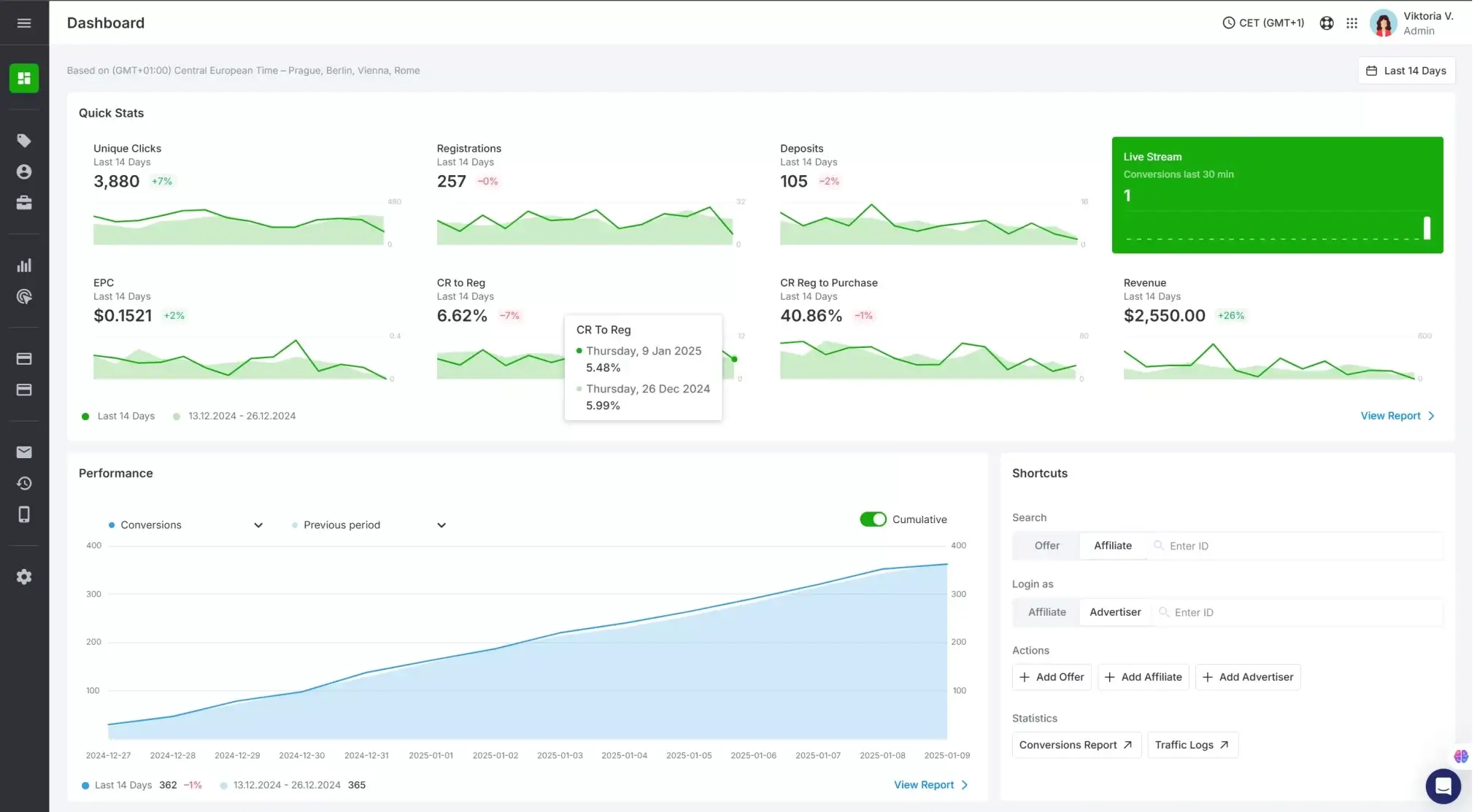
Scaleo isn’t positioned as “software.”
It’s infrastructure for enforceable marketing.
| Operator Need | With Scaleo |
|---|---|
| Affiliate & partner tracking | S2S + real-time |
| Attribution accuracy | KYC-gated logic |
| Campaign optimization | Creative-level reports |
| Margin protection | Anti-fraud + clawbacks |
| Team alignment | Single source of truth |
This is what allows marketing to scale without surprises.
Conclusion
By 2026, casinos that rely on intuition, generic dashboards, or unqualified traffic are quietly losing money—even when top-line numbers look healthy.
Data-driven marketing isn’t about more data.
It’s about fewer, better decisions made earlier in the funnel.
If you want to attract new casino customers without inflating CAC, rewarding fraud, or fighting attribution disputes, your strategy must be measurable, enforceable, and aligned with finance.
That’s exactly where Scaleo fits: turning data into decisions, and decisions into sustainable growth.
That actually cares about what you’re doing and an increase in cold, hard cash.
Ready to revolutionize your marketing strategy?
Ready to streamline your marketing campaigns and track your casino customer journey properly? Try Scaleo today and discover how we can help you turn data into your most powerful marketing asset.