
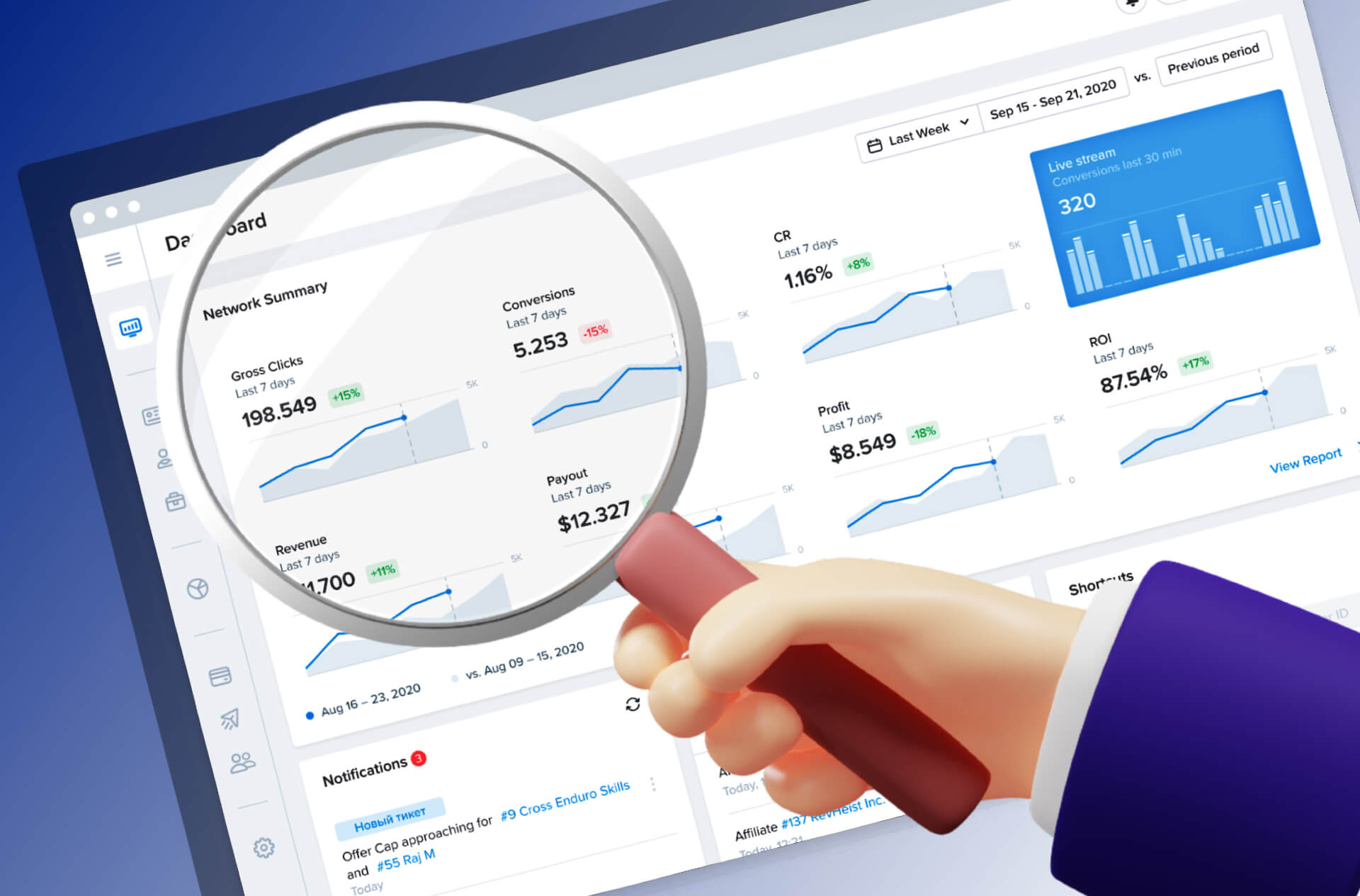
TL;DR — best link tracker tools for affiliate marketing campaigns
- Scaleo is best when link tracking needs to connect to affiliate accounts, offers, conversions, fraud checks, commission rules, postbacks, and payouts.
- ClickMagick, Voluum, RedTrack, BeMob, and ClickMeter are better fits for media buyers and campaign teams that need click IDs, rotators, traffic routing, paid ad attribution, and conversion tracking.
- Pretty Links, ThirstyAffiliates, and Lasso are better for WordPress publishers and affiliate bloggers who need link cloaking, link organization, automatic link insertion, and content monetization workflows.
- Bitly and Rebrandly are best for branded short links, QR codes, social campaigns, and campaign-level analytics — not serious affiliate commission attribution.
- The biggest mistake is using a simple click tracker when your real problem is conversion attribution, partner payout accuracy, or affiliate fraud. Clicks are not revenue. Clicks are just the beginning of the audit trail.
Link tracking software shows which links, campaigns, partners, and traffic sources are actually producing clicks, conversions, and revenue. For affiliate marketing, a basic URL shortener is not enough once you start paying partners, buying traffic, using postbacks, or reconciling commissions. You need to know not only who clicked, but which click became a lead, sale, deposit, approved conversion, or rejected payout.
This guide compares the best link tracker tools for affiliate marketing campaigns in 2026, from simple WordPress link cloaking plugins to full affiliate tracking platforms. The point is not to crown one generic “best” tool for everyone. The point is to help you choose the right level of tracking before bad attribution starts quietly eating your margin.

What Is Link Tracking Software?
Link tracking software records how users interact with URLs and campaign links. At the simplest level, it counts clicks and shows source, location, device, browser, and timestamp data. At a more advanced level, it connects every click to conversions, revenue, affiliate IDs, postbacks, traffic sources, fraud signals, and commission outcomes.
That distinction matters. A blogger may only need to know which product link gets the most clicks. A media buyer needs to know which ad, keyword, landing page, and offer produced profitable conversions. An affiliate program manager needs to know which partner deserves credit, whether the conversion is valid, and whether the payout rule was applied correctly.
Best Link Tracker Tools for Affiliate Marketing: Quick Comparison
The best link tracker depends on the job you need it to do. Use this table as the first filter: simple link analytics, WordPress affiliate link management, media buying attribution, or full affiliate program tracking.
| Tool | Best For | Tracking Depth | Conversion Tracking | Affiliate Payout Logic | Typical Starting Price* |
|---|---|---|---|---|---|
| Scaleo 🏆 | Affiliate programs, networks, SaaS, iGaming, partner tracking | Clicks, conversions, postbacks, partners, subIDs, fraud signals | Yes — S2S/postbacks, pixels, goals | Yes — CPA, RevShare, hybrid, custom rules | Quote / plan-based |
| ClickMagick | Media buyers, funnels, paid ads, conversion attribution | Clicks, ads, visitors, CAPI, bot filtering | Yes | No | From about $79/month |
| Voluum | High-volume affiliate media buying | Campaigns, offers, landers, traffic sources, anti-fraud | Yes | No | From about $149/month |
| RedTrack | Paid traffic teams, affiliate media buyers, ecommerce attribution | Events, ad platforms, custom domains, rules, CAPI | Yes | No | From about $149/month |
| BeMob | Affordable campaign tracking and affiliate traffic routing | Events, flows, traffic sources, bot rules, reports | Yes | No | Free / from about $49/month |
| ClickMeter | Link tracking, redirect tracking, agencies, publishers | Tracked links, branded domains, conversions, reports | Yes | No | Varies by plan |
| Pretty Links | WordPress affiliate link cloaking and click reports | Short links, redirects, basic click tracking | Limited / plugin-based | No | Annual WordPress plugin pricing |
| ThirstyAffiliates | WordPress affiliate publishers and Amazon-style link management | Link cloaking, categorization, auto-linking, geo redirects | Limited / add-on dependent | No | From about $99.60/year promotional pricing |
| Lasso | Affiliate bloggers who want link management + product displays | Affiliate link inventory, displays, opportunities, reporting | Limited / content monetization focus | No | Plan-based |
| Bitly | Branded short links, QR codes, social links, campaign analytics | Clicks, QR scans, campaign dashboards, UTMs | No serious affiliate attribution | No | Free / from about $10/month annually |
| Rebrandly | Branded links, link routing, QR codes, team link management | Branded links, custom domains, analytics, routing | Limited / evolving | No | Free / from about $8–$11/month |
| Hyros | High-ticket attribution, ecommerce, agencies, paid traffic | Customer journey, ad attribution, LTV, integrations | Yes | No | From about $230/month annual plan |
*Pricing changes often. Treat published prices as directional and confirm before buying.
The Link Tracking Maturity Model: Which Level Are You Actually Buying?
Most bad tracking decisions happen because teams buy the wrong category of tool. A link shortener, an affiliate link plugin, an ad tracker, and an affiliate management platform all “track links,” but they solve very different business problems.
| Level | Tracking Maturity | What It Tracks | Who Needs It | Typical Tools | Risk If You Stop Here |
|---|---|---|---|---|---|
| Level 1 | URL Shortening | Clicks, QR scans, link edits, basic analytics | Social teams, content teams, small campaigns | Bitly, Rebrandly | You know clicks happened, but not whether they produced revenue. |
| Level 2 | Affiliate Link Management | Cloaked links, categories, click reports, product links | WordPress bloggers and affiliate publishers | Pretty Links, ThirstyAffiliates, Lasso | You organize links, but conversion truth usually lives somewhere else. |
| Level 3 | Campaign Attribution | Clicks, visitors, ads, landing pages, offers, conversions, traffic quality | Media buyers, paid traffic teams, affiliate advertisers | ClickMagick, Voluum, RedTrack, BeMob, Hyros | You optimize traffic, but you may still lack partner payout governance. |
| Level 4 | Affiliate Program Tracking | Partners, offers, goals, conversions, postbacks, fraud checks, payouts | SaaS, iGaming, finance, lead-gen, networks, partner programs | Scaleo | This is where tracking becomes financial infrastructure, not just analytics. |
This is the fresh distinction most generic “best link tracker” lists miss. They compare Bitly and Voluum as if they are the same type of software. They are not. Bitly is for branded links and campaign engagement. Voluum is for paid traffic attribution. Scaleo is for running an affiliate program where link tracking must connect to partners, offers, conversions, commissions, and payout decisions.
12 Best Link Tracker Tools for Affiliate Marketing Campaigns in 2026
The best tools are grouped below by real use case, not by generic feature count. This matters because a solo publisher, paid media buyer, SaaS partner manager, and iGaming operator do not need the same tracking stack.
1. Scaleo — Best for Affiliate Programs That Need More Than Click Tracking
Scaleo is best for companies that need link tracking connected to affiliate accounts, conversion validation, postbacks, fraud prevention, commission rules, and payouts. It is not just a URL tracker. It is affiliate tracking and partner management software for businesses where attribution mistakes create real financial exposure.
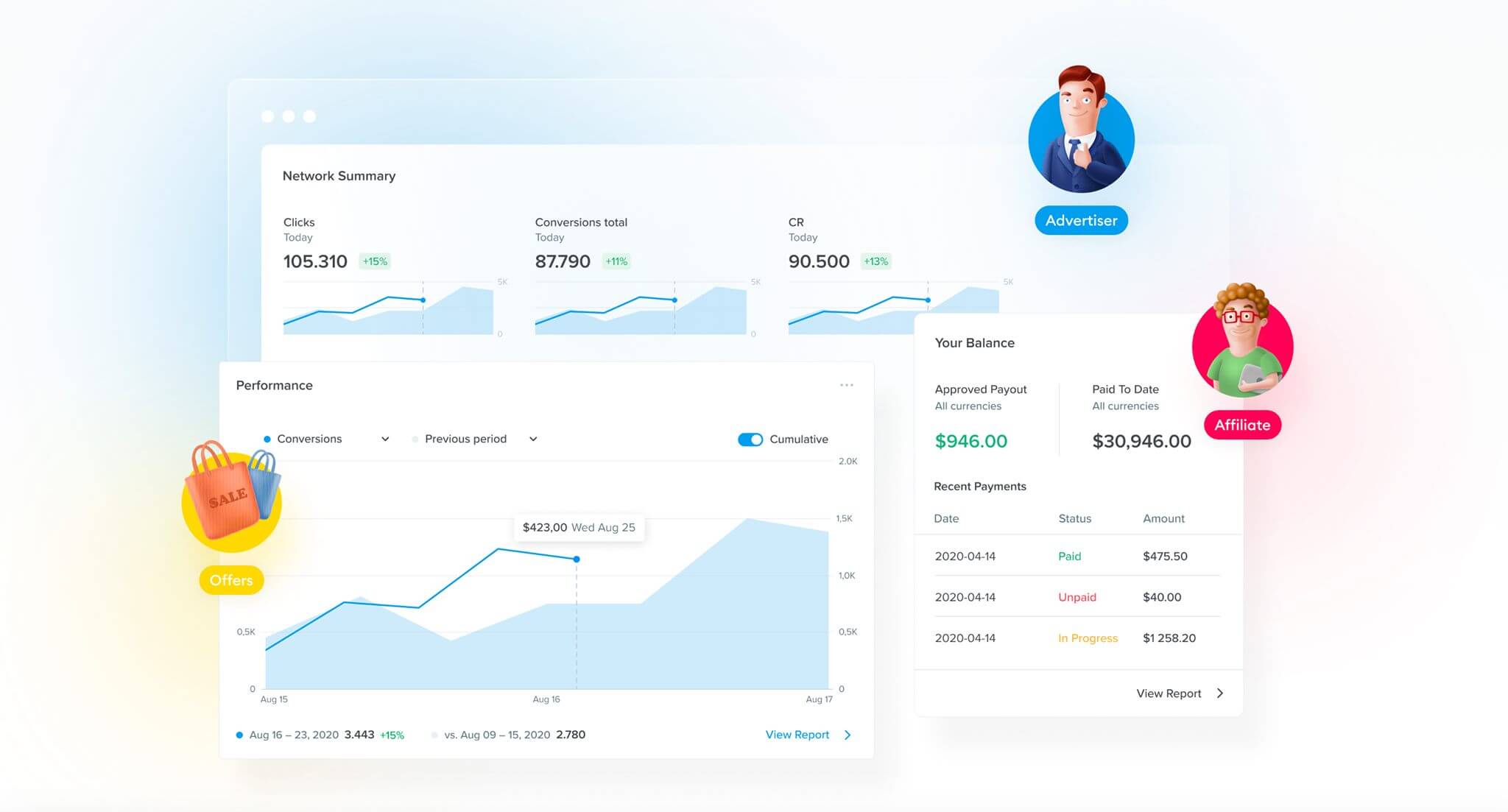
Scaleo fits affiliate programs, CPA networks, SaaS partner programs, iGaming operators, lead-generation businesses, and media teams that need one system for partner tracking and commercial reconciliation. A simple click tracker can tell you that someone clicked. Scaleo is designed to help you answer the harder questions: which affiliate sent the click, which offer converted, which goal fired, whether the event was valid, what commission applies, and what should be paid.
Best for: affiliate program owners, affiliate networks, SaaS partner teams, iGaming operators, advertisers running CPA/RevShare/hybrid models, and businesses that need S2S postback tracking.
- Tracking depth: clicks, conversions, goals, postbacks, subIDs, partners, offers, campaigns, traffic sources, and reporting.
- Affiliate management: partner accounts, offer access, creative tracking, commission plans, and payout workflows.
- Fraud control: useful when bad clicks, duplicate conversions, VPN/proxy traffic, bot patterns, or suspicious conversion behavior can affect payouts.
- Revenue logic: supports more than “count click, count sale.” This matters when different affiliates have different goals, payout types, and qualification rules.
Limitations: Scaleo is too advanced if you only need a free URL shortener or a simple WordPress plugin to cloak Amazon links. Use Scaleo when link tracking is part of a performance marketing operation, not just a convenience feature.
Verdict: choose Scaleo when affiliate link tracking needs to become a reliable business system — especially when conversion accuracy, partner trust, fraud control, and payout integrity matter.
2. ClickMagick — Best for Funnel Tracking and Paid Campaign Attribution
ClickMagick is a strong option for marketers who need practical click tracking, conversion attribution, bot filtering, and campaign optimization without building a full affiliate program platform. It is especially useful for funnels, paid ads, solo ads, landing pages, and direct-response campaigns.
ClickMagick tracks visitors, conversions, ads, and campaign performance. It also supports first-party tracking domains, bot filtering, real-time reporting, API/Zapier access, and optimization features. It is a better fit for advertisers who want to improve campaign ROI than for companies managing many affiliates and payout rules.
- Best for: funnel marketers, paid media buyers, direct-response advertisers, and smaller teams tracking campaign ROI.
- Not ideal for: running a full affiliate program with partner accounts, offer rules, and commission governance.
- Pricing: published plans start around $79/month, with higher tiers for more visitors, team members, and advanced support.
3. Voluum — Best for High-Volume Affiliate Media Buying
Voluum is built for affiliate marketers and media buyers who need campaign-level tracking across traffic sources, offers, landing pages, and conversion events. It is closer to a performance marketing command center than a simple link tracker.
Voluum supports campaign flows, traffic distribution, anti-fraud features, custom domains, workspaces, API access, integrations, and high event volumes. It is especially useful when you are testing multiple traffic sources, landing pages, and offers at scale.
- Best for: affiliate media buyers, paid traffic teams, agencies, arbitrage teams, and high-volume campaign operators.
- Not ideal for: WordPress bloggers who only need link cloaking, or operators who need affiliate payout management.
- Pricing: published affiliate-tracker plans start around $149/month and scale upward with events, campaigns, domains, and support.
4. RedTrack — Best for Paid Ad Tracking and Conversion API Workflows
RedTrack is a strong choice for advertisers who need click and conversion tracking across ad platforms, custom domains, events, and Conversion API workflows. It is particularly useful when ad platform reporting is not enough and you need your own attribution layer.
RedTrack supports tracking events, custom domains with SSL, unlimited campaigns, landing pages, offers, rules, and integrations with major ad platforms. It is a practical choice for teams that care about ROAS, campaign automation, and conversion feedback loops.
- Best for: paid traffic teams, ecommerce advertisers, affiliate media buyers, and lead-generation advertisers.
- Not ideal for: affiliate managers who need partner portals, payout approvals, and commission rule management.
- Pricing: published plans start around $149/month for individual advertisers and increase for team features and higher tracking-event volumes.
5. BeMob — Best Budget-Friendly Campaign Tracker for Affiliates
BeMob is useful for affiliate marketers who want campaign tracking, traffic distribution, event reporting, and bot-rule access at a lower entry price. It is a practical option for performance marketers who are not ready for a more expensive tracking stack.
BeMob offers a free tier with monthly event limits, then paid tiers with more events, campaigns, offers, landing pages, flows, traffic sources, reports, and advanced options. It is attractive for marketers who want to test proper campaign tracking without committing to a high monthly bill.
- Best for: beginner-to-intermediate affiliate marketers, paid traffic testers, and smaller campaign teams.
- Not ideal for: enterprise affiliate programs or businesses that require commission management and partner payouts.
- Pricing: free tier available; paid plans start around $49/month.
6. ClickMeter — Best for Agencies and Link-Level Conversion Tracking
ClickMeter is designed for tracking links, redirects, branded domains, campaigns, and conversions from one dashboard. It sits between basic URL shorteners and heavier affiliate campaign trackers.
ClickMeter can work well for agencies, publishers, advertisers, and teams that need tracked links with analytics, redirect monitoring, conversion tracking, and reporting. It is less suitable when you need a full affiliate management backend with partner accounts and payout rules.
- Best for: agencies, publishers, advertisers, and teams managing many campaign links.
- Not ideal for: complex affiliate programs with payout workflows and advanced fraud governance.
7. Pretty Links — Best WordPress Link Tracker for Affiliate Bloggers
Pretty Links is best for WordPress users who want to shorten, cloak, organize, and track affiliate links directly inside WordPress. It is one of the most familiar options for bloggers who monetize content with affiliate links.
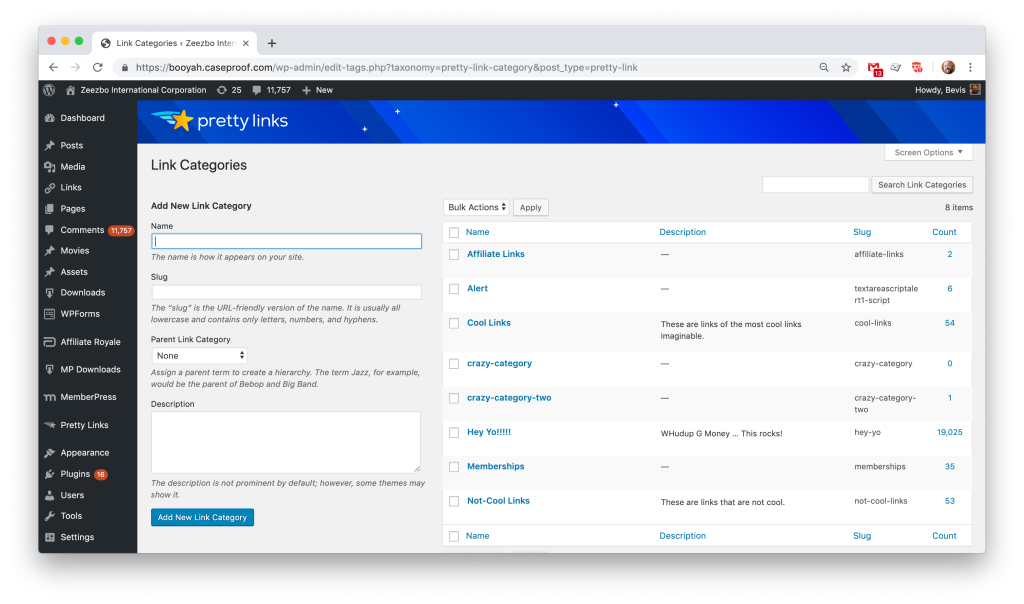
Pretty Links is useful when your main pain is managing messy affiliate URLs, creating cleaner internal redirects, tracking click activity, and keeping link management inside WordPress. It is not built to manage affiliate partners, advertiser postbacks, commission validation, or payout rules.
- Best for: WordPress bloggers, niche site owners, content affiliates, and review sites.
- Not ideal for: media buyers running many traffic sources or companies managing affiliate programs.
8. ThirstyAffiliates — Best for WordPress Affiliate Link Cloaking and Auto-Linking
ThirstyAffiliates is a WordPress affiliate link management plugin built for publishers who need cloaking, categorization, automatic keyword linking, import/export, and geo redirects. It is especially useful for affiliate sites with lots of product links across many posts.
ThirstyAffiliates helps keep affiliate links organized and easier to insert into content. It is a content monetization tool rather than a complete attribution or partner management platform. Use it when the website is the affiliate; do not use it as the backend for running an affiliate program.
- Best for: WordPress affiliate publishers, product review blogs, Amazon-style affiliate sites, and niche publishers.
- Not ideal for: paid media attribution, S2S conversion tracking, or partner payout management.
- Pricing: published promotional pricing starts around $99.60/year for a single-site plan, with higher tiers for more sites.
9. Lasso — Best for Affiliate Product Displays and Link Revenue Optimization
Lasso is best for affiliate publishers who want link management combined with product displays, monetization opportunities, and content revenue workflows. It is less of a raw click tracker and more of a publishing monetization system.
Lasso is useful when your affiliate revenue depends on product boxes, product comparison displays, link health, and content-level monetization. It is a natural fit for bloggers and publishers, not for advertisers or affiliate program operators who need conversion postbacks and commission rules.
- Best for: affiliate blogs, review sites, product comparison publishers, and niche content businesses.
- Not ideal for: affiliate networks, iGaming programs, paid traffic teams, or partner payout workflows.
10. Bitly — Best for Branded Short Links and Campaign Analytics
Bitly is best for branded short links, QR codes, social media links, campaign dashboards, and simple link analytics. It is useful for marketing teams that want cleaner links and basic performance visibility across channels.
Bitly can help with branded links, UTM building, redirects, QR code scans, campaign-level tracking, mobile deep linking on higher tiers, and team workflows. It is not a full affiliate attribution platform. It can show engagement, but it will not replace S2S postback tracking or affiliate payout logic.
- Best for: social teams, brand teams, content marketers, QR campaigns, and general campaign link tracking.
- Not ideal for: affiliate commission attribution or complex conversion validation.
- Pricing: free tier available; paid plans start around $10/month when billed annually.
11. Rebrandly — Best for Branded Link Management and Dynamic Routing
Rebrandly is best for teams that want branded links, custom domains, QR codes, link destination editing, and link routing. It is stronger on brand control than on affiliate payout attribution.
Rebrandly is useful for organizations managing many short links across social, email, partnerships, and offline campaigns. Higher tiers add more links, domains, workspaces, teammates, advanced data, mobile deep linking, and enterprise controls.
- Best for: brand teams, agencies, social campaigns, QR-heavy marketing, and teams that care about domain-level link trust.
- Not ideal for: affiliate networks or advertisers that need detailed click-to-conversion payout logic.
- Pricing: free tier available; paid tiers start around $8–$11/month depending on billing and plan display.
12. Hyros — Best for Advanced Ad Attribution and Customer Journey Tracking
Hyros is best for businesses that need deep paid ad attribution, customer journey tracking, LTV visibility, and analyst-supported setup. It is more advanced than a link tracker and more focused on ad attribution than affiliate program management.
Hyros is commonly positioned for ecommerce, agencies, high-ticket funnels, subscription businesses, and paid traffic teams that need a cleaner source of truth than ad platform dashboards. It can be valuable where attribution gaps create major budget waste, but it is not an affiliate management platform.
- Best for: high-ticket advertisers, ecommerce brands, agencies, coaching funnels, and complex paid traffic attribution.
- Not ideal for: simple link shortening or affiliate partner payout management.
- Pricing: published business pricing starts around $230/month on an annual plan, with setup handled through demo/sales flow.
How Does Click Tracking Work in Affiliate Marketing?
Affiliate click tracking works by attaching a unique identifier to a link, recording the click, and then using cookies, click IDs, UTMs, or server-side postbacks to connect the later conversion back to the correct source. The better the tracking setup, the less you rely on fragile browser-side assumptions.
- The affiliate link is generated. The system creates a unique URL for the affiliate, campaign, offer, subID, creative, or traffic source.
- The user clicks the link. The tracking system records the click timestamp, source, device, IP, browser, country, referrer, and tracking parameters.
- The user is redirected. The click may pass through a tracking domain before sending the user to a landing page, offer page, app store, registration page, or merchant site.
- The click ID is stored or passed forward. This can happen through URL parameters, cookies, first-party tracking, or server-side systems.
- The conversion happens later. The user registers, buys, deposits, books, subscribes, fills a lead form, or completes another tracked goal.
- The conversion is attributed. The system matches the conversion to the click ID, affiliate ID, source, campaign, or partner record.
- The payout or report is updated. In simple tools, this updates analytics. In affiliate platforms like Scaleo, it can also trigger commission logic, validation status, fraud review, and payout workflows.
Important: click tracking and conversion tracking are not the same thing. Click tracking tells you that someone interacted with a URL. Conversion tracking tells you whether that interaction produced a business outcome. Affiliate tracking adds the financial layer: which partner gets credit and how much they should be paid.
What Features Should Affiliate Link Tracking Software Have?
Good affiliate link tracking software should do more than count clicks. It should help you understand source quality, conversion performance, traffic loss, bot activity, partner contribution, and campaign profitability.
| Feature | Why It Matters | Needed By |
|---|---|---|
| Custom tracking links | Creates unique URLs for campaigns, affiliates, offers, creatives, and traffic sources. | Everyone |
| UTM builder | Standardizes source, medium, campaign, term, and content tags for analytics. | Content and paid teams |
| SubID tracking | Lets affiliates pass granular placement, keyword, ad, creative, or funnel data. | Affiliates and managers |
| Conversion tracking | Connects clicks to leads, sales, deposits, registrations, or other goals. | Advertisers and affiliates |
| S2S postbacks | Improves attribution reliability when cookies, ad blockers, or browser restrictions interfere. | Affiliate programs and paid media teams |
| Bot and fraud filtering | Helps exclude fake clicks, suspicious traffic, data-center traffic, fast clicks, or repeated patterns. | Paid traffic and affiliate programs |
| Branded domains | Improves trust and makes tracking links less ugly or suspicious. | Brands, publishers, agencies |
| Link rotation and routing | Sends traffic to different offers, landing pages, countries, devices, or tests. | Media buyers |
| Partner management | Connects links to affiliate accounts, approvals, offers, and permissions. | Affiliate program owners |
| Commission logic | Turns valid conversions into CPA, RevShare, hybrid, or custom payouts. | Affiliate program owners |
| Audit trail | Helps resolve disputes when affiliates, advertisers, and finance disagree. | Networks, SaaS, iGaming, finance |
Simple Link Tracker vs Affiliate Tracking Platform: What Is the Difference?
A simple link tracker measures link engagement. An affiliate tracking platform manages performance marketing relationships. That means links, clicks, conversions, offers, affiliates, advertisers, commission plans, fraud controls, payment statuses, and reporting all live in one connected workflow.
Use a simple tracker if you only need campaign visibility. Use an affiliate platform when payouts depend on that tracking. The moment a click becomes a financial liability, you need more than “clicks by country.” You need conversion evidence, validation logic, and payout rules.
| Question | Simple Link Tracker | Affiliate Tracking Platform |
|---|---|---|
| Can it count clicks? | Yes | Yes |
| Can it show source/device/location? | Usually | Yes |
| Can it track conversions? | Sometimes | Yes |
| Can it manage affiliates? | No | Yes |
| Can it apply commission rules? | No | Yes |
| Can it validate or reject suspicious conversions? | Limited | Yes |
| Can it support payouts and invoices? | No | Yes |
| Best fit | Campaign analytics | Affiliate program operations |
The Affiliate Campaign Tracking Audit: 9 Questions Before You Choose a Tool
Before choosing a link tracker, audit the business decision the tool needs to support. A cheap tracker becomes expensive when it cannot answer the questions finance, media buying, compliance, or affiliates ask later.
- Are you tracking clicks only, or clicks and conversions? If conversions matter, choose a tool with reliable attribution and postback support.
- Do you pay affiliates or partners? If yes, you need affiliate tracking, not only link analytics.
- Do affiliates need their own dashboard? If yes, a URL shortener or WordPress plugin will not be enough.
- Do you run paid traffic? If yes, look for traffic source integrations, cost sync, conversion APIs, bot filtering, and landing-page testing.
- Do you need link cloaking inside WordPress? If yes, Pretty Links, ThirstyAffiliates, or Lasso may be enough.
- Do you need branded short links? If yes, Bitly or Rebrandly may solve the problem faster than a heavy tracker.
- Do you need S2S postbacks? If yes, prioritize campaign trackers or affiliate tracking platforms over basic link shorteners.
- Do you need fraud filtering? If fake clicks or suspicious conversions cost money, choose a tracker with bot/fraud logic.
- Do you need payout reconciliation? If yes, use a platform like Scaleo where tracking and commission logic are connected.
Common Link Tracking Mistakes That Kill Affiliate Campaign ROI
Most affiliate tracking failures are boring, expensive, and avoidable. They happen because teams count clicks but fail to build a clean chain from click to conversion to payout.
Mistake 1: Treating Clicks as Proof of Value
A click is not a lead, sale, deposit, signup, or retained customer. High click volume can still be worthless if traffic quality is low, bots are inflating reports, or users never convert. Always connect click reports to downstream outcomes.
Mistake 2: Using Only Browser-Side Tracking
Browser-side tracking is easier to set up, but it is more fragile. Cookies can expire, consent can block scripts, users can switch devices, and ad blockers can interfere. For serious affiliate campaigns, server-to-server postback tracking is usually a safer baseline.
Mistake 3: Not Passing SubIDs
SubIDs are where a lot of useful truth lives. They help affiliates and managers understand which placement, keyword, ad group, creative, email, influencer, or traffic source produced the result. Without subIDs, you get a foggy report and a headache wearing a tiny hat.
Mistake 4: Sending All Tracking Data to Analytics, But Not to Finance
Marketing analytics can say a campaign worked while finance says the payouts are wrong. That usually means tracking and commission logic are disconnected. Affiliate programs need one shared source of truth for conversion status, payout eligibility, and partner credit.
Mistake 5: Keeping Dead or Broken Affiliate Links Live
Broken affiliate links waste content value, damage trust, and silently destroy revenue. Publishers should audit affiliate links regularly. Operators should monitor destination availability, offer status, redirect chains, and conversion event health.
Which Link Tracker Should You Choose?
Choose the lightest tool that fully protects the business decision you need to make. Do not buy enterprise attribution if you only need branded links. Do not use a cute WordPress plugin if you are paying affiliates across offers, geos, and commission models.
| If You Are… | Choose… | Why |
|---|---|---|
| A blogger managing affiliate links in WordPress | Pretty Links, ThirstyAffiliates, or Lasso | You need link organization, cloaking, product displays, and content monetization workflows. |
| A social/content team creating branded links | Bitly or Rebrandly | You need short links, custom domains, QR codes, UTMs, and campaign-level analytics. |
| A paid traffic affiliate testing offers | ClickMagick, BeMob, Voluum, or RedTrack | You need click IDs, landing-page tests, traffic routing, conversion tracking, and bot filtering. |
| An agency managing ad attribution | RedTrack, Voluum, Hyros, or ClickMagick | You need campaign optimization, ad platform feedback, and client reporting. |
| A company running an affiliate program | Scaleo | You need partner accounts, offer tracking, postbacks, conversion validation, commissions, and payouts. |
| An iGaming, SaaS, finance, or lead-gen operator | Scaleo | You need tracking that survives disputes, fraud review, multi-goal attribution, and commission reconciliation. |
Why Scaleo Is Different From a Basic Affiliate Link Tracker
Scaleo is different because it connects link tracking to the full affiliate lifecycle. It tracks the click, records the conversion, validates the event, attributes it to the correct partner, applies commission logic, and supports reporting and payout workflows.
This matters when the business has moved beyond “which link got clicks?” and needs to answer “which partner should we pay, for which event, under which rule, and with what evidence?” That is the point where affiliate tracking becomes infrastructure.
- For SaaS partner programs: Scaleo helps track referral partners, offers, trials, signups, paid conversions, and recurring partner performance.
- For iGaming operators: Scaleo supports tracking flows that can include registrations, FTDs, deposits, revenue events, postbacks, fraud checks, and commission rules.
- For CPA networks: Scaleo helps manage offers, affiliates, advertisers, goals, caps, postbacks, tracking links, and payout workflows.
- For performance teams: Scaleo gives a cleaner operational layer when multiple partners, subIDs, traffic sources, and payout models need one reporting system.
Operator-grade rule: if your tracking data decides who gets paid, do not use a tool that only tells you who clicked. You need a system that preserves the evidence chain from click to conversion to commission.
Final Verdict: Best Link Tracker Tools for Affiliate Marketing Campaigns
The best link tracker for affiliate marketing depends on whether you are tracking content links, paid traffic, or a full partner program. For bloggers, Pretty Links, ThirstyAffiliates, and Lasso are practical. For branded links, Bitly and Rebrandly are clean and easy. For paid campaign attribution, ClickMagick, Voluum, RedTrack, BeMob, ClickMeter, and Hyros are stronger.
For businesses running an affiliate program, Scaleo is the more complete choice because tracking does not stop at the click. It continues into conversion validation, partner management, commission logic, fraud prevention, reporting, and payouts.
Looking for affiliate tracking software that goes beyond basic link clicks? Scaleo gives you the tracking, analytics, fraud controls, postbacks, and commission workflows needed to manage affiliate campaigns as a revenue channel — not just a pile of URLs.
Link Tracking Software FAQ
What is link tracking software?
Link tracking software records clicks on URLs and shows where those clicks came from, which campaigns generated them, and whether they produced conversions. Advanced link tracking tools can also use click IDs, UTM parameters, cookies, first-party domains, and server-to-server postbacks to connect clicks to revenue outcomes.
What is the best link tracker for affiliate marketing?
The best link tracker depends on the use case. WordPress publishers usually need Pretty Links, ThirstyAffiliates, or Lasso. Paid media buyers often need ClickMagick, Voluum, RedTrack, or BeMob. Businesses running affiliate programs need a full affiliate tracking platform like Scaleo because it connects clicks to partners, conversions, fraud checks, commission rules, and payouts.
What is the difference between a link tracker and affiliate tracking software?
A link tracker measures link clicks and campaign engagement. Affiliate tracking software manages the full affiliate workflow: tracking links, affiliate accounts, offers, conversions, postbacks, fraud checks, commission models, payout statuses, and reporting. If you pay affiliates based on tracked actions, affiliate tracking software is safer than a basic link tracker.
Do affiliate marketers need server-to-server postback tracking?
Server-to-server postback tracking is strongly recommended when conversion accuracy matters. Browser-based tracking can be affected by cookie restrictions, consent settings, ad blockers, and cross-device journeys. S2S postbacks move conversion validation into a more reliable server-side flow.
Is a free link tracker enough for affiliate marketing?
A free link tracker can be enough for basic click counting, short links, and small content campaigns. It is usually not enough for serious affiliate marketing where you need conversion tracking, postbacks, fraud filtering, subID reporting, partner dashboards, and payout reconciliation.
How do I track affiliate links in WordPress?
You can track affiliate links in WordPress with plugins such as Pretty Links, ThirstyAffiliates, or Lasso. These tools help create cleaner affiliate URLs, organize links, track clicks, and insert affiliate links into content. For full affiliate program tracking, use a platform like Scaleo instead of relying only on a WordPress plugin.
Why use Scaleo instead of a simple link tracker?
Use Scaleo when link tracking needs to connect to affiliate management, conversion validation, postbacks, fraud controls, commission rules, and payouts. A simple link tracker can show clicks. Scaleo helps manage the financial and operational side of affiliate campaigns.