

Programmatic advertising trends in 2026 aren’t about shiny buzzwords; they’re about how you’ll keep performance climbing while privacy policy, identity, and supply all keep shifting under your feet.
The “cookiepocalypse”?
Not how it was pitched.
The real story in 2026 is a dual-stack world—durable first-party data and clean rooms on one side, pragmatic use of still-available signals on the other—plus a serious reweighting toward CTV, commerce/retail media, and quality supply.
We build affiliate and performance software for operators with zero tolerance for vanity metrics, so here’s a straight, operator-grade view of what changes and how to turn each shift into profit.
10 Programmatic Advertising Trends for 2026
| Trend (2026) | What changes | KPIs to watch | Operator move (Scaleo-ready) |
|---|---|---|---|
| Dual-stack identity | Third-party cookies linger; Privacy Sandbox optional → hybrid reality. | Consent rate, 1P ID match rate, % S2S events | Run two pipes: 1P IDs + S2S postbacks, and a “pragmatic” cookie path with strict consent & governance. |
| 1P data & clean rooms = default | Authenticated IDs, CRM audiences, clean-room joins for exposure→outcome. | Deduped reach, frequency, overlap %, incremental revenue | Build audiences from logins/CRM; measure in clean rooms; keep raw PII off the wire. |
| Retail/commerce media becomes your “second DSP” | Offsite targeting + full-funnel planning beyond retailer domains. | New-to-brand %, ROAS, basket LTV, geo-lift | Test RMN offsite + CTV; fund hybrid (brand + performance); run incrementality studies. |
| CTV behaves like performance | Shoppable formats, QR, deterministic paths into analytics. | Visit lift, QR scan rate, CPV/CPVist, D7/D30 revenue | Pipe CTV events S2S; cap by attention, not just impressions; daypart + sports context DCO. |
| Attention as a currency | aCPM deals; planning/buying to attention thresholds. | Attention seconds, aCPM, effective freq by attention tier | Filter out low-attention supply; throttle frequency by attention, not impressions. |
| SPO with teeth; MFA shrinks | Contracted paths, direct-seller share up; enforced floors cut arbitrage. | Supply-path quality score, take rate, IVT %, attention | Shortest auditable path; auto-exclude MFA clusters; prefer premium contexts. |
| Carbon enters the RFP | Emissions-aware curation and fewer hops without performance loss. | gCO₂e/1k impressions, hops per path, viewability/attention parity | Add “sustainable media” line items; test low-emission routes vs control for equal outcomes. |
| GenAI = workflow tool, not magic wand | Creative auto-versioning, copilot optimization, anomaly detection. | Creative throughput, time-to-iteration, anomaly MTTR | Use AI within guardrails: human policies, audit logs, easy rollbacks; auto-cut low performers. |
| pDOOH + digital audio scale | Triggered OOH (weather/location/sports) and smarter podcast/streaming. | Incremental reach, store/visit lift, freq overlap, completion rate | Add pDOOH triggers to omnichannel; manage audio frequency with web/video caps unified. |
| Measurement reset | MMM + geo/audience holdouts + clean-room attribution; last-click only for payout. | Lift %, modeled ROAS, contribution index, time-to-learn | Quarterly MMM refresh; always-on holdouts; show assisted conversions next to last-click payouts. |
Google’s April 2025 update effectively backed away from a forced third-party cookie deprecation in Chrome.
Translation: you won’t wake up to a hard cutoff; you will, however, keep operating in a messy hybrid where cookies still exist while Privacy Sandbox tools remain optional and unevenly adopted.
Build two paths: a durable path (first-party IDs, S2S events, clean rooms) and a pragmatic path (existing signals with tight consent and governance). Expect this status quo to hold longer than anyone predicted.
First-party data and clean rooms stop being “advanced”—they’re default
You’ll lean into publisher/brand first-party IDs, server-to-server conversion events, and clean rooms to join exposure with outcomes without throwing privacy overboard. Expect more cross-publisher collaboration deals, cleaner consent strings, and audience building that starts with your CRM and authenticated sessions.
Clean rooms aren’t magic; they are simply where you’ll reconcile impression paths, frequency, and sales without shipping raw PII.
Retail & commerce media become your second performance DSP
Retail media networks (RMNs) keep growing because they’re built on authenticated, purchase-grade first-party data. Two shifts matter in 2026:
- Offsite expansion—RMN audiences now follow users beyond retailer domains into the open web and CTV.
- Full-funnel planning—from in-search and on-site placement to offsite prospecting and in-store digital.
If you’ve treated RMNs as “just sponsored product,” upgrade your playbook: audience testing, incrementality studies, and hybrid funding (brand + performance) are the new normal. IAB’s 2025 outlook flagged double-digit growth for retail media and CTV—budget is moving there for a reason.
CTV behaves like a performance channel (finally)
CTV spend keeps compounding, and the KPI stack is shifting from pure reach to outcome proxies: site visits, QR scans, incremental search, and even attributable first deposits where journeys are deterministic.
Expect more shoppable formats, dynamic creative based on daypart and sports context, and tighter pipes between CTV ad servers and your analytics. IAB’s 2025 video spend study pegs digital video—including CTV—on a steep climb; plan for it to take a disproportionate share in 2026 as identity frictions remain lower than on the open web.
Attention becomes a currency you actually buy against
Viewability got you partway. Attention (exposure time, screen real estate, interaction) predicts outcomes better—especially on CTV, premium video, and long-form native. In 2026, expect aCPM (attention-adjusted CPM) deals, planning with attention thresholds, and smart throttling of placements that pass MRC viewability but deliver near-zero attention. Use attention signals as a filter, not a vanity scoreboard: buy fewer, better impressions and let frequency caps follow attention, not just impressions.
SPO grows teeth and MFA inventory shrinks
SPO 2.0 is not just “one hop to the SSP.” It’s contracted paths, higher share of direct-seller supply, and enforced floors that cut arbitrage. Expect your DSP seat to show supply path quality scores, domain/app clustering, and automated exclusions for MFA-like supply where attention and outcomes underperform.
You’ll still need human judgment—some MFA is disguised as “curation”—but your default stance should be: shortest path, auditable economics, premium contexts.
Sustainability enters the RFP—carbon becomes a KPI
Brands and agencies will ask for carbon-aware buying in 2026. That means supply curation by emissions profiles, optimized rendering chains, and fewer hops. Independent reporting keeps pointing out the scale of ad-tech emissions and how more efficient supply can lower carbon and waste.
Expect line items labeled “sustainable media” and tests proving no performance penalty when you cut the dirtiest paths. The upshot: greener buys, cleaner outcomes.
GenAI moves from toy to tooling across the whole workflow
You won’t “AI your media plan.” You will embed GenAI where it compounds:
- Creative ops: auto-versioning by geo/context, compliant copy variants, image/video cuts that actually fit the slot.
- Optimization co-pilots: budget and bid suggestions constrained by your guardrails, not a black box running wild.
- Anomaly detection: fraud spikes, bid shading gone wrong, sudden domain mix shifts—flagged in minutes, not days.
Guardrails are everything: human-approved policies, audit logs for every AI decision, and easy rollbacks.
pDOOH and digital audio get real programmatic budgets
Programmatic digital out-of-home (pDOOH) enters your omnichannel plan because triggers (weather, location, sports) and real flighting control now exist at scale.
Audio continues its quiet surge: podcast networks, streaming audio, host-read and dynamically inserted ads with clean targeting and frequency management.
Both channels give you incremental reach with low identity friction—use them to balance a heavy web/video mix.
Measurement resets: MMM + experiments + privacy-safe attribution
With privacy tech and policy in motion, 2026 measurement blends:
- MMM for budget allocation across big buckets, updated quarterly.
- Geo or audience holdouts for incrementality on retail media and CTV.
- Clean-room pathing for frequency and contribution without raw joins.
- Last-click payout if you must—but assist reporting for optimization.
Bottom line: your pay logic can stay simple; your learning logic cannot.
2026 signal stack: what actually works (and why)
| Capability (2026) | Resilient to policy shifts | Cross-device | Privacy-safe | Scales beyond walled gardens | Notes |
|---|---|---|---|---|---|
| First-party IDs (auth + CRM) | ✅ | ✅ | ✅ | ✅ | Anchor everything—consent and value exchange decide reach |
| S2S conversion events | ✅ | ✅ | ✅ | ✅ | Trustworthy payouts and faster optimization |
| Clean rooms | ✅ | ✅ | ✅ | ✅ | Measurement + frequency control without raw PII movement |
| Chrome Privacy Sandbox APIs | ✅ | ❌/limited | ✅ | ✅ | Useful in niches; adoption remains uneven given cookie status |
| Contextual + attention planning | ✅ | ✅ | ✅ | ✅ | Context ≠ guesswork—pair with attention thresholds |
| Third-party cookies | ❌ (politically) | ❌ | ❌ | ✅ | Still here in 2026, but don’t bet your roadmap on them |
Conclusion: Where to point your budget first?
- CTV + retail media + premium native as your quality triad; tie them with clean-room measurement and attention to floors.
- Open web prospecting through curated, short supply paths; dump low-attention MFA.
- pDOOH + audio to add incremental reach without identity drama.
- Always-on experiments: quarterly geo-lift or audience holdouts; if you’re not disproving your own assumptions, you’re guessing.
What we’re building toward?
…so you don’t have to!
We at Scaleo keep the plumbing calm while the market churns: first-party click IDs, instant S2S postbacks, assisted reporting next to last-click payouts, rule-based commissions, fraud scoring, and creative-level cohorts by GEO/placement.
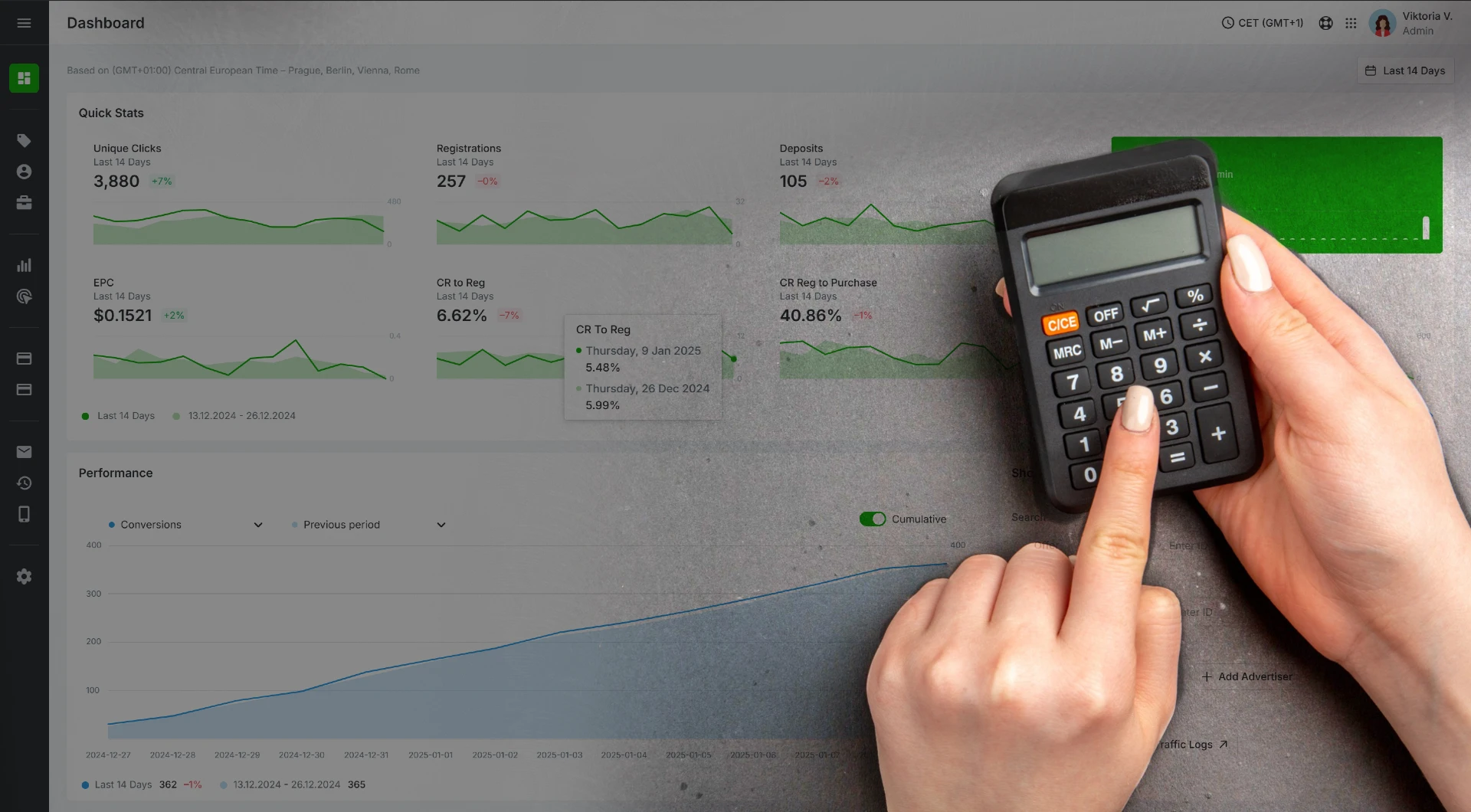
For programmatic-heavy plans, that means your affiliate and partner channels can align to the same truth set—deposits, time-to-first-deposit, D7/D30 revenue—no matter where the media originated.
Have you pressure-tested your 2026 plan against these ten shifts? Because the brands that don’t worry about trends—they buy them on purpose.
Try Scaleo for free and see how a privacy-ready, performance-first platform turns programmatic chaos into simple dashboards, trustworthy postbacks, and payouts your finance team actually enjoys signing.