
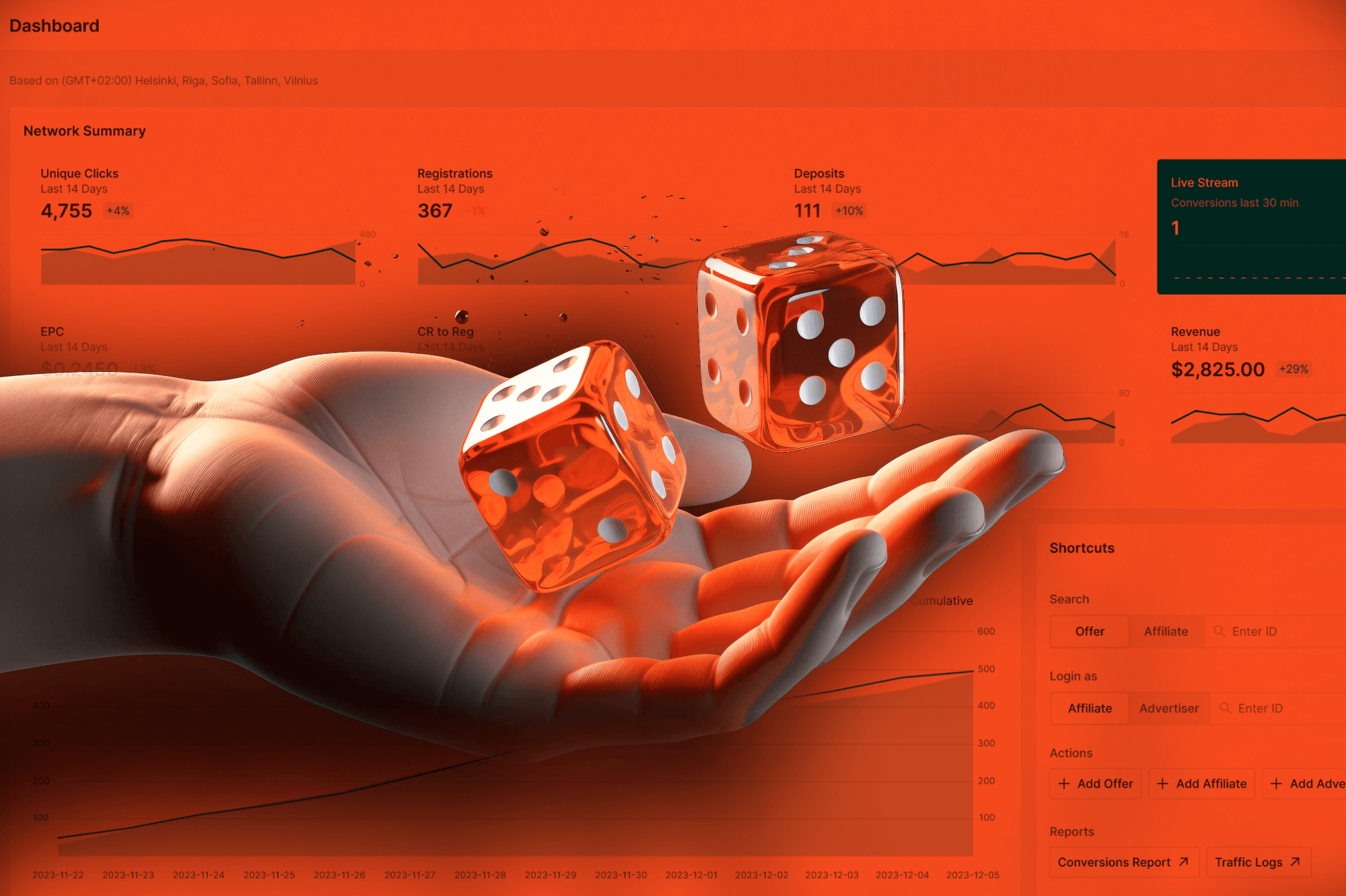
Most casino affiliate funnels aren’t “broken.” They’re just under-instrumented and full of silent drop-offs.
A typical click-to-first-deposit (FTD) outcome can sit around 1–3% for many affiliate flows—until you fix the two stages that bleed the most: KYC and cashier/payment. During major sports moments, some operators reported unusually high registration-to-payer conversion (for example, an Optimove iGaming Pulse snapshot around the 2024 Super Bowl cited ~42% of fresh registrants becoming payers in that period).

That number isn’t a universal benchmark—it’s a reminder that behavior is movable when timing, intent, trust, and payments align.
If you’re getting impressions for queries like how to convert casino leads, lead to deposit funnel for casinos, player conversion tactics, or tracking conversions for casino referrals, this is the exact playbook: identify where the funnel leaks, fix the highest-friction steps first, then track conversion events end-to-end so you’re optimizing reality—not vibes.
Free Tool: Affiliate Conversion Leak Finder
Lead → Deposit Funnel Calculator (Find Your Biggest Leak)
This calculator is intentionally built for casino referral funnels—not generic “1% lift” math. It shows expected FTDs and revenue, then highlights the single stage where your funnel is leaking the most and what to fix first.
🎰 Free FTD Funnel Suditor
Enter your funnel rates. You’ll get expected FTDs, monthly value, and the biggest leak to fix first.
Want the full optimization checklist? →
The Real Casino Lead-to-Deposit Funnel (Not AIDA)
Casino conversion is not “Awareness → Desire → Action.” It’s a chain of high-friction commitments. If you track and optimize the wrong funnel model, you’ll “improve” vanity metrics while deposits stay flat.
Here’s the funnel that actually matters for casino referrals:
| Stage | What “kills” it | What fixes it |
|---|---|---|
| SERP click → affiliate page | Wrong intent match, slow load, thin review, no trust signals | Intent-specific page, fast mobile UX, clear offer summary, compliance-friendly trust stack |
| Affiliate page → operator landing | Weak CTA, unclear bonus terms, geo mismatch, popups | One primary action, bonus clarity, localized copy, fewer exits |
| Landing → registration | Too many fields, OTP issues, unclear eligibility, device friction | Short form, “why we ask” microcopy, mobile-first layout, reduce surprises |
| Registration → KYC approved | Unclear requirements, delays, rejected docs, no progress visibility | Status transparency, clear doc examples, faster review, fallback support route |
| KYC → cashier | Missing local payment methods, deposit limits, currency mismatch | Local rails, correct defaults, limits explained, less cognitive load |
| Cashier → first deposit (FTD) | Declines, 3DS friction, bonus confusion, unclear wagering, fees | Payment reliability, simple bonus explanation, “deposit now” justification |
| FTD → first bet | “Now what?”, onboarding gap, game choice overload | Guided first session, default game suggestions, lightweight onboarding prompts |
Fix Leaks: The Stage-by-Stage Playbook
If you want more deposits from the same traffic, you don’t need “more creativity.” You need to remove friction at the stages that matter. Here are the highest-impact fixes, explained in plain language.
1. Click → Registration: Don’t lose users before they even become leads
- Intent-match the page to the query. A user searching “best casino for fast withdrawals” will bounce if you open with generic funnel talk. Your first screen must answer their specific motive: withdrawals, bonuses, local payments, mobile, or game selection.
- Reduce “trust uncertainty” immediately. Show licensing/brand legitimacy signals, supported payment methods, withdrawal time ranges, and bonus rules in a short, scannable block. People don’t deposit into mystery boxes.
- Mobile speed is a conversion feature. If the page is heavy (images, scripts, embeds), you’re paying with deposits. Compress, lazy-load, and keep above-the-fold clean.
2. Registration → KYC: The silent conversion killer nobody brags about
KYC is where “interested” turns into “annoyed.” The fix is rarely “make KYC easier” (compliance exists). The fix is make KYC predictable.
- Set expectations before registration completes. Tell users what they’ll need (ID + proof of address, etc.) and how long it typically takes. Surprise requirements feel like deception.
- Show progress and status. “Under review” with no timeframe is where motivation dies. Even a simple step indicator reduces abandon rate.
- Handle rejections like a product, not a punishment. If documents fail, show examples of acceptable uploads and provide a fast support path.
3. Cashier → First Deposit: Payments are your real conversion rate
Lots of “low conversion funnels” are actually payment failure funnels disguised as marketing problems.
- Local payment methods matter more than your headline. If users can’t deposit with what they trust, your funnel is over. Prioritize local rails per geo (cards aren’t universal).
- Remove deposit ambiguity at the moment of payment. Display min/max, fees (if any), processing time, and currency defaults. Confusion causes exits.
- Bonus confusion kills deposits. If the player has to do math to understand wagering requirements, they postpone—and “later” means never.
4. FTD → First Bet: Don’t let “deposit” be the end of the story
A first deposit without a first bet is a fragile win. Your goal is to reduce “now what?” instantly.
- Guide the first session. Suggest 3–5 popular games relevant to the traffic source (sportsbook vs slots intent). Too much choice is paralysis.
- Make the bonus feel usable. Explain the next step in one sentence: what the bonus is, how it applies, what to do now.
Player Conversion Tactics That Actually Move Deposits
“Player motivations” isn’t fluff when it becomes decisions you can implement in UX, messaging, and offers. These tactics are deposit-focused and casino-specific.
- Build a trust stack above the fold. Payment icons, licensing/brand credibility cues, withdrawal expectations, and transparent bonus terms. The goal is simple: remove the fear of getting stuck.
- Make wagering requirements understandable in 10 seconds. Translate terms into one example (“Deposit $50 → get $50 bonus → wager $X before withdrawal”). If you hide it, users assume it’s bad.
- Localize the “deposit moment.” Currency, payment rails, support channel, and wording that matches the region. A perfect offer in the wrong language is still the wrong offer.
- Reduce steps, not words. A longer explanation can convert if it eliminates uncertainty. A shorter flow converts if it eliminates friction. Optimize for whichever is currently killing you.
- Time your nudges to intent windows. Sports traffic behaves differently near match time than mid-week. Your strongest message often isn’t “best bonus,” it’s “fast onboarding + deposit in 60 seconds.”
Tracking Conversions for Casino Referrals (So You Don’t Optimize the Wrong Thing)
If you can’t see registration → KYC → FTD as separate events, you’ll misdiagnose the leak. That’s how teams end up “improving landing pages” when the real issue is deposit declines, KYC delays, or attribution loss after redirects.
What to track? (minimum viable funnel instrumentation)
At a minimum, treat these as separate conversion events:
- Registration (Lead): confirms intent and removes the “anonymous click” problem.
- KYC Approved: separates “interested” from “eligible” and reveals compliance friction.
- First Deposit (FTD): the conversion your acquisition model is actually paid on.
- First Bet / Wager: validates the deposit is meaningful, not just a bonus poke.
- Revenue events (NGR/LTV): where you learn which sources create value, not volume.
How tracking breaks in casino flows
Casino journeys often include redirects, cross-domain hops, app handoffs, and identity steps (OTP/KYC). That’s why browser-only pixels can lose attribution. The most reliable approach is usually server-to-server (S2S) postback tracking, where a click ID is passed to the operator and sent back upon conversion.
Implementation checklist (practical, not theoretical)
- Define funnel events. Decide what “Registration”, “KYC Approved”, “FTD”, and “First Bet” mean in your system, including edge cases (failed deposits, partial verification).
- Pass a click ID + subIDs. Every outbound affiliate click should carry a unique click identifier plus partner and campaign metadata (subid, source, creative, geo).
- Send S2S postbacks per event. Operator fires a postback when each event happens. Don’t compress everything into “deposit” or you’ll never know where users died.
- Build dedupe rules. If users can touch multiple channels, decide how you attribute: last touch, first touch, or weighted. Make it explicit.
- Monitor anomalies. If registration spikes but KYC/FTD doesn’t, that’s not “bad traffic” by default—it’s often UX/KYC/cashier friction or fraud.
Metrics That Matter for Lead-to-Deposit (Skip the Vanity Stuff)
For this topic, the audience isn’t asking for brand metrics. They want funnel math that maps to deposits and revenue.
| Metric | What it tells you | Why it matters |
|---|---|---|
| Click → Registration % | How well your traffic + message creates “lead intent” | If this is low, your page/offer/geo match is wrong (or UX is slow) |
| Registration → KYC Approved % | How many leads become eligible | This is where compliance friction shows up as “marketing failure” |
| KYC Approved → FTD % | Whether the cashier + offer actually closes | Low here usually means payment methods, declines, limits, or bonus confusion |
| FTD value (avg first deposit) | How much initial value the funnel creates | Lets you evaluate incentives and acquisition cost economics |
| FTD-to-first-bet % | Whether deposits turn into activity | Prevents optimizing for “deposit-only” behavior |
| LTV/NGR by source | Quality of players, not just volume | Stops you from overpaying for low-value conversion spikes |
How Scaleo Helps You Track and Fix the Funnel
When operators say “affiliates are sending low-quality traffic,” the uncomfortable truth is often: we can’t see where the funnel fails.
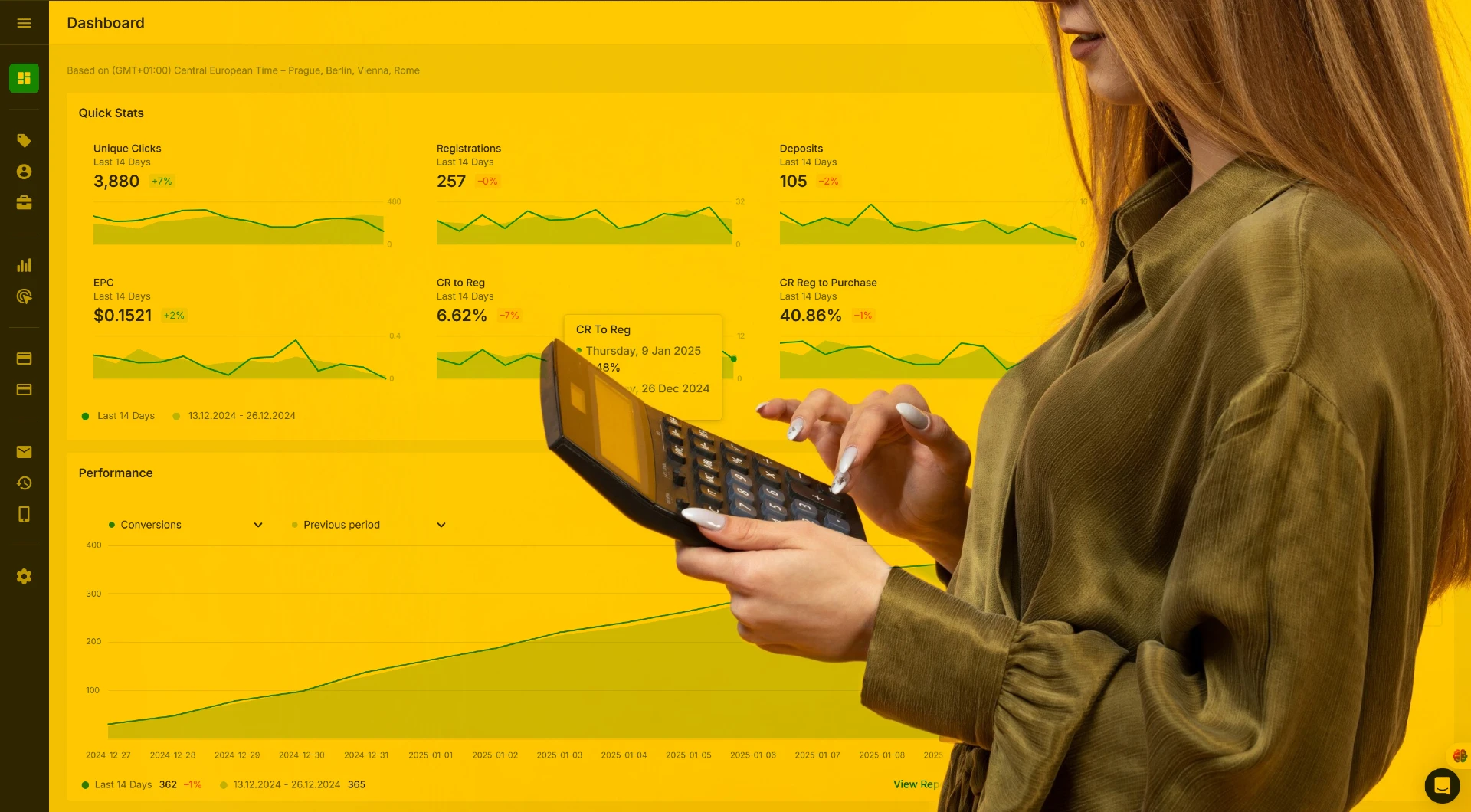
Scaleo is designed to make the journey measurable from click to conversion events, so you can diagnose the leak before you “optimize” the wrong stage.
Model the funnel as multiple goals (not one “deposit” blob)
Instead of treating conversion as a single event, track separate outcomes like registration, KYC approval, first deposit, and revenue events. When you can segment by affiliate, geo, device, and source, you stop guessing and start fixing.
Use S2S postbacks for reliability
Casino funnels often break browser-based attribution due to redirects, cross-domain hops, or device switches. S2S tracking is typically more stable for capturing conversion events consistently and reducing “missing conversion” disputes.
Catch suspicious patterns early
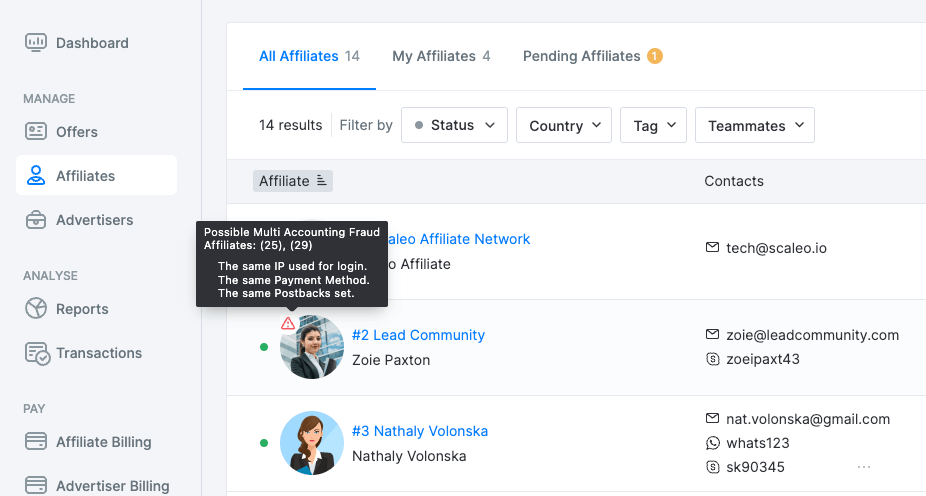
Abnormal spikes in registrations with low KYC/FTD progression can indicate fraud, incentivized junk leads, or broken UX flows. Having visibility and alerts makes it easier to respond quickly—before budgets and relationships get burned.
Conversion Funnel Deep Dive: Uncover the Leaks in Your Casino Affiliate Program
Let’s break down the typical funnel to help you better identify leaks in it.
| Aspect | Description |
|---|---|
| 🎯 Awareness | How potential customers first learn about your casino |
| 🧐 Interest | What engages their interest and keeps them exploring your site |
| 💡 Desire | What motivates them to consider making a deposit or signing up |
| 🛒 Action | What prompts them to take the final step and complete the desired action |
| 🔍 Identifying Leaks | Spotting where users drop off in the conversion funnel |
| 🔥 High Bounce Rate | Visitors leave your site quickly without engaging |
| 👀 Low Click-Through Rate | Few visitors proceed from one stage to the next |
| 🚪 Cart Abandonment | Users start the signup process but don’t complete it |
| 🖥️ Improve Website Design | Ensuring your site is visually appealing and easy to navigate |
| ✍️ Optimize Content | Providing engaging, relevant, and valuable content |
| 🚀 Enhance User Experience | Making the signup and deposit processes as simple and straightforward as possible |
| 🌡️ Heat Maps | Visual representations of where users click, scroll, and spend the most time on your site |
| 📊 Attribution Models | Understanding which marketing efforts are driving conversions |
| 🔀 A/B Testing | Comparing two versions of a web page or marketing campaign to see which performs better |
| 💼 Scaleo: Affiliate Management | Intuitive dashboard for managing affiliates, tracking performance, and optimizing campaigns |
| 📈 Advanced Tracking and Reporting | Monitoring every aspect of your affiliate program with real-time reporting |
| ⚙️ Customizable Attribution Models | Creating models that align with your specific business goals |
| 🛡️ Fraud Detection and Prevention | Protecting your business from fraudulent activities |
| 🔗 Seamless Integration | Integrating with your existing tools and platforms |
| 📈 Boost Your Conversion Rates | Optimizing marketing efforts to increase deposits and revenue |
| 🎯 Enhance Your Marketing Strategy | Fine-tuning your strategy based on real-time data |
| 🏆 Gain a Competitive Edge | Staying ahead of the competition by continuously improving your affiliate program |
| ⏳ Save Time and Resources | Streamlining affiliate management processes to focus on growth |
| 🤝 Improve Affiliate Relationships | Building stronger relationships with affiliates through transparent reporting and fair compensation |
| 🚀 Getting Started with Scaleo | Easy setup process and comprehensive onboarding support |
| 💡 Dedicated Support Team | Having a team to help with any questions or issues |
| 📅 Continuous Improvement | Regular software updates with new features and enhancements |
A Practical “Fix Leaks” Action Plan
- Instrument the funnel. Separate registration, KYC, and FTD as events. If you can’t see them, you can’t fix them.
- Identify the biggest leak. Use your analytics (and the calculator above) to pick one stage to attack first.
- Fix KYC predictability. Reduce surprises, show status, shorten time-to-approval, and handle rejections gracefully.
- Fix cashier reliability. Local payment methods, clear limits, fewer declines, and simple bonus explanations at deposit time.
- Run one controlled test. Change one thing, measure one stage outcome, and don’t “optimize” with ten variables at once.
If you do only one thing, make KYC and the cashier measurable. Most “conversion problems” are hiding there, wearing a fake mustache labeled “marketing.” 🥸
Conclusion
We’ve reviewed how analyzing conversion funnels can help make your casino affiliate program more effective and profitable. Knowing where people drop out of your sales process creates an opportunity to improve the customer experience and increase conversions.
You were given various tools during this investigation, such as heat maps or complex attribution models. These methods provide deeper insights into user behavior and preferences, enabling the creation of more engaging content, personalized marketing for individuals, and optimization of online presence.
Analyzing conversion funnels for casino affiliate programs – You cannot succeed in casino affiliate marketing if you don’t track your conversions. This simply means that you should analyze where customers drop off during their journey towards making a purchase on an online casino site. Find out what pages they leave from, why they abandon carts etc. Plug these gaps by implementing strategies such as retargeting ads, which follow them around the web until the purchase is made.
Ready to take your casino affiliate program to the next level? Try Scaleo, the affiliate marketing software optimized for iGaming businesses. Start optimizing your conversions today!

FAQ
What’s a casino lead-to-deposit conversion funnel?
A measurable path from click → registration → KYC approval → cashier → first deposit (FTD) → first bet. Each step has different failure modes, so you must track them separately to find the real leak.
What’s a “good” click-to-FTD conversion rate for casino referrals?
It depends on geo, brand, payment rails, and whether KYC is required. Many funnels sit in the low single digits for click-to-FTD. The more useful benchmark is stage-by-stage: click→reg, reg→KYC, KYC→FTD—because that tells you what to fix.
What are the biggest funnel leaks for casinos?
Most leaks cluster in two places: KYC (uncertainty, delays, rejection loops) and the cashier (missing local payment methods, declines, confusing limits/fees, bonus/wagering confusion at deposit time).
How do you track casino referral conversions reliably?
Track multiple events (registration, KYC approved, FTD, revenue) and use server-to-server (S2S) postbacks where possible. Pass a click ID + subIDs on the outbound click, then have the operator send postbacks for each conversion event.
What should I optimize first if I have zero deposits?
Start with cashier and KYC visibility. If registrations exist but deposits don’t, it’s often payment method mismatch, declines, deposit limits, or KYC friction—not “bad traffic.” Fix the stage that drops the most users by volume.