Tag

Operator Intelligence

Browsing

You’re paying €40,000/month to an affiliate who claims they’re sending premium traffic. Your platform shows 2,847 registrations attributed to them. But you have no idea which of their 14 different traffic sources is actually profitable. Was it their Instagram story? The banner ad on their review site? The Twitch stream overlay? The email blast to their house list? You don’t know. Because you’re tracking at the affiliate level, not the placement level. You’re flying blind…


Most casino affiliate funnels aren’t “broken.” They’re just under-instrumented and full of silent drop-offs. Jump to FREE Deposit Funnel Optimizer A typical click-to-first-deposit (FTD) outcome can sit around 1–3% for many affiliate flows—until you fix the two stages that bleed the most: KYC and cashier/payment. During major sports moments, some operators reported unusually high registration-to-payer conversion (for example, an Optimove iGaming Pulse snapshot around the 2024 Super Bowl cited ~42% of fresh registrants becoming payers…

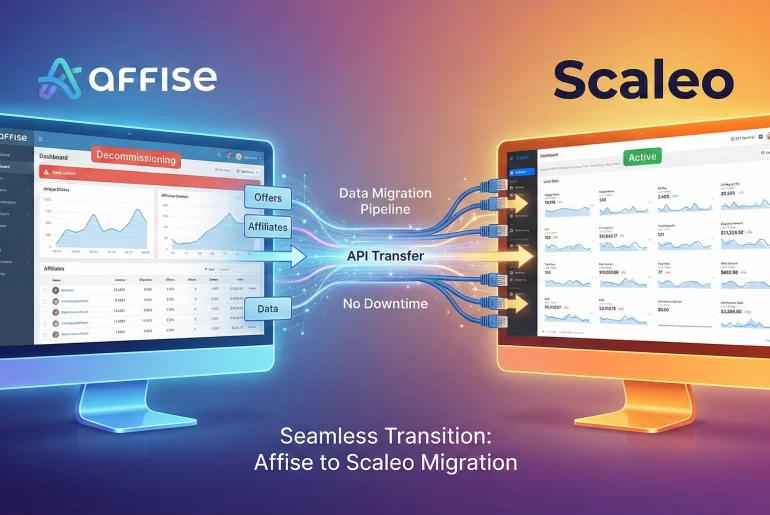
iGaming traffic does not rise gently. It hits in waves: kickoff weekends, playoffs, title fights, influencer pushes, GEO-specific promo bursts. And when it does, most affiliate platforms reveal what they really are. Some stay stable. Some become expensive apology machines. That is the real context behind the growing search for Affise alternatives and the reason more operators are shortlisting Scaleo. In iGaming, price matters. Features matter. But when traffic spikes, stability, payout clarity, and partner…

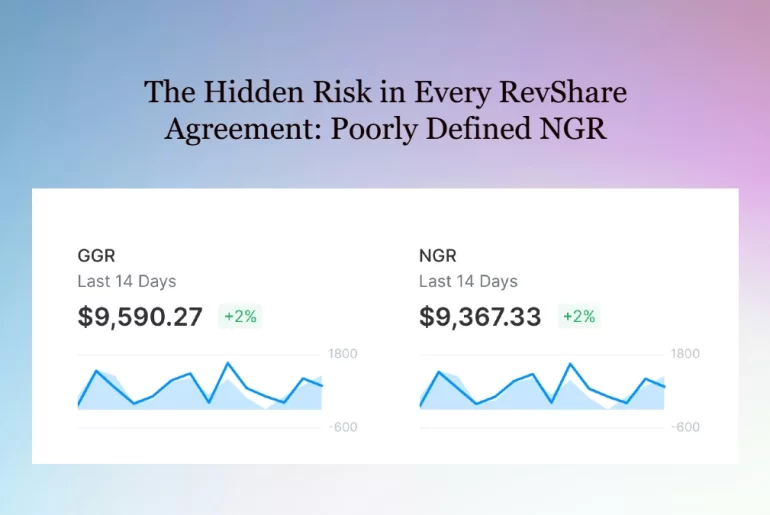
Your affiliate program generated €2.4M in Gross Gaming Revenue last month. You calculated Net Gaming Revenue at €1.3M after deductions and paid affiliates 35% RevShare: €455,000. Three of your top affiliates are now disputing their payouts. They claim you applied “hidden deductions.” Your finance team insists every deduction is legitimate. Your legal counsel reads the contract: “RevShare calculated on Net Gaming Revenue after standard operational costs.” That vague clause just cost you three affiliates and…

Your casino generated €2.4M in revenue last month. Your affiliate system says you owe €840K in commissions. Your finance team pulls the gaming platform’s revenue report and sees €2.1M. Your payment processor shows €2.6M in deposits. Which number is correct? All of them. And none of them. This is the reconciliation nightmare that costs casino operators real money—not because the systems are “broken,” but because nobody built a coherent framework for how affiliate data, platform…

Here’s the blunt truth, right up front, for the exec who only reads the first paragraph: A casino affiliate migration is successful only if the same player, triggering the same event, produces the same payout—bit-for-bit—before, during, and after the cutover. If you can’t prove that down to the individual player level, you didn’t migrate. You rolled the dice and hoped for the best. Everything below exists to enforce that invariant. We, the team behind Scaleo,…

Your finance team sends you a spreadsheet at month-end with a simple question: why did we pay affiliates €847,000 when the gaming platform shows €722,000 in attributed revenue? You don’t have a good answer. Your affiliate tracking system says one thing. Your iGaming platform says another thing. Your payment processor has a third number. Your CRM has player counts that don’t match any of them. And your BI dashboard? That’s pulling from all four sources…

Your affiliate partners are sending you qualified traffic and you’re not paying them for half the sales they generate. Not intentionally. You’re just using tracking technology that Safari’s Intelligent Tracking Prevention systematically destroys. Every time someone clicks an affiliate link in Safari, Apple makes a unilateral decision about which conversions your partners get credit for. The 30-day cookie window you promised in your program terms? ITP caps it at seven days. Sometimes twenty-four hours. We’ve…

Affiliate marketing in iGaming is supposed to be a clean trade: partners deliver customers, operators pay for measurable outcomes. The moment you’re paying on outcomes, you’ve created a financial incentive to fake outcomes. At small volume, that shows up as “one questionable affiliate.” At serious volume, it turns into an engineered system that manufactures traffic, steals attribution, impersonates brands, and launders credibility through platforms that search engines and users already trust. The scary part isn’t…

Flat CPA looks tidy on a spreadsheet. It is also the fastest way to subsidize bonus abusers and starve the partners who actually drive value. If you pay a uniform $150 per FTD, you will, by definition, overpay for minimum-deposit churn while underpaying for high-retention players. In 2016, that was the cost of doing business because data was messy and delayed. In 2026, it’s a choice—and an expensive one. The operators outperforming their cohorts are…