Malta didn’t become an iGaming hub by accident, and it didn’t stay one by coasting on history. What happened here was structural. Early regulation, deliberate policy choices, and a feedback loop between operators, regulators, and service providers turned a small jurisdiction into a control center for online gambling across Europe and beyond.
By 2026, the question is no longer why Malta matters. The better question is why it still does, while other jurisdictions cycle in and out of relevance.
The short answer: Malta optimized for operational clarity, not just licensing.

iGaming in Malta in a Nutshell…
| Keypoint | Details |
|---|---|
| Inception of Gaming Framework | Malta began its innovative gaming framework in 2004, placing it as a pioneer in the EU for regulating remote gaming. |
| Malta Gaming Authority (MGA) | Established as a flagship authority within the gaming industry, overseeing various gaming activities. |
| Remote Gaming Regulations | Initiated in 2004, these regulations positioned Malta as the first EU member state to regulate remote gaming. Updated by the Gaming Act in August 2018. |
| iGaming Industry Growth | Malta’s iGaming industry has experienced aggressive growth with expectations of continued momentum. |
| iGaming Activities | Includes poker, bingo, online casinos, lotteries, fixed-odds betting, fantasy sports. |
| Licensing Requirement | Online gaming companies in Malta require either a B2C gaming service license or a B2B critical gaming supply license from the MGA. |
| Types of Gaming Licenses | Four classes: Class 1 for online casinos, Class 2 for online betting, Class 3 for poker rooms and betting exchanges, Class 4 for software providers. |
| Gaming License Fees | B2C licensees pay €25,000 annually (€10,000 for Type 4 game suppliers). B2B licensees pay €25,000 to €35,000 based on revenue, with reduced fees for specific services. |
| Compliance Contribution for B2C | Ranges from €15,000 to €600,000, depending on the type of gaming service. One-year exemption for startups approved by the MGA. B2B licensees are exempt. |
| Corporate Tax Rate | Remote gaming operators are subject to a 35% corporate tax rate, with potential tax incentives. |
| Gaming Tax Rate | A 5% gaming tax is applied to gaming revenue generated from Malta-based players. |
| iGaming Events | Events like SiGMA are organized annually, attracting startups and international companies in the iGaming industry. SiGMA events are primarily held in St. Julian’s or Ta’ Qali (usually at the Malta Fairs and Conventions Centre). |
The Allure of Malta for iGaming Businesses
Malta isn’t just a dot on the map; it’s a giant in the iGaming world. But what exactly about this island makes it so irresistible to iGaming businesses, especially for astute business owners and casino operators?
Let’s have a look at some stats first, according to the Times of Malta, to get a rough estimation of what we are talking about:
| Aspect | Statistics/Facts | What you need to know? |
|---|---|---|
| Population | 500,000 | Malta has a population of approximately half a million, making its leadership in online gambling particularly impressive. |
| Global Online Gambling Market | $94.4 billion | Forecasted global market value by 2024, with Malta playing a key role. |
| Global Market Share | 10% | 10% of the world’s online gaming companies are registered in Malta. |
| Economic Contribution | 13.6% | Online gaming contributed 13.6% of Malta’s GDP in 2019, with a turnover of around $2 billion. |
| International Bandwidth Usage | 50% | Around 50% of Malta’s international bandwidth is dedicated to online gambling activities. |
| Double Taxation Treaties | 70 | Malta has around 70 double taxation treaties, offering significant tax relief to companies. |
| Corporate Tax | 5% | Effective corporate tax rate after refunds to shareholders when dividends are declared. |
| VAT Exemptions | Exempt without credit | Gaming services in Malta are exempt from VAT under the VAT Act, reducing the financial burden on operators. |
| Capital Gains & Dividend Exemptions | 10% equity threshold | Capital gains and dividend income are exempt from tax when a Maltese company holds at least 10% of equity in a subsidiary. |
| Job Creation | 2,500 jobs | The introduction of Remote Gaming Standards in 2008 created 2,500 jobs within one year. |
| Technological Advancements | AI, VR, Blockchain | Malta has integrated cutting-edge technologies to maintain a competitive edge in the global online gambling market. |
| Responsible Gambling | Player protection | Malta prioritizes responsible gambling practices, setting a global benchmark for player protection and ethical practices. |
| Challenges | Technological adaptation, fraud, reputation management | Malta faces ongoing challenges but sees them as opportunities to solidify its leadership position. |
| Future Prospects | Continued growth and innovation | Malta is expected to continue leading in regulatory advancements, technological innovations, and responsible gambling practices. |
Advantages of Running an iGaming Business from Malta
Let’s have a look at the advantages of operating an iGaming business from Malt, as opposed to other countries.
| Advantages in Malta | Comparison to Other Countries |
|---|---|
| Robust Regulatory Framework | Malta’s regulatory environment is more developed and stable compared to many countries, with clear guidelines from the Malta Gaming Authority (MGA). |
| Favorable Tax Regime | Malta offers competitive corporate tax rates and gaming taxes, often lower than other jurisdictions. |
| Strong Industry Reputation | Malta is recognized globally as a leading iGaming hub, which can lend credibility to businesses based there, unlike newer or less established jurisdictions. |
| EU Membership | As an EU member state, Malta provides access to European markets, which is not always the case with other non-EU jurisdictions. |
| Skilled Workforce | Malta has a growing pool of local and international talent specialized in iGaming, which may be more limited in other countries. |
| Advanced Technological Infrastructure | Malta boasts high-quality technological infrastructure, essential for iGaming operations, which might not be as advanced in other countries. |
| Multilingual Environment | English is an official language in Malta, facilitating international business, unlike some countries where language barriers can be an issue. |
| Networking Opportunities | The presence of numerous iGaming companies in Malta creates valuable networking and partnership opportunities, which might be less prevalent in countries with smaller iGaming industries. |
| Proactive Government Support | The Maltese government actively supports and promotes the iGaming industry, unlike some governments that may have restrictive policies. |
| Strategic Location | Malta’s location in the Mediterranean offers excellent connectivity to both Europe and Africa, which might not be the case with more geographically isolated countries. |
Setting Up Your iGaming Business in Malta
Malta was the first EU member state to regulate remote gaming in a serious, centralized way. That head start mattered, but the real advantage came later: iteration. The original Remote Gaming Regulations of 2004 evolved into the Gaming Act of 2018, which consolidated fragmented rules into a single framework that operators, suppliers, and regulators could actually work with.
By 2026, the Malta Gaming Authority (MGA) is no longer “innovative” in the flashy sense. It is predictable. That predictability is why serious operators stay.
Now that you’re aware of Malta’s benefits, the big question looms:
How do you set up your iGaming business in this promising locale?
The process is more straightforward than you might think. Here is a step-by-step guide that will help you cover the basics:
| Step | Description | Details |
|---|---|---|
| 1. Choose Your Business Structure | Decide whether to establish your company as a Limited Liability Company (LLC), a partnership, or another structure. | Most iGaming companies in Malta opt for a Limited Liability Company due to its flexibility and limited liability protection. |
| 2. Register Your Company | Register your company with the Malta Business Registry (MBR). | You can find more information and start the registration process on the Malta Business Registry website. |
| 3. Obtain an iGaming License | Apply for a license from the Malta Gaming Authority (MGA). | The MGA offers different types of licenses depending on your gaming operations. Visit the Malta Gaming Authority for detailed information and application procedures. |
| 4. Open a Bank Account | Open a bank account in Malta for your company. | This is necessary for handling transactions and meeting the financial requirements of the MGA. Several banks in Malta specialize in servicing iGaming companies. |
| 5. Appoint Key Officials | Appoint the necessary Key Officials such as the Director, Compliance Officer, and Money Laundering Reporting Officer (download MLRO). | These positions are required by the MGA to ensure compliance with legal and financial regulations. |
| 6. Prepare a Business Plan and Financial Forecast | Create a detailed business plan and financial forecast as part of your licensing application. | The business plan should include your target markets, marketing strategy, and financial projections for the next three years. |
| 7. Set Up Your Office in Malta | Establish a physical presence in Malta by setting up an office. | This is a requirement by the MGA, and it helps in maintaining a good relationship with Maltese authorities. |
| 8. Implement Technical and Operational Infrastructure | Set up your gaming platform, including software, servers, and security measures. | Your infrastructure must meet the technical requirements laid out by the MGA, including data protection and anti-fraud systems. |
| 9. Submit Your Application to the MGA | Complete the MGA license application, including all required documentation. | Submit your application through the MGA e-Services portal. The application process can take several months, so plan accordingly. |
| 10. Comply with Ongoing Regulatory Requirements | After receiving your license, comply with ongoing regulatory requirements, including regular audits and reporting. | Stay updated with any changes in regulations via the MGA website. Non-compliance can result in penalties or loss of your license. |
An MGA license doesn’t remove regulatory pressure. It makes that pressure legible.
The economics: why Malta still works on paper
Malta’s tax structure is often summarized poorly. The headline corporate tax rate is high, but the refund mechanism changes the outcome materially. For foreign-owned iGaming businesses that structure dividends correctly, the effective corporate tax rate can fall close to single digits, without aggressive planning.
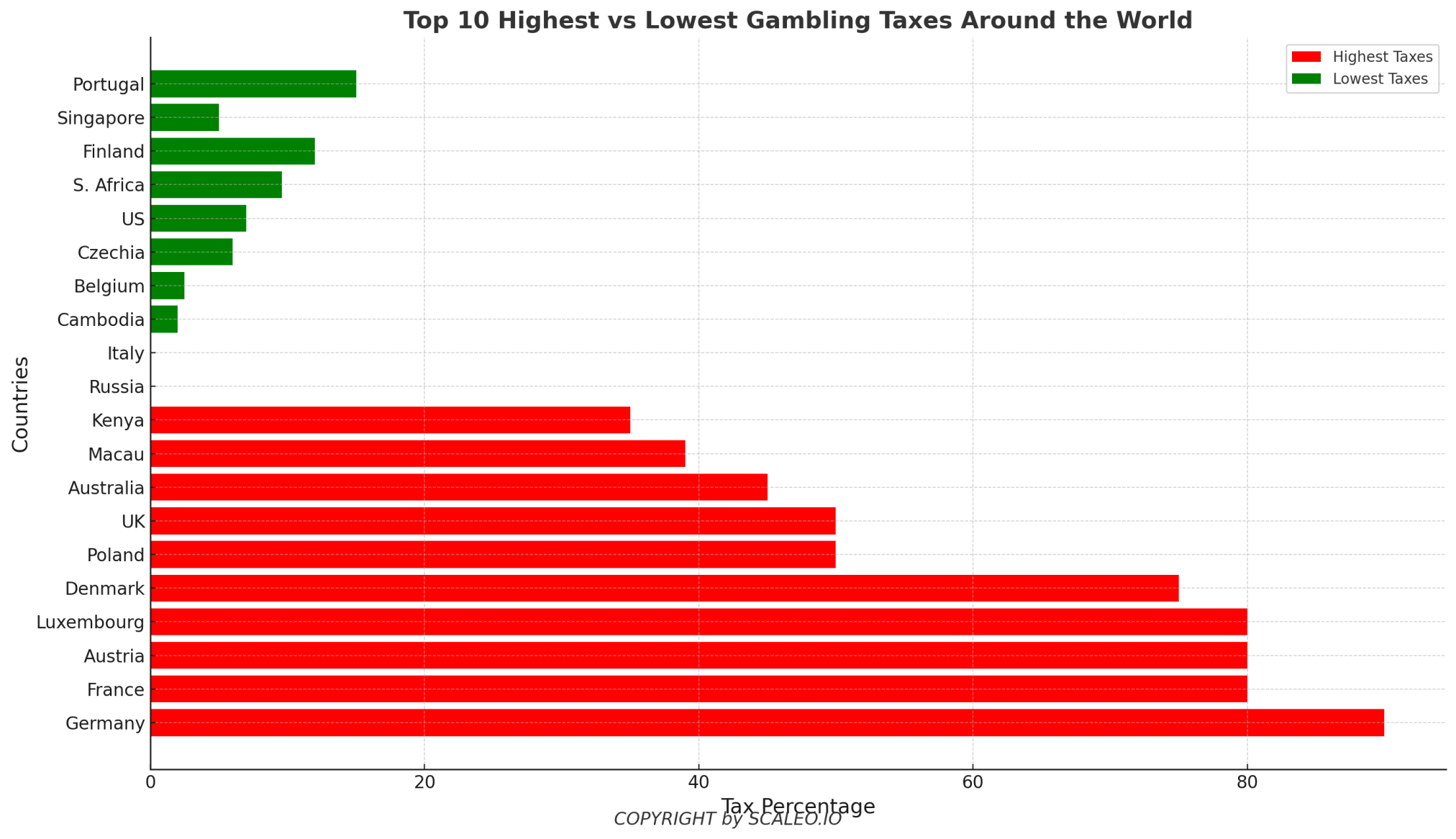
Add to that VAT treatment for gaming services and an unusually dense network of double-taxation treaties, and you get a jurisdiction that rewards planning rather than improvisation.
| Financial dimension | Malta reality |
|---|---|
| Headline corporate tax | 35% |
| Effective rate (after refunds) | ~5% for many structures |
| Gaming tax | 5% on Malta-sourced revenue |
| VAT on gaming services | Exempt without credit |
| Double taxation treaties | ~70 |
By 2026, these numbers are not “cheap.” They are stable. That distinction matters more.
Scale matters: how much iGaming Malta actually carries?
Malta’s population is roughly half a million. Its iGaming footprint is global.
| Indicator | Approximate scale |
|---|---|
| Share of global online gambling companies | ~10% |
| Contribution to Maltese GDP | ~12–14% |
| Share of international bandwidth usage | ~50% |
| Annual iGaming turnover | ~$2B+ |
This concentration creates gravity. Legal firms, payment providers, hosting companies, compliance specialists, and marketing platforms cluster where demand is constant. By 2026, Malta’s advantage is less about incentives and more about density.
Infrastructure isn’t optional in iGaming
Running an iGaming operation is infrastructure-heavy by default. Player data, payment flows, fraud signals, and reporting pipelines cannot tolerate downtime or ambiguity.
Malta invested early in connectivity, data centers, and redundancy. That investment aged well. Operators don’t choose Malta because it is fast. They choose it because it is boring in the right ways.
Downtime in gambling isn’t an inconvenience. It’s a liability.
The human layer: why talent keeps flowing in?
Malta’s labor market is small, but it’s specialized. By 2026, most senior iGaming professionals working in Malta are not local by origin. They are local by repetition.
English as an official language removes friction. EU mobility lowers hiring barriers. Universities and private programs feed compliance, legal, and operational roles that would otherwise be scarce.
For operators, this translates into shorter hiring cycles and fewer “learning by accident” mistakes.
Affiliate marketing and Malta: an underestimated link
Affiliate marketing did not grow because of Malta. It stabilized with Malta.
As paid media options narrowed and enforcement tightened across platforms, affiliates became the default acquisition channel for many operators. Malta’s regulatory clarity helped normalize affiliate relationships instead of pushing them into gray zones.
By 2026, affiliate marketing will represent a substantial share of acquisitions for Malta-licensed operators, not because it is cheap, but because it is accountable.
| Attribute | Why Malta helps |
|---|---|
| EU-grade data protection | Cleaner compliance posture |
| Licensing discipline | Less tolerance for abusive traffic |
| Reporting expectations | Fewer payout disputes |
| Ecosystem density | Faster partner vetting |
Affiliate programs in Malta tend to be stricter, slower to launch, and harder to exploit. That’s precisely why they last.
What types of iGaming companies cluster in Malta
Malta isn’t dominated by a single gambling vertical. The distribution matters.
| License class | Share |
|---|---|
| Casino games & lotteries | ~49% |
| Sports betting | ~36% |
| P2P, exchanges, bingo | ~12% |
| Software suppliers | ~3% |
This mix keeps the ecosystem balanced. Suppliers don’t dominate operators. Operators don’t dictate regulation. Each group depends on the others staying credible.
Setting up an iGaming business in Malta (the reality version)
The process is structured, not fast.
Most operators follow the same sequence:
- Choose structure and key officials
The MGA cares about accountability before technology. - Prepare licensing documentation
Business plan, forecasts, AML policies, system architecture. - Submit and wait
Approval timelines are measured in months, not weeks. - Implement infrastructure and reporting
Compliance starts before launch, not after.
| Phase | What usually slows teams down |
|---|---|
| Licensing | Incomplete documentation |
| Banking | Risk appetite mismatches |
| Payments | PSP onboarding delays |
| Compliance | Underestimating ongoing audits |
By 2026, Malta’s process is smoother than most alternatives. It is not forgiving.
Relocating an iGaming Business to Malta: When It Makes Sense (and When It Doesn’t)
By 2026, relocation to Malta is rarely driven by tax alone. Most operators who move are reacting to regulatory friction elsewhere: banking instability, affiliate restrictions, reputation drag, or increasing scrutiny from PSPs and counterparties.
Relocation typically happens in three scenarios.
First, operators originally licensed in light-touch jurisdictions hit a ceiling. Payments start failing. Larger affiliates become hesitant. Enterprise suppliers quietly deprioritize them. Nothing breaks outright, but growth slows for reasons that are hard to quantify. Malta becomes attractive because it removes these invisible constraints.
Second, multi-brand operators consolidate. Instead of managing fragmented licensing, compliance teams, and reporting standards across jurisdictions, they centralize around a regulator that counterparties already trust. Malta works well here because most PSPs, affiliate platforms, CRM providers, and analytics vendors already have established MGA workflows.
Third, affiliate-heavy operators relocate defensively. As enforcement around advertising, data handling, and player protection tightens, affiliates become more cautious about who they work with. An MGA license doesn’t guarantee traffic, but by 2026 it still signals operational seriousness. That signal matters when affiliates choose between otherwise similar offers.
Relocation is not trivial. It involves licensing, restructuring, potential player migration, and temporary revenue disruption. Operators who succeed treat relocation as an operational reset, not a cosmetic move.
Malta vs Other iGaming Jurisdictions (2026 Reality Check)
Below is a comparison operators actually care about in 2026. Not slogans. Outcomes.
| Jurisdiction | Regulatory Reputation | Banking & PSP Access | Affiliate Acceptance | Tax Predictability | Typical Use Case |
|---|---|---|---|---|---|
| Malta (MGA) | High, conservative | Strong, stable | High | High | EU-facing, long-term brands |
| Curaçao (post-2023 reforms) | Improving but uneven | Mixed | Medium–low | Medium | Cost-sensitive startups |
| Cyprus | Moderate, fragmented | Medium | Medium | Medium | Hybrid B2B / non-gaming ops |
| Estonia | High but strict | Strong | Medium | High | Regulated niche markets |
| Isle of Man | Very high | Strong | Medium | High | Premium, smaller-scale ops |
A few points that matter:
Malta is not the cheapest jurisdiction anymore. It is, however, one of the few where banking, affiliates, payment providers, and regulators align instead of contradicting each other.
Curaçao has improved substantially, but by 2026 it still carries a perception gap. That gap doesn’t show up in license fees; it shows up when PSP risk teams or top-tier affiliates quietly say no.
Cyprus works well for certain B2B or mixed-use structures, but its gaming oversight lacks the clarity operators expect at scale.
Estonia and the Isle of Man offer strong regulation, but with narrower use cases and less ecosystem density, especially on the affiliate side.
What Relocation Changes for Affiliate and Partner Marketing
Relocating to Malta does not magically increase affiliate volume. What it does is reduce friction.
Affiliates operating at scale care about three things by 2026:
attribution reliability, payout consistency, and regulatory survivability.
An MGA-based operation makes it easier to enforce clear affiliate terms, reject abusive traffic without argument, and integrate with professional tracking platforms that affiliates already trust. Disputes become operational, not emotional.

This is also where technology choices matter. Affiliate platforms like Scaleo fit naturally into Malta-based setups because they mirror the regulator’s expectations: auditable player journeys, rule-based payouts, fraud prevention, and clean historical data. For relocating operators, this reduces one of the biggest risks — losing affiliate confidence during transition.
A Practical Warning for Operators Considering Relocation
Relocation works best when it’s proactive.
Operators who move before payment issues, affiliate distrust, or regulatory pressure become visible preserve optionality. Those who move reactively often spend the first year rebuilding credibility they didn’t realize they had lost.
Malta rewards preparation. It punishes improvisation.
Where affiliate technology fits into this picture
Affiliate marketing in a regulated jurisdiction cannot run on ad-hoc tools. Attribution disputes, delayed reporting, and opaque payouts become regulatory issues faster than many teams expect.
This is where platforms like Scaleo slot naturally into Malta-based operations. Not as a growth toy, but as an enforcement layer. Attribution rules are applied consistently. Player journeys remain auditable. Fraud signals are captured early. Affiliate payouts reconcile cleanly with operator revenue.
In a jurisdiction that values traceability, that matters more than feature breadth.
Conclusion
Malta remains relevant in 2026 because it optimizes for durability, not shortcuts. Relocating there is less about tax arbitrage and more about aligning your operation with how the industry actually functions at scale — regulated, audited, and partner-driven.
For affiliate-heavy businesses, that alignment matters disproportionately. Clear rules, defensible attribution, and infrastructure that survives scrutiny turn partner marketing into a controllable channel rather than a reputational risk.
This is why Malta-based operators increasingly pair jurisdictional clarity with systems like Scaleo — not to grow faster at any cost, but to grow without losing control. When affiliates, regulators, finance teams, and operators can all read from the same data, growth stops being fragile.