
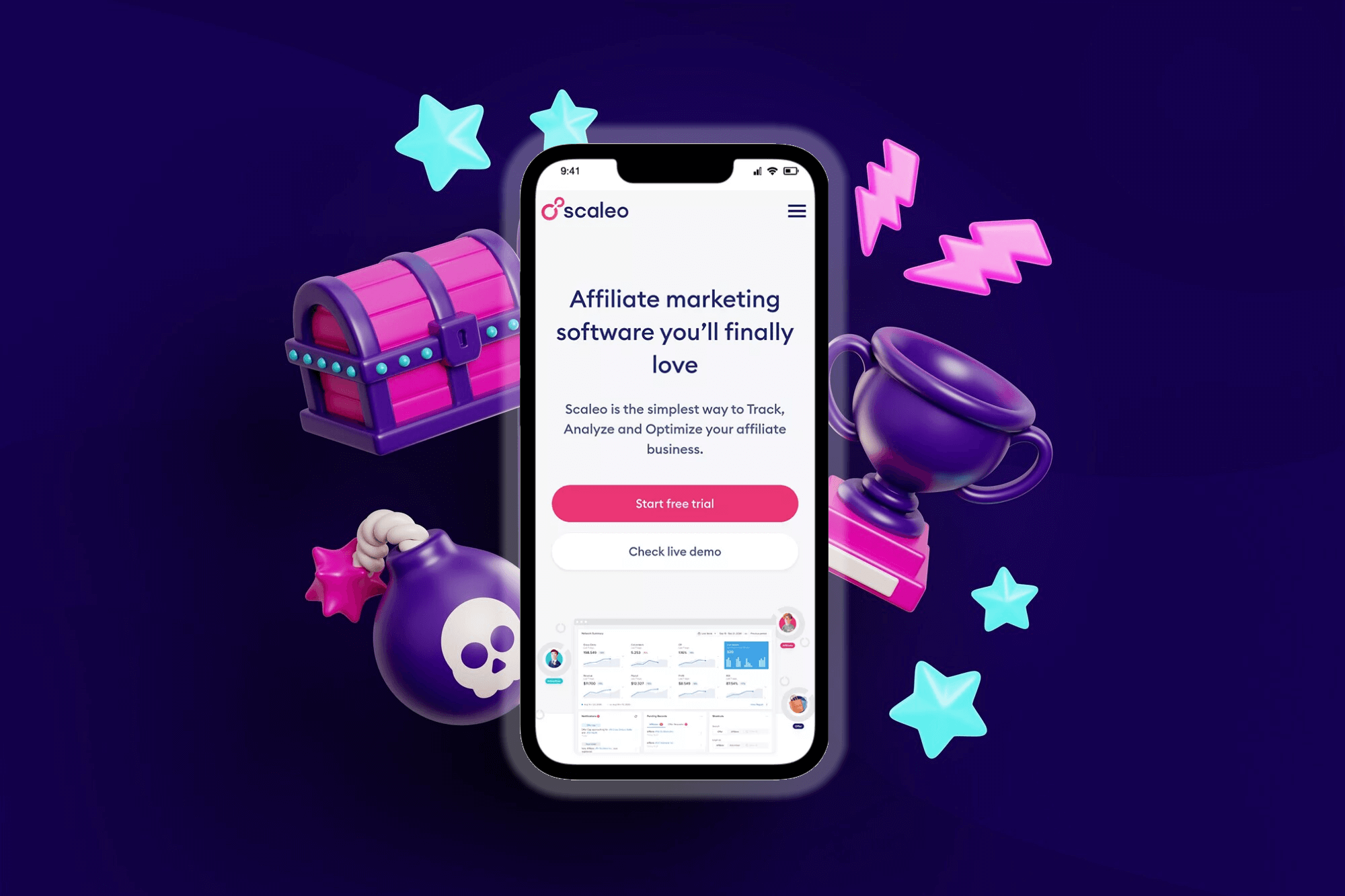
Speed wins attention; clarity wins trust; continuity wins revenue. In iGaming affiliate platforms, UX is no longer decoration—it’s the conversion engine partners and operators share. If your interface doesn’t make it effortless for publishers to find offers, launch creatives, wire tracking, and read truth they can act on, you’ll bleed top partners to whoever ships a calmer, faster workspace.

Below is a pragmatic, design-first playbook for 2026 that treats UX as a profit lever, not a paint job.
1. Offer discovery that behaves like a trading terminal
Search-and-scroll is dead weight when you manage dozens of GEOs and verticals. Affiliates need an offer desk that filters by country, license status, device, funnel type, and payout model in a single motion with instant results. Include saved views, quick pins, and keyboard navigation so power users never touch the mouse.
Publish eligibility and validation rules inline, not in PDFs. If an offer is geo-blocked or capped, the UI should say so before the click.
2. One-link orchestration with deep-link clarity
Smart links should be visible, testable, and human-readable. Show a compact builder that exposes:
- destination rules by platform and GEO
- deferred deep-link parameters for app store hops
- partner signature and consent flags traveling with the click
Add a “simulate route” button that previews where traffic will land from a given device and location. When links are predictable, support tickets drop and creators move faster.
3. Copy blocks and creatives where partners actually work
Affiliates don’t want a file dump. They want a creative rack that:
- renders mobile and desktop previews in real time
- locks jurisdictional variants by role and GEO
- exposes localized copy blocks and captions ready for Shorts, Reels, Telegram, and in-app browsers
- tracks which asset a partner pulled and when
If an asset violates a region’s rules, it simply doesn’t render in that partner’s view. Speed with brakes is a UX pattern, not a legal memo.
4. Reporting you can read in sixty seconds
Dashboards should talk like a manager, not a database. Start with a narrative header: what moved, why it matters, and one actionable suggestion.
Follow with tiles for FTDs, validated CPA, RevShare, refund rate, bonus cost per NGR, and D7/D30 retention—segmentable by offer, GEO, device, and placement type. Make every number clickable to a detail table that’s exportable and idempotent. If an affiliate or CMO cannot learn something in under a minute, the page is ornamental.
5. Reason-coded holds and evidence at arm’s length
Nothing destroys trust like silent reversals. When you flag fraud or quality issues, ship a hold card that includes:
- the rule or model that fired
- cluster scope (not the whole account)
- summarized evidence (ASN overlaps, device graphs, abnormal velocity)
- a clear, dated path to review
Design for de-escalation: human language, tight summaries, and a button to request a recheck. UX can lower heat without lowering standards.
6. Mobile-first partner workspace
Discovery happens on phones; so does a lot of work. Build a compact mobile UI with:
- fast offer filters and pinning
- link build, copy, and share in two taps
- creative previews that fit vertical video
- push-safe weekly summaries for busy partners
No modal hell, no hidden actions. Keep taps under three to build, test, and ship.
7. Consent-aware by design
TCF 2.2 and age eligibility can’t be bolted on.
Treat consent as a first-class object:
- show consent state on each click and conversion
- degrade postbacks visibly when consent is partial
- log the chain of custody in the same timeline partners see
When privacy is legible, audits are boring and partners adjust rather than argue.
8. Progressive disclosure for complex tasks
Not every user needs every switch. Use progressive disclosure to keep novices safe and power users fast:
- basic view: paste link, pick GEO, download creative
- advanced view: add deep-link payloads, choose attribution windows, override landing paths where allowed
Remember the principle: fewer choices up front, all choices for those who ask.
9. Latency budgets for live sport use cases
For in-play content and odds-led promos, the UI must respect a latency budget.
Tiles that surface live markets, SGP templates, or cash-out signals need to update under a few hundred milliseconds or they should fall back gracefully. Stale odds are worse than no odds. UX should show “live-ready” status so creators don’t post a dead hook.
10. Explainability stitched into every decision
Automation without explanation breeds suspicion. Pair scores with reason codes:
- Why is a payout window what it is?
- Why did the tier move?
- Why is an asset restricted?
- Why was a postback masked?
Place explanations one click away from the number. If finance and partners can replay the month to the cent, the interface has done its job.
UX checklist table for affiliate platforms
| UX element | Job to be done | Success metric | Failure pattern |
|---|---|---|---|
| Offer desk | Find the right offer in seconds | Time to first eligible click | Endless scroll, hidden rules |
| Link builder | Create a route that survives app hops | Test pass rate across devices | Broken parameters, mystery redirects |
| Creative rack | Ship compliant assets fast | Time to publish, per GEO | PDF dumps, outdated files |
| Narrative reporting | Make decisions in a minute | Weekly repeat logins, lower tickets | Vanity charts, dashboard theater |
| Hold cards | Resolve disputes calmly | Reversal time, partner satisfaction | Silent holds, vague messages |
| Mobile workspace | Work anywhere | Mobile session completion | Desktop-only controls |
| Consent visibility | Keep privacy clean | Lower audit time | Black-box postbacks |
| Progressive disclosure | Keep both novice and pro productive | Fewer misconfigurations | Option overload |
| Live latency | Avoid stale odds | Error rate during live windows | Out-of-date components |
| Explainability | Build durable trust | Fewer disputes per 1k conversions | “Because the system said so” replies |
Mobile web vs app UX priorities
| Surface | Critical UX focus | Practical tip |
|---|---|---|
| Mobile web | Pre-lander speed, clarity, app-aware routes | Show permitted GEO and bonus truth in first fold |
| Native app | Deep-link landing, onboarding, payment clarity | Intro screen explains value before registration |
| In-app browsers | Parameter survival, consent prompts | First-party redirects, short clean URLs |
Design systems that scale with fewer designers
Codify tokens for spacing, color, typography, and feedback states; ship components for tables, drawers, chips, and cards; enforce accessibility from day one. With a strong design system, you can ship features faster, keep accessibility intact, and resist one-off chaos every new GEO brings. Document patterns next to components so engineers never guess.
Accessibility that pays back
Accessible UIs are faster to parse, easier to automate, and better on small screens.
Use high-contrast text, obvious focus states, voice-friendly labels, and error messages that tell users what to do next. For partners working late or on the go, these “small” details decide whether a campaign ships tonight or slips.
Research loops that don’t stall shipping
Create lightweight feedback loops inside the product:
- a two-question pulse at logout
- a contextual “Was this helpful?” on complex pages
- a monthly 15-minute panel with top partners
Feed insights into a public changelog. UX is a habit; the interface should signal progress without a pitch deck.
iGaming affiliate marketing and platform fit
Affiliate programs in iGaming live and die on event-level truth, partner trust, and compliance that moves at production speed. A platform built for this industry should:
- Carry partner context across web, in-app browsers, app stores, and desktop with server-to-server tracking and deferred deep linking
- Make economics executable—hybrid CPA-RevShare baselines, LTV-aware bands, and temporary boosts that automatically revert with caps
- Render consent and age eligibility visible inside the same timeline that shows clicks, registrations, deposits, and holds
- Expose evidence when risk controls fire so partners can fix supply rather than debate it
- Gate creatives and landing variants by jurisdiction and partner class so non-compliant assets never ship
Scaleo is engineered around that spine. The interface treats offers like an order book, links like routes you can simulate, creatives like programmable blocks bound by GEO rules, and reporting like a weekly brief you can act on.
![10 Game-Changing UX Design Tactics for iGaming Affiliate Platforms [2026-Ready Update] -](https://www.scaleo.io/blog/wp-content/uploads/2025/04/scaleo-trust-affiliate-software-for-casino-websites.webp "10 Game-Changing UX Design Tactics for iGaming Affiliate Platforms [2026-Ready Update] -")
Because attribution is versioned with shadow mode, partners see what will change before it changes. Because postbacks are consent-aware, privacy isn’t a guessing game. Because fraud holds are reason-coded, conversations stay productive. It’s an iGaming workspace where affiliate marketing feels less like juggling tabs and more like running a desk.
What this unlocks for B2B teams
- Affiliate managers move from inbox firefighting to portfolio steering.
- Creators and publishers stop waiting for answers and start optimizing placements that pay.
- CRM runs partner-aware journeys without cannibalizing validation windows.
- Finance signs off faster because payouts reconcile to the cent on replay.
- Legal sleeps because compliance is code, not a checklist.
Conclusion
UX is not the frosting on top of your affiliate stack; it’s the heat sink that lets the whole machine run hotter without melting. When partners can find, launch, measure, and get paid inside a calm, explainable interface, they lean in. And when they lean in, your distribution compounds.
If this is the operating rhythm you want—faster offer launches, cleaner tracking, explainable payouts, and partners who scale with you—set up a conversation with the team and see the workspace in action. You can spin up a sandbox, wire a test offer, and watch how Scaleo’s iGaming-native UX turns complexity into throughput.
Crafting a top-notch UX in iGaming affiliate platforms isn’t just a luxury—it’s a necessity. With a streamlined, mobile-friendly, and responsive experience, you’re positioning your platform as a leader in the field.
Ready to elevate your platform’s UX?
Scaleo provides everything you need, from real-time data transparency to customizable roles and alerts. Try Scaleo and watch your platform become the affiliate’s first choice.