

In 2026, online casino marketing strategy isn’t about “more affiliates” — it’s about clean attribution, fraud resistance, and repeatable partner ROI. Gambling affiliate marketing works when you treat it like infrastructure: every click has an ID, every conversion is validated server-side, and every partner gets paid on rules that survive audits and disputes. Affiliate marketing for online casinos is simply pay-for-performance distribution — but the “performance” part only holds if tracking, compliance, and traffic quality controls are real.
If you’re an operator/CEO/Head of affiliates, your real enemy is measurement decay: browsers restrict identifiers, ad platforms blur data, and bad actors get better at laundering fake value. So your online casino marketing strategy has to be built around instrumentation (what to track), validation (what counts), and governance (what you’ll reject).

Use casino affiliate software like Scaleo to run online casino affiliate marketing like an ops function: consistent tracking domains, clear attribution rules, automated approvals, and fraud controls that reduce “he said / she said” payout disputes.
This post breaks down 20 operator-grade tactics for gambling affiliate marketing and online casino marketing strategy in 2026 — focused on what survives real-world traffic, compliance, and finance scrutiny.
20 Affiliate Marketing Strategies for Online Casinos in 2026
The list below is useful, but don’t treat it as a buffet. Pick strategies that match your operating reality: license restrictions, payment rails, geo mix, and how strict your finance team is on conversion validation.
| Strategy | How to implement it? |
|---|---|
| 1. Utilizing AI for Personalized Marketing | Use AI to personalize offers and messaging based on verified behavior (not just clicks). Tie segments to postback-confirmed events and player value signals. |
| 2. Implementing Dynamic Content Strategies | Serve geo- and segment-specific landing pages (KYC rules, payment methods, bonuses) and rotate creatives based on conversion rate by source. |
| 3. Maximizing SEO for Enhanced Visibility | Build pages that answer operator-grade questions (tracking, compliance, payments, retention). Optimize for long-tail “how-to” queries and internal-link to product/docs. |
| 4. Optimizing for Voice Search | Target conversational queries and FAQs that map to legal/geo intent. Use clear definitions and short frameworks that can win AI snippets. |
| 5. Harnessing Micro-Influencers | Run influencer deals like affiliates: unique tracking links, coupon/promo code mapping, and postback validation to stop “vanity reach” from eating budget. |
| 6. Mobile Optimization | Reduce mobile drop-off: fast pages, clean signup funnel, and deep links into app/web. Track each step (click → registration → KYC → first deposit). |
| 7. Implementing Gamification Strategies | Use quests, streaks, and milestone rewards tied to responsible play rules. Measure lift by cohort retention, not just first-time deposit. |
| 8. The Impact of Interactive Content | Use quizzes, odds explainers, bonus calculators, and localized “payment method match” flows. Instrument completion rate and conversion by source. |
| 9. Focusing On Trust Through Educational Content Creation | Publish compliance-safe guides (KYC, withdrawals, RTP basics). Trust is a conversion lever in regulated markets — and a refund/dispute reducer. |
| 10. Optimizing Emails For Conversions + Engagement | Trigger emails from verified events (registration, KYC complete, deposit failed). Don’t blast; orchestrate sequences by player state. |
| 11. Segmenting Email Lists For Better Results | Segment by geo, device, payment method, and lifecycle stage. Measure by retained NGR/ARPU uplift, not opens. |
| 12. Automating Email Sequences For Convenience | Automate onboarding + reactivation flows. Add guardrails to avoid reactivating self-excluded or restricted segments. |
| 13. Leveraging Social Proof | Use proof that doesn’t create compliance headaches: licensed jurisdiction badges, responsible gambling resources, payment method trust signals. |
| 14. Partnering with Content Creators | Use performance terms (CPA/RevShare/Hybrid) with strict definitions and audit-friendly conversion rules. Require traffic source transparency. |
| 15. Utilizing Data Analytics | Build a reporting model that answers: which partner drove verified value, in which geo, with which retention curve, at what fraud risk score. |
| 16. Offering Exclusive Promotions | Run exclusives with caps and validation (promo code + click ID mapping). Kill any deal where the numbers can’t be reconciled. |
| 17. Creating Engaging Video Content | Focus on “how it works” videos: withdrawals, KYC flow, game walkthroughs, responsible gambling tools. Track assisted conversions by cohort. |
| 18. Hosting Webinars and Live Events | Make it operator-relevant: compliance updates, payments performance by region, bonus abuse patterns, attribution troubleshooting. |
| 19. Partnering with Affiliate Networks | Use networks to scale discovery, but keep direct governance: traffic quality rules, sub-affiliate transparency, and deduplication policies. |
| 20. A/B Testing Landing Pages and CTAs | Test one variable at a time and evaluate on verified events (KYC, deposit, retained value). A/B testing on clicks is how you optimize yourself into fraud. |
Leveraging Data Analytics for Targeted Campaigns
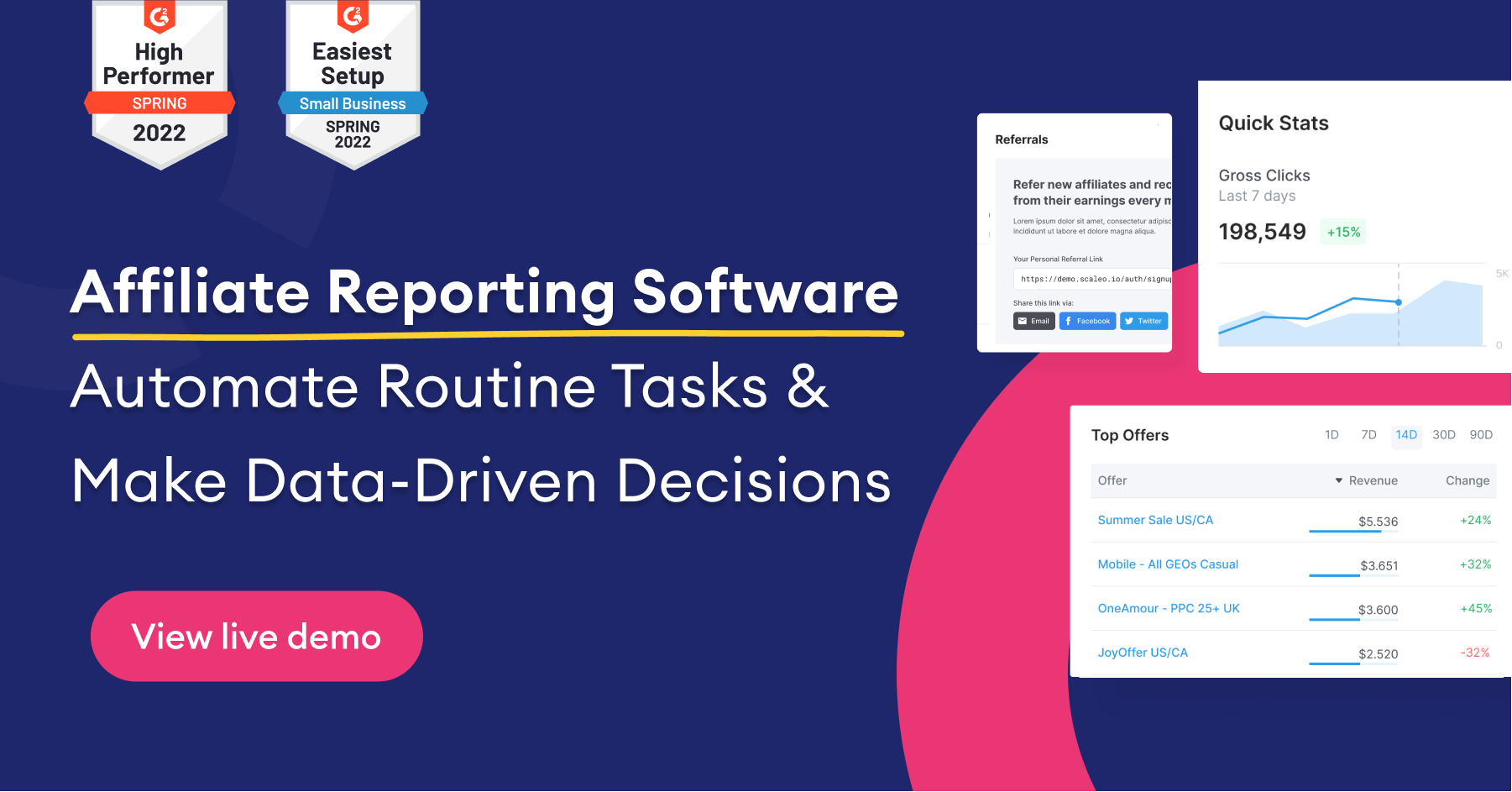
Data analytics matters because affiliate growth breaks the moment your numbers stop agreeing across systems (casino backend vs affiliate platform vs CRM). Casino operators get the fastest lift by tracking the full chain: click → registration → KYC → first deposit → retained value, with server-side validation where possible. :contentReference[oaicite:2]{index=2}
Below are the two tactics that usually move the needle fastest for operators, because they turn “marketing” into measurable ops.
Utilizing AI for Personalized Marketing
AI personalization only works if your input data is clean. Tie “personalization” to verified events (KYC pass, deposit success, game preference after X sessions), then tailor offers by player segment and geo rules. Integrated with affiliate software such as Scaleo, this becomes measurable: which segment increased retention, and which one just created bonus abuse.
This is how you grow customer lifetime value (CLV) without handing out expensive incentives to low-quality cohorts.
Implementing Dynamic Content Strategies
Dynamic content should reflect reality: different geos convert on different payment methods, different KYC steps, and different bonus structures. Build landing variants for new players, high-value cohorts, and reactivations — then route traffic based on source + geo + device.
Operators usually see better conversion when the page answers the “friction questions” upfront (withdrawal speed, KYC time, local payment methods), not when it screams about bonuses.
Maximizing SEO for Enhanced Visibility
SEO in iGaming is less about cramming keywords and more about building authority around topics operators and affiliate managers actually search for: attribution reliability, fraud prevention, payout disputes, retention mechanics, and geo compliance. That’s how you win organic visibility without attracting junk traffic.
Optimizing for Voice Search
Voice search queries skew toward questions (“best casino bonus in X”, “how to withdraw in Y”), which means your content must be structured and explicit. Create short definitions, clear steps, and FAQ-style sections so search engines (and AI answers) can lift the right snippet without misrepresenting your offer.
If you’re serious about 2026-proofing your online casino marketing strategy, optimize for “question intent” and link internally to deeper operational guides.
Harnessing Micro-Influencers
Micro-influencers convert when you run them like affiliates, not like celebrities. Give them trackable assets, cap the offer, validate conversions server-side, and review traffic quality. Otherwise you’re buying vibes — and finance will hate you.
Affiliate software helps here because you can isolate performance by creator, by geo, and by funnel step (not just “clicks”).
Mobile Optimization
Mobile is where attribution breaks first and conversion friction is highest. Tighten the funnel: fast page load, minimal fields, clear KYC expectations, and payment method availability by geo. Then measure where the drop actually happens (registration vs KYC vs deposit).
Implementing Gamification Strategies
Gamification works when it drives retention, not when it manufactures short-term “activity.” Tie rewards to responsible behaviors and long-term value markers, and watch for abuse patterns (multi-accounting, bonus cycling).
The Impact of Interactive Content
Interactive content is a conversion assistant disguised as content. Quizzes, bonus calculators, and “payment method finders” reduce uncertainty and increase trust — especially in regulated markets where players are cautious.
Focusing On Trust Through Educational Content Creation
Educational content isn’t charity — it’s risk reduction. Clear guides on odds, RTP basics, withdrawal expectations, and responsible gambling tools reduce churn, chargebacks, and support load, while improving brand credibility.
The best way to build trust at scale is consistent content marketing that matches your geo and license reality.
Optimizing Emails For Conversions and Engagement
Email still prints money in iGaming — but only when it’s triggered from real events and segmented properly. Build sequences for registration, KYC completion, deposit failures, and churn risk. Measure the outcome in deposits and retained value, not vanity metrics.
| Operator email lever | How it drives revenue |
|---|---|
| Segment lists by player state | Send different flows to “registered but not KYC,” “KYC passed but no deposit,” “deposit failed,” and “active but declining.” This avoids spam fatigue and improves conversion. |
| Automate sequences with guardrails | Prebuild onboarding + reactivation sequences, but exclude restricted/self-excluded segments and enforce geo + compliance rules to avoid expensive mistakes. |
If you’re using Scaleo’s mailroom workflows, treat them like ops automation: define triggers, define exclusions, and validate results in reporting (conversion rate by step, cohort retention, and payout accuracy).
Why affiliate marketing stays profitable when other channels don’t
The core advantage of affiliate marketing in gambling is not cost. It’s auditability.
Every meaningful action can be recorded, reconciled, and revisited later. That matters more as privacy restrictions tighten and external ad platforms become opaque.
| Metric operators actually care about | Why it matters in 2026 |
|---|---|
| Effective CPA | True cost after bonuses and reversals |
| Payback period | Cashflow predictability |
| NGR per partner | Quality over volume |
| Reversal rate | Fraud and incentive abuse signal |
Affiliate commissions look expensive until you compare them to untraceable spend. In an environment where attribution certainty is rare, channels that can still be audited retain value.
Traffic sources going into 2026: stability beats novelty
Affiliate traffic didn’t evolve toward new platforms. It evolved toward resilient funnels.
Platforms come and go. Funnels persist.
| Source | Why it still matters | Structural weakness |
|---|---|---|
| SEO-driven content | High intent, durable | Saturation, slow iteration |
| Social traffic | Speed, reach | Enforcement volatility |
| Apps | Retention control | Store compliance risk |
| Streaming | Trust transfer | Inconsistent conversion |
Operators who depend on a single source eventually get punished. Operators who instrument behavior across sources survive. The question is no longer “where does traffic come from,” but “can we prove what it does over time.”
What Breaks in Real Life?
Most operator affiliate programs don’t “fail,” they quietly bleed: attribution windows don’t match reality, promo codes get shared outside the intended source, sub-affiliates run unapproved traffic, and fraud slips through because nobody checks anomalies until the payout dispute lands.
What to Instrument
| Funnel checkpoint | What to track | Why it matters for operators |
|---|---|---|
| Click | Click ID, source, geo, device, landing variant | Gives you a defensible origin story when traffic quality is questioned. |
| Registration | Registration timestamp + deduplication rules | Stops double-counting and “registration farming.” |
| KYC | KYC status + time-to-verify | KYC friction is often the real reason a “good affiliate” looks bad. |
| First deposit | Deposit success/failure reason + payment method | Payment rails can tank conversion even when traffic is fine. |
| Value | NGR/ARPU/retention by cohort | Prevents overpaying on CPA for players who never retain. |
| Risk | Fraud signals (IP/device anomalies, velocity, patterns) | Stops paying for manipulated conversions. |
How to Validate in Reporting?
Validation means your affiliate platform reports can be reconciled with your casino backend and finance rules. If those numbers can’t be aligned, you don’t have “growth” — you have future disputes.
| Validation check | What you’re looking for | Action when it fails |
|---|---|---|
| Event matching | Postback-confirmed conversions match backend events | Fix integration or adjust event definition before scaling spend. |
| Deduplication | No double-credit across partners or channels | Define precedence rules (last click, first click, assisted) and enforce them. |
| Promo code leakage | Promo usage aligns with intended source | Restrict codes, rotate, or switch to click ID mapping. |
| Anomaly detection | Spikes in conversion rate, weird geo/device mix | Quarantine traffic, require source disclosure, tighten approvals. |
Pro-Tip (technical): If you allow promo codes for attribution, treat them as a secondary signal — not the source of truth. Use click IDs + postbacks as primary attribution, then reconcile promo code usage as an audit layer to catch leakage and coupon site cannibalization.
Online Casino Marketing Strategy in 2026: The Operator Funnel That Actually Matters
Most “online casino marketing strategy” advice skips the part that determines profit: where players fall out of the funnel. In 2026 you should measure and optimize six checkpoints: click → registration → KYC passed → first deposit → day-7 activity → net gaming revenue (NGR). If you only optimize clicks or registrations, you’ll scale the wrong partners and the wrong offers.
| Funnel step | Operator KPI | What usually breaks |
|---|---|---|
| Registration | Reg CVR | Landing mismatch, geo/payment confusion |
| KYC | KYC pass rate + time-to-verify | Document friction, vendor latency, unclear requirements |
| Deposit | FTD rate + deposit success rate | Payment method availability, issuer declines, UX |
| Retention | D7/D30 retention | Bonus abuse, weak CRM, irrelevant offers |
| Value | NGR, ARPU, payback period | Overpaying on CPA, low-quality cohorts |
Gambling Affiliate Marketing: Commission Models Operators Actually Use
Searchers looking for “gambling affiliate marketing” usually want the business mechanics: how you pay partners, why, and what can go wrong. Your commission model should match your risk tolerance and your fraud exposure.
| Model | Best for | Operator risk | What to require |
|---|---|---|---|
| CPA | Fast scale, predictable CAC | FTD fraud, low retention | KYC + deposit validation, traffic source disclosure |
| RevShare | Long-term value, aligned incentives | Partner churn, reporting disputes | Clear NGR definition, negative carryover rules, audit rights |
| Hybrid | Balanced growth + retention | Complex reconciliation | Transparent formulas, reporting consistency across systems |
| Tiered | Performance incentives | Gaming the tiers | Quality gates (retention/KYC), caps and review periods |
Operator rule of thumb: if your fraud exposure is high, reduce the “instant payout” surface area (CPA) and add quality gates (KYC/retention thresholds) before partners unlock higher rates.
Traffic Quality and Fraud: The 2026 Reality Check
Affiliate growth dies when fraud and low-quality traffic become “normal.” In 2026, you need a written definition of what counts as a valid conversion, plus automated flags that quarantine suspicious sources before payout time.
| Risk pattern | What it looks like | Operator action |
|---|---|---|
| FTD farming | High registrations, low KYC/deposit quality | Switch to qualified CPA (KYC+FTD), tighten approvals |
| Incent traffic abuse | Short sessions, repeated bonus behaviors | Cap bonuses, segment offers, exclude sources |
| Geo laundering | Traffic “from allowed geo” but devices/IP patterns disagree | Enforce geo rules, verify signals, pause partner |
| Promo code leakage | Code used outside intended channel | Rotate codes, map to click IDs, restrict redemption rules |
Attribution and Tracking Setup Operators Should Demand
“Affiliate marketing” is basically attribution. If attribution is weak, you will overpay, underpay, and fight. In 2026 your baseline should include server-to-server (postback) tracking, deduplication rules, and event definitions everyone agrees on (affiliate team, BI, finance, compliance).
- Define events: registration, KYC approved, first deposit, qualified FTD, net deposit, chargeback/reversal.
- Define attribution: last-click vs assisted, cross-device rules, attribution window.
- Define dedup: what happens when PPC, SEO, and affiliates touch the same player.
- Define reversals: fraud, chargebacks, self-exclusion, bonus abuse, duplicate accounts.
Budgeting an Online Casino Marketing Strategy: CAC vs Payback (Operator View)
Operators don’t need “more traffic.” They need payback discipline. A marketing channel is healthy when you can explain: CAC → expected NGR → payback period, by geo and by partner type.
| Metric | What it tells you | How to use it |
|---|---|---|
| CAC (by partner/geo) | Cost to acquire a depositor | Cut sources where CAC rises but retention doesn’t |
| Payback period | How fast you recover CAC | Set caps on CPA based on acceptable payback |
| D7/D30 retention | Player quality early signal | Use as a quality gate for higher commissions |
| NGR per cohort | True value after bonuses/fees | Move partners to RevShare/Hybrid if quality is strong |
Compliance and Responsible Gambling: What You Can (and Can’t) Do With Affiliates?
Regulated iGaming punishes sloppy affiliate programs. Your partners need clear rules on claims, targeting, and creatives — and you need enforcement. The goal isn’t to be “nice.” It’s to avoid fines, license risk, and reputational damage.
- Creative approvals: pre-approve landing pages, ad copy, bonus claims, and geo targeting.
- Audience restrictions: enforce age gating and prohibited segments by jurisdiction.
- Responsible gambling messaging: require consistent RG disclosures where applicable.
- Audit trail: keep partner comms, approvals, and change logs in one place.
Recruiting affiliates in 2026: what actually attracts serious partners
By 2026, top affiliates are not impressed by commission percentages. They’ve seen every number.
They look for:
- consistent attribution
- predictable payout cycles
- clean historical reporting
- dispute resolution backed by logs
Conferences still matter. Outreach still matters. But partners choose programs that feel operationally boring. Boring scales.
Technology’s real role (beyond feature lists)
Affiliate marketing in gambling doesn’t collapse because of strategy. It collapses because enforcement drifts.
Tracking gaps, delayed reporting, manual corrections, and weak fraud controls compound slowly. By the time someone notices, margins are already gone.
This is where platforms like Scaleo operate. Not as a growth lever, but as an enforcement layer. Attribution rules are encoded. Player journeys are tracked end-to-end. Fraud signals are surfaced early. Payout logic is applied consistently across partners and GEOs.
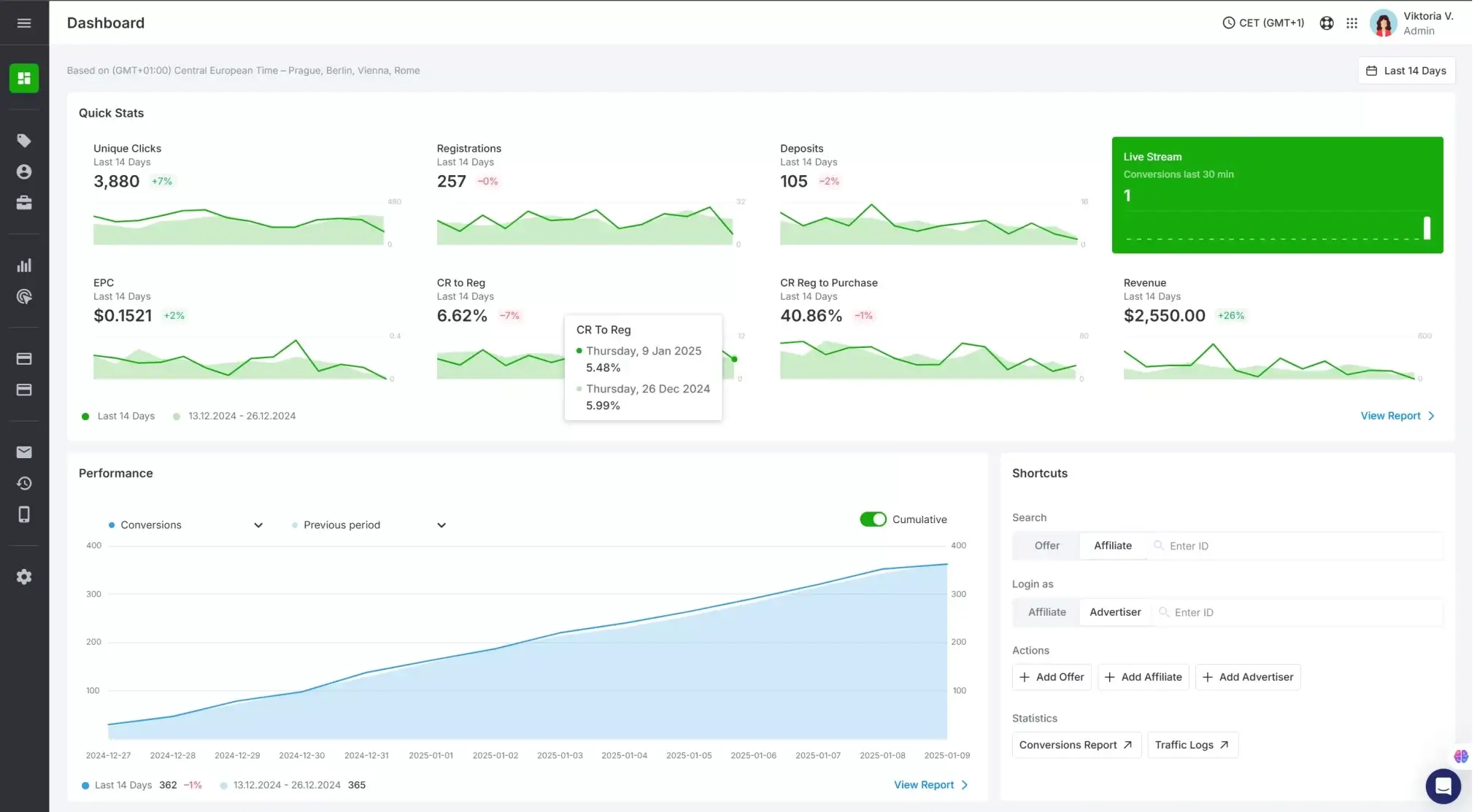
Automation doesn’t make programs smarter. It makes them defensible.
Scale affiliate growth the boring way: instrument everything, validate in reporting, and only then open the spend taps. The flashy “20 strategies” don’t matter if your attribution can’t survive a payout dispute — so which part of your current setup would your finance team challenge first?