
AI in sports betting is the secret coach in your corner, fine-tuning odds and turbocharging conversions so you dominate the 2025 playing field.
The era when manual odds-setting and gut-feel campaign tweaks ruled is over. Picture an affiliate manager juggling multiple attribution models, real-time odds feeds, and fraud alerts—all before breakfast.
At Scaleo, we’ve seen these shifts firsthand: AI isn’t a “nice to have”—it’s the backbone of profitable, scalable sports-betting programs.
The AI-Driven Shift No One Saw Coming
When the global AI in sports market hit $8.92 billion in 2024, growing at 21.1% CAGR through 2030, you might’ve nodded and moved on. But consider this: AI now touches every fraction of the value chain—from data ingestion to personalized promotions. If you haven’t updated your strategy, you’re already lagging behind.
Why does this matter?
In a $48.17 billion sports-betting marketplace projected for 2025, operators who take advantage of AI to refine odds, detect fraud, and tailor offers will outpace peers by double-digit margins. The margin for error is thinning—are your teams ready?
3 Core Trends Shaping 2025
1. Real-Time Attribution Meets Predictive Modeling
Here’s the bottom line: if your attribution model updates in daily batches, you’re already obsolete. Real-time feeds powered by machine-learning algorithms let you adjust commissions, improve creative, and cap budgetary overruns on the fly. Imagine flagging a spike in bonus-abuse patterns and rerouting misallocated spend in seconds, rather than weeks.
It’s not sci-fi.
2. Hyper-Personalization at Scale
To be frank, blanket promotions feel amateurish when your data can predict a high roller’s next move. Deep-learning engines segment players not by “high,” “medium,” or “low” value, but by day-of-week behavior, average bet size, and churn likelihood. Then, they serve custom bonuses, retention offers, and reactivation flows with precision timing.
The result?
A 15–25% lift in lifetime value.
3. Advanced Fraud Prevention and Compliance
Compliance—the thing no one loves but everyone needs to master. AI’s anomaly-detection models can now parse billions of micro-transactions, identifying bots, mule accounts, and geo-masking efforts in real time. When suspicious activity’s flagged, automated workflows pause suspect accounts and alert your team—keeping risk down without derailing genuine bettors.
I remember when integrating real-time attribution seemed futuristic—now it’s table-stakes.
Actionable AI Strategies for Affiliates vs. Casino Ops
| Strategy | For Affiliates | For Casino Operators | Quick Tip |
| AI-Driven Odds Adjustment | Leverage API hooks to sync your landing pages with dynamic odds | Integrate ML-based risk engines to auto-tune probabilities | Test small cohorts first; monitor deviations in conversion and margin. |
| Personalized Offer AI | Use player segmentation models to push affiliate-specific promos | Deploy recommendation engines to suggest cross-sell games | Swap static banners for dynamic widgets that refresh per user behavior. |
| Anomaly Detection & Fraud Alerts | Partner with platforms that send webhook alerts on suspicious events | Embed real-time scoring of transactions to auto-block fraud | Establish clear SLA with fraud-detection vendors—delay is your enemy. |
| Predictive Churn Models | Incentivize high-value leads before they go quiet | Trigger in-app and email reactivation flows via AI insights | Align CPA tiers with churn-risk scores to optimize ROI. |
When AI Stumbles: Real-World Pitfalls
It’s exciting—until it isn’t. Overreliance on a single ML model can backfire. One operator we know plugged everything into a third-party “black-box” engine, only to see margin erosion when market conditions shifted after a major rule change in cricket betting. The lesson? Maintain model governance by shadow-testing new algorithms alongside your legacy system and always implement a roll-back plan before making any changes.
Have you considered the downstream impact of switching attribution methods mid-campaign? It’s frustrating when promising campaigns plateau unexpectedly, isn’t it?
Building Your AI Pipeline: From Data Lakes to Decision Engines
To get from data noise to real-time insights, you need a robust pipeline—no ifs, ands, or buts. Think of it as an assembly line: raw feeds in, enriched signals out, then action.
Start with a centralized data lake.
Pull feeds from your affiliate network, CRM, odds providers, and fraud logs. It sounds obvious, but most shops still silo these streams. When your customer journey data sits in three different buckets, you’re flying blind. A unified lake powered by cloud compute lets you run advanced transformations—like joining clickstream with KYC records—at scale.
From there, you’ll layer on real-time ETL tools that push enriched events into your decision engine. That’s where machine-learning models flex their muscles. You might deploy gradient-boosted trees for churn prediction and neural nets for personalization. Yes, managing multiple models can be a headache, but containerization (Docker, Kubernetes) turns that headache into a routine. Automate retraining, monitor data drift, and always have rollback checkpoints.
Scaling ML Ops Without Losing Sleep
Model governance isn’t optional. With regulations tightening across North America and Europe, you can’t afford an undocumented black box. Tag every model version, log feature changes, and version your training data. I remember a launch day gone sideways because a last-minute feature tweak wasn’t logged—lesson learned.
Automated pipelines help: CI/CD for data science, scheduled retraining jobs, alert thresholds for performance dips. Your Ops dashboard should light up before revenue tanks.
AI-driven sports betting sits at the crossroads of innovation and regulation. GDPR, CCPA, the UK Gambling Commission’s new AI guidelines—they’re staring you in the face. Here’s the catch: regulators love data but hate opacity.
You need explainable AI. When a gambler disputes a decision—say, why they didn’t qualify for a bespoke high-roller offer—you must trace recommendations back to input features. Shapley values and LIME aren’t just buzzwords; they’re your compliance lifejackets.
And geo-fencing?
Don’t let a savvy bettor hop around virtual borders. Integrate IP intelligence with your ML workflows to enforce regional restrictions. Trust me, fines from non-compliance can wipe out your Q4 profits.
Automation Workflows That Free Up Your Team
Manual tasks kill momentum. Campaign setup, A/B test scheduling, and bonus configuration—these can all be automated. At Scaleo, we’ve seen affiliate teams reclaim 20% of their week by scripting routine tasks.
Imagine this: a new tournament launches. Your workflow automation:
- Detect the event in your calendar API.
- Spin up appropriate odds-sync campaigns.
- Notify affiliate managers via Slack.
- Trigger email blasts with segmented previews.
No one writes that by hand anymore. It’s exhausting to think of it. Automation platforms plugged into your data lake make it effortless—and scalable.
Automation vs. Manual ROI Comparison
| Task | Manual Effort (hrs/week) | Automated Effort (hrs/week) | ROI Gain (%) |
| Campaign Setup | 8 | 1 | 87 |
| A/B Test Scheduling | 5 | 0.5 | 90 |
| Bonus Configuration | 6 | 1 | 83 |
| Fraud Alert Triage | 4 | 0.5 | 88 |
Those hours add up. Free time means room for strategy—where the real value lies.
Advanced Segmentation: Beyond Demographics
Segmenting by age or location?
That’s kindergarten.
In 2025, you segment by psychographic profiles, betting velocity, risk tolerance curves, and even sentiment analysis of social chatter.
Picture this: you detect a cohort of bettors showing signs of anxiety-driven wagers—large bets placed after late-night live games. Your AI flags them, and you deploy a “relax-and-play” micro-campaign with lower-stakes parlays and timely risk-management tips. The emotional payoff? Trust, retention, and ethical upselling.
Have you ever run a campaign so nuanced it felt like mind-reading?
That’s where next-gen segmentation takes you—it’s thrilling when done right.
Combatting Partner Burnout and Fatigue
Affiliates are human. They burn out. They hit creative blocks. AI can’t replace relationship management, but it can predict when partners plateau. Use machine-learning to analyze partner performance curves: sudden dips in traffic or conversion signal fatigue. Then, proactively offer creative workshops, joint brainstorming sessions, or flex commissions for re-engagement.
It’s surprising how a simple nudge—“Hey, noticed your traffic dipped; want to test this new widget?”—can reignite momentum. And because the insight came from data, it feels less like micromanagement and more like support.
Integration Realities: APIs, SDKs, and Vendor Lock-In
Let’s face it: every vendor promises seamless integration, but reality’s messier. API rate limits, schema changes, downtime—these are part of the game. You need a middleware layer that abstracts vendor peculiarities.
At Scaleo, we built a lightweight orchestration API that sits between our core platform and external AI engines.
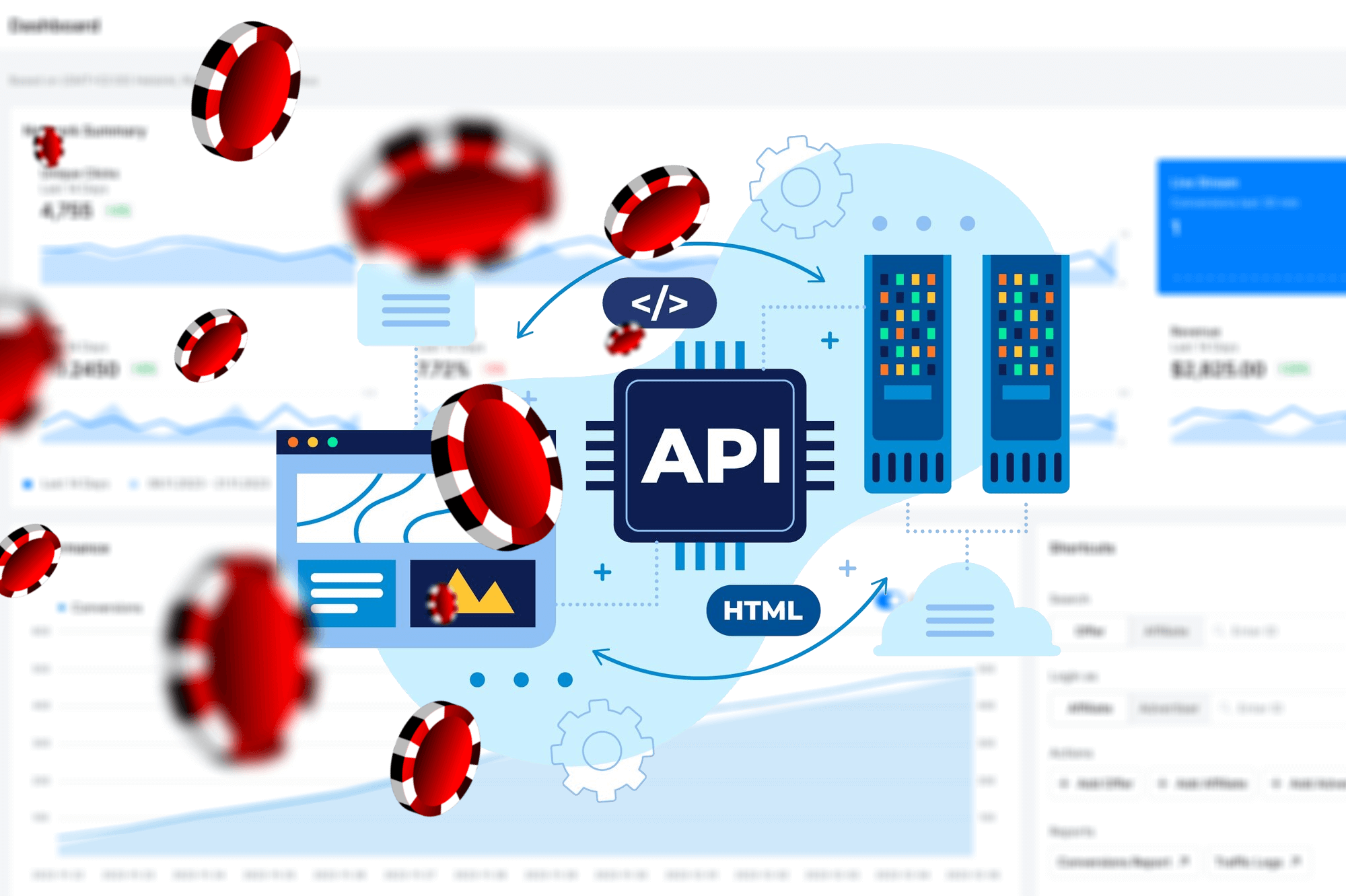
Swap out risk models, odds feeds, or personalization modules without rewriting your integration layer. It sounds trivial until you need to pivot on Friday afternoon because your odds supplier changed their JSON schema.
Tackling Campaign Optimization Fatigue
Campaign fatigue isn’t just “creative burnout”—it’s revenue erosion. After months of A/B tests and offer tweaks, diminishing returns become painful. Here’s the kicker: AI can spot plateau patterns weeks before you do.
Imagine your dashboard flags a cohort of campaigns whose click-through rates have flatlined for ten days straight. Rather than running more headline tests, your system spins up a variation based on past winners—dynamically swapping creatives, adjusting payout tiers, and even altering landing-page flows. What used to take your team hours now happens in seconds. Felt like magic when we first saw it—now it’s simply how you stay ahead.
Deep-Dive: Continuous Learning Loops
AI isn’t “set and forget.” Continuous learning means feeding your models fresh data daily—or even hourly. Here’s a quick breakdown of a lean loop:
- Data Ingestion: Clickstream, bet logs, CRM updates.
- Model Inference: Real-time prediction of churn, fraud, and conversion potential.
- Automated Activation: Trigger bespoke campaigns or risk controls.
- Feedback Capture: Log outcomes, retrain models nightly.
This loop keeps your strategy adaptive. When a new promotion type flops, the system immediately de-prioritizes it. When a micro-campaign overachieves, it scales autonomously. No endless decks of slide-by-slide approvals—just results.
When to Pull the AI Levers Manually
Of course, AI is a tool—not a tyrant. Sometimes you need human intuition:
- Major regulatory shifts.
- Sudden market anomalies (e.g., a surprise World Cup upset).
- Creative overhauls that require fresh strategy.
The sweet spot?
Hybrid control.
Let the models handle routine optimizations; your analysts focus on the paradigm shifts.
Rethinking Affiliate Partnerships
In every operator’s roadmap, affiliates are both your greatest asset and your largest cost center. AI can help you tier partners not only by volume but by behavioral quality—predicting which affiliates drive sustainable, low-risk traffic. Then, pivot your commission structures in real time.
Say goodbye to flat CPA tiers. Instead, imagine a dynamic commission matrix that rewards partners for recruiting bettors who deposit thrice within 30 days, wager above a risk-adjusted threshold, and exhibit low fraud signals. Align incentives with quality, not quantity.
Dynamic Commission Matrix Example
| Tier | Deposit Frequency | Wager Threshold | Fraud Score (<0.3) | Commission Rate |
| Bronze | ≥1 in 30 days | ≥€100 | ✓ | 25% CPA |
| Silver | ≥2 in 30 days | ≥€300 | ✓ | 30% CPA + 5% Revenue |
| Gold | ≥3 in 30 days | ≥€500 | ✓ | 35% CPA + 7% Rev. |
| Platinum | ≥5 in 30 days | ≥€1,000 | ✓ | 40% CPA + 10% Rev. |
Notice how quality filters (fraud score) and behavioral triggers drive margins up.
Conclusion: What’s Next?
Here’s a question worth mulling: if AI can already automate so much of your affiliate workflow, what’s left for human teams? The answer lies in strategic imagination—identifying new partnership models, exploring emerging markets (think virtual sports, AI-driven esports), and crafting narratives that resonate emotionally.
Truth be told, the real competitive edge will come from combining machine precision with human creativity.
So: is your organization structured to let AI handle the grunt work and free your experts to innovate?
Your Next Move with Scaleo
When it comes to scaling your affiliate campaigns and optimizing traffic, you need a purpose-built platform—not a patchwork of tools.
Scaleo is engineered to manage every step of your affiliate journey with precision and ease:
- End-to-End Campaign Management: Create, launch and monitor campaigns in one unified dashboard—no juggling between spreadsheets and third-party apps.
- Real-Time Traffic Quality Control: Filter out bots, low-quality leads and fraud instantly with built-in validation rules and webhook alerts.
- Dynamic Optimization Engine: Automatically adjust payouts, caps and creatives based on performance thresholds you set—so your budgets stretch further.
- Deep Analytics & Custom Reporting: Drill down into every click, conversion and commission with fully customizable reports and API access.
- Seamless Integrations: Plug into your favorite CRM, CMS or BI tools via our REST API and streamline data flows without extra dev time.
Ready to future-proof your sports-betting program? Schedule a demo call with our team and see how Scaleo can turbocharge your affiliate and casino operations—driving higher margins, tighter controls, and unparalleled growth.
Curious how your 2025 roadmap stacks up against next-gen benchmarks? Let’s schedule a demo call together and take your marketing efforts to the next level!