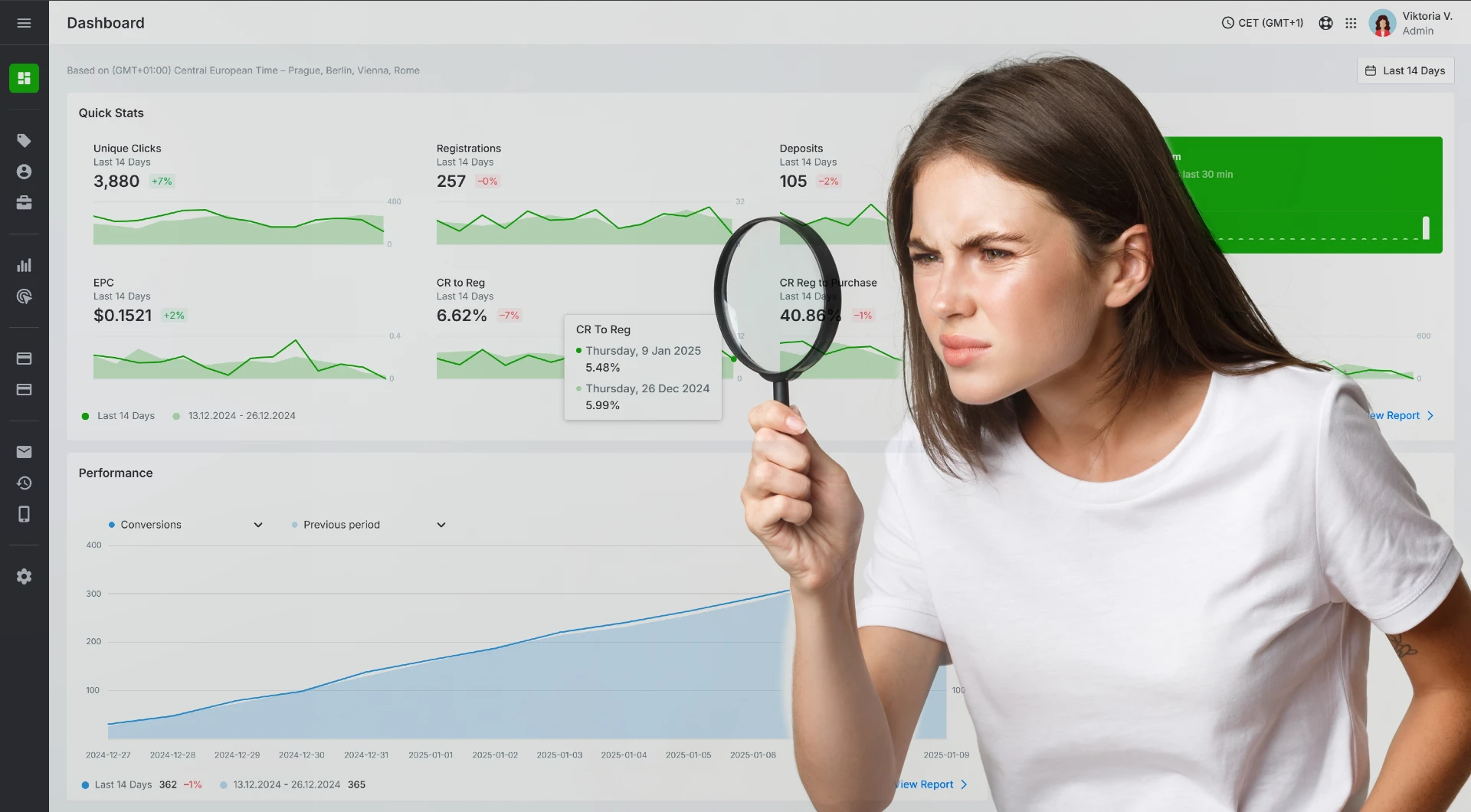
Where do conversions go? If you’ve ever found yourself staring at your dashboard, wondering why yesterday’s big win didn’t show up in the conversions log—welcome. You’re not alone.
Affiliate program managers across the iGaming world are constantly chasing ghosts—clicks that were tracked, players that signed up, even deposits that happened—yet somehow, conversions vanish into thin air. Sound familiar?
There’s a Reddit thread floating around where one affiliate vents: “Clicks were tracked. Conversions? Nothing…” It struck a nerve. Comments rolled in because everyone’s seen it happen. You probably have, too. And when it does, trust becomes the first casualty.
Here’s the reality: in the iGaming industry, where competition is brutal, missing a single conversion is potential lost revenue, a disgruntled affiliate, and a whole lot of unnecessary back-and-forth between you and your partners.
Affiliates start asking if they’re being “shaved.” The mood gets tense. You find yourself triple-checking your postback setup at 11:47 PM instead of sleeping like a normal human. Good times, right?
But the issue isn’t always malicious.
Often, it’s mechanical.
- A missing parameter.
- A goal misconfiguration.
- A session that expired.
- A conversion link that never fired.
In short: your tech stack’s version of “the dog ate my homework.”
Unlike other industries, you’re often dealing with high-stakes traffic, tiered CPA deals, complex funnels, and—let’s be honest—some very data-savvy affiliates who will notice if things don’t add up.
So, what now?
First, breathe. Second, let’s walk through where conversions typically fall off the radar, and how to sniff out the cause without tearing your entire tracking infrastructure apart.
Yes, it’s fixable.
But you have to know what to look for first.
Most Common Tracking Mistakes: Not Your Fault (But Maybe It Is?)
We get it: sometimes, you’re sure everything’s set up right — and yet, conversions still pull a Houdini. But here’s the truth: most tracking errors aren’t some elaborate glitch in the matrix. They’re small, stupid things. Easy to miss. Easy to fix. But also, easy to overlook for weeks while you’re busy scaling campaigns or putting out fires elsewhere.
Especially in iGaming, where player behavior is unpredictable, traffic sources are diverse, and affiliates are pushing hard across multiple geos and platforms… it’s chaos wrapped in a tracking pixel.
So let’s break down the usual suspects. The ones that trip up even the seasoned affiliate pros.
Here are just the culprits and how to catch them:
| ⚠️ Mistake | 🚫 What’s Going Wrong | 🛠️ Where to Look / What to Do |
|---|---|---|
| ❌ Incorrect Click ID | The Click ID in the postback? Doesn’t match any recorded click. | Check if {click_id} is passed correctly in the URL and received back in postback. Must be 32 characters, no exceptions. |
| 💤 Offer is Inactive | That offer you thought was running? Yeah, it’s not. | Go into your platform (ideally Scaleo) and double-check offer status. No click = no conversion. |
| 🧟 Affiliate Not Approved | The affiliate isn’t even authorized to promote that offer. | Under Offer > Affiliate Access, make sure they’re not stuck in the “Denied” list. Happens more often than you’d think. |
| 🍪 Cookie Problems | User’s session can’t be linked to any click. | If you’re using client-side tracking, expired or blocked cookies could be killing attribution. Server-side postbacks fix that. |
| 🎯 Wrong Goal ID | Postback’s firing to a ghost goal. | Ensure the goal_id in the postback matches the actual goal assigned to the offer. One digit off = no conversion. |
| 🔕 Pixel Didn’t Fire | The conversion happened… but no signal was sent. | Use platform postback logs. If nothing shows, ask the advertiser to check logs on their end. No fire, no record. |
And here’s the kicker — most of these aren’t even technical bugs. They’re config oversights.
Someone forgets to update the tracking URL. An old test link gets reused. Or the advertiser switches the postback format without telling anyone. Good times.
But the consequences? Real.
That’s why platforms like Scaleo have built-in diagnostics, postback logs, and error reporting that make spotting these issues a whole lot less painful. You shouldn’t have to guess whether your traffic is being tracked properly. You should know.
Because when you’re running traffic in a high-stakes niche like iGaming, tracking errors aren’t just annoying. They’re expensive.
Red Flags in Your Postback Setup
So, you’ve double-checked the affiliate. The offer’s active. Clicks are coming through. Yet still… no conversions. Now we’re in postback territory. And this is where a lot of things go sideways—quietly, invisibly, and usually after 5 PM on a Friday.
At the heart of every successful conversion in affiliate tracking is one golden rule: the postback must be structured perfectly. One missing variable, one typo in the query string, and boom — the conversion never reaches your platform. Worse? No one gets paid, and everyone gets suspicious.
If you’re using server-side postbacks (which you definitely should be in iGaming — client-side is a gamble), your conversions rely on the correct transmission of one thing: the click_id. This is your lifeline. Without it, your platform can’t tie a sale to a session, an affiliate, or a commission.
Here’s what usually goes wrong:
- The advertiser isn’t passing back the
click_id, or they’re renaming it to something unexpected (aff_sub,subid,rid,weird_vendor_thing…). - You forgot to insert
{click_id}in the landing page URL. - The postback is hitting your endpoint, but with the wrong structure — extra parameters, missing values, or worse, a malformed URL.
Sound familiar?
Below’s a quick cheat sheet of the core parameters that need to be rock solid. Memorize it. Tattoo it on your retargeting arm. Whatever works.
| 🧩 Parameter | 📌 Description | 🤯 Common Screw-ups |
|---|---|---|
{click_id} | The holy grail. Unique identifier for each user click. | Misspelled, missing, or not passed back at all. |
goal_id | Identifies the type of conversion (e.g., registration, deposit). | Advertiser sent a goal ID you don’t even use. |
{amount} | Required for revenue-based (CPS) offers. | Sent in the wrong format, or missing currency info. |
adv_order_id | Helps track unique user purchases. Great for deduping. | Reused across multiple conversions = mess. |
aff_sub1–5 | Optional but golden for traffic segmentation. | Filled with junk or not set at all by the affiliate. |
Another red flag: if your postback is firing, but conversions still aren’t showing, check the order of parameters. Some platforms (not Scaleo, thankfully) are extremely picky about this. Also, make sure you’re not using smart quotes (“) or curly apostrophes — yes, that tiny typo can kill a postback. Fun.
And if you’re working with a non-technical advertiser or a small casino brand just getting into affiliate marketing? Triple-check that they’re actually using the final postback you gave them. Not some outdated test link from last year’s spreadsheet.
Scaleo makes this whole circus much easier. It provides ready-to-go postback URLs the moment you set up an offer, with the correct variables embedded for each goal. You just pick the goal, send the link to your advertiser, and boom — job done. Plus, with real-time logs of every fired (or failed) postback, you don’t need to fly blind.
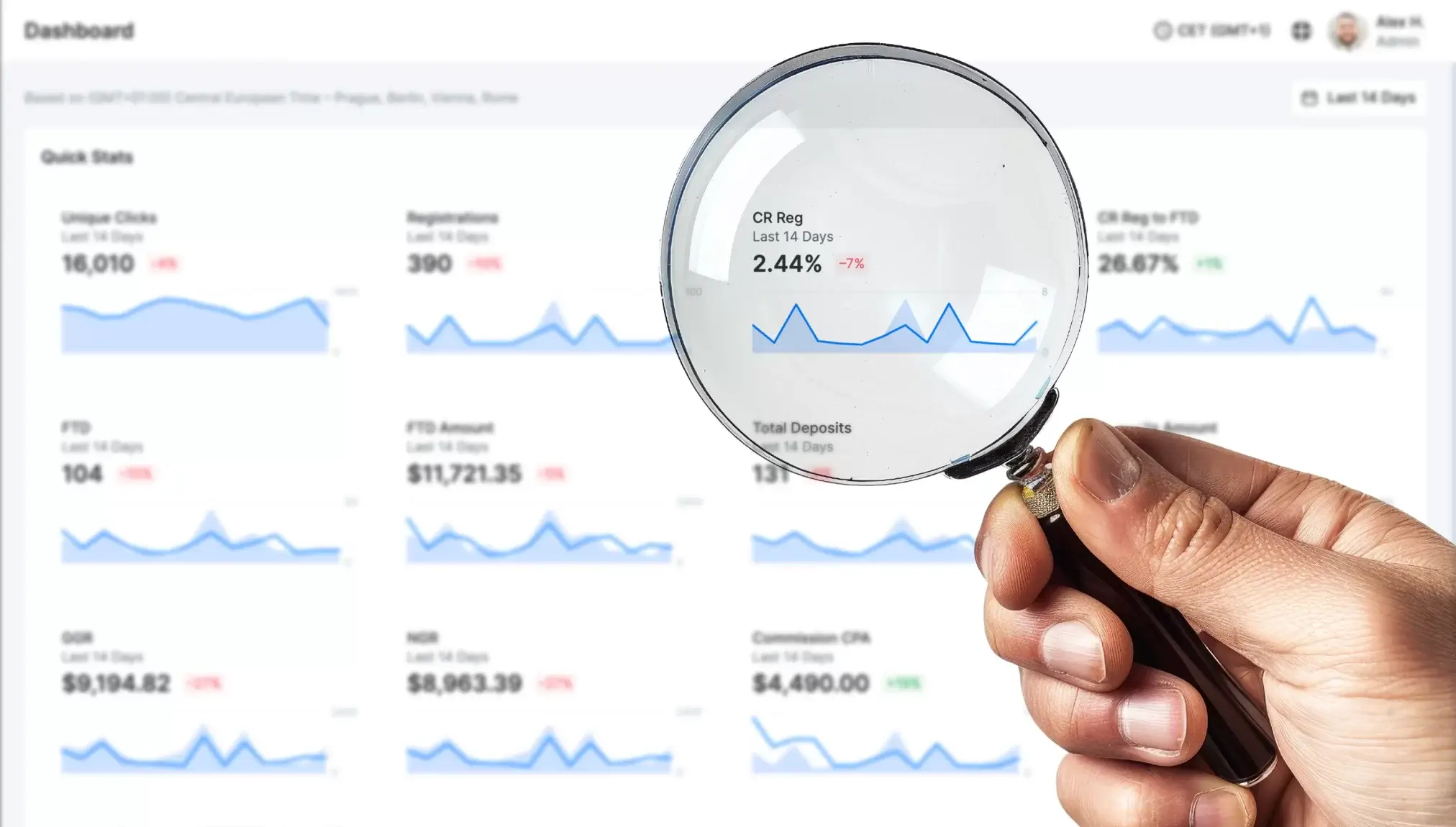
Bottom line: tracking breaks more often from small syntax issues than platform-wide meltdowns. Know your parameters. Know where they go. And if all else fails—yep, it’s probably a missing click_id.
Testing Tracking Like a Pro (Without Pulling Your Hair Out)
So..
- You’ve checked your offer.
- You’ve checked your postback.
- You’ve checked your program’s integrity.
Now it’s time to actually test the whole setup—click to conversion—before your affiliates start sending 10,000 clicks from Twitch streamers in Brazil and asking why their deposits aren’t showing.
Because in iGaming? You don’t get a second chance at attribution. One misfire and you’ve lost a valuable player and pissed off your partner.
Fortunately, testing doesn’t need to feel like decoding the Matrix. With a few simple steps, and the right platform (cough Scaleo cough), you can find out exactly where tracking is breaking… before it becomes a disaster.
Here’s how the pros do it:
| 🧪 Step | 🚀 What You’re Doing | 🧰 Tools to Use |
|---|---|---|
| 1 | Build a clean tracking link for your test offer. | Use Scaleo’s Link Builder (Offers > Link Builder). Add {click_id} in the right spot. |
| 2 | Paste the link in your browser and click it. | This simulates a user click. Go to Transactions > Clicks and make sure it’s logged. |
| 3 | Perform a conversion. | Complete the goal action — signup, deposit, whatever the goal_id specifies. If you’re not the advertiser, ask them to trigger one manually. |
| 4 | Check Transactions > Conversions. | If the postback was received and parsed correctly, the conversion should be there. If not… keep going. |
| 5 | Check Transactions > Advertiser Postbacks. | If the pixel fired but wasn’t recognized, it’ll show here. Look for formatting issues, missing parameters, or Click ID mismatch. |
| 6 | No postback at all? | Time to bug your advertiser for logs. Ask what URL was triggered, with full query string. Compare it to your expected structure. |
| 7 | Still stuck? | Run through error codes. They’re brutally honest, and yes, Scaleo gives you detailed feedback, not just vague “Error 500” nonsense. |
A few friendly reminders:
- Do not test from your CMS preview mode. Clicks from backend editors often break attribution.
- Disable any ad blockers or privacy plugins before testing. They’ll sabotage pixels, silently.
- If you’re working with deep links or third-party landing pages, confirm that the
{click_id}is being carried all the way through. - Always use a fresh browser session (or incognito) for each test. Old sessions can throw off results.
And here’s where Scaleo really pulls its weight: you don’t have to guess. The system shows you each click, each postback received, and whether or not the parameters lined up. You can even filter by affiliate, offer, status, or time—so when something goes sideways, you know exactly where.
Testing shouldn’t be a guessing game, but not in iGaming, where high-value players and large CPA payouts are on the line.
Treat your tracking tests like a final boss fight. Because once you beat it, the real game — scaling — can begin.
Error Codes Decoded: Your New Best Frenemy
Ah, error codes.
Nothing like seeing a glowing red ❌ next to your postback test to send you spiraling into a rabbit hole of tracking forums, outdated documentation, and midnight Slack rants.
But let’s be honest — most error codes aren’t mysterious. They’re just… blunt. Brutally honest, even. Like that friend who points out there’s spinach in your teeth mid-meeting.
And in the world of iGaming affiliate marketing, where every missed deposit could be worth real money (to you and the affiliate), knowing how to interpret these little nuggets of truth is essential. You can’t fix what you don’t understand — and you definitely can’t explain it to your affiliate partners if you don’t speak error code fluently.
Here’s your no-nonsense decoder ring for the most common ones:
| 🧨 Error Code | 🧐 Translation | 🛠️ What to Do |
|---|---|---|
| Incorrect Click ID | The value sent back as click_id doesn’t exist or is malformed. | Should be exactly 32 alphanumeric characters. Not 31. Not 33. Not “clicky_boi_123”. |
| Multiple Conversions Not Allowed | Same click trying to convert twice. But your offer’s goal only allows one. | Go to Offer > Goals and flip “Multiple Conversions” to ON if you want to allow repeats (think recurring deposits). |
| Offer Inactive | The offer is… off. Literally. | Someone deactivated it or capped it. Check status in Scaleo, and make sure geo/device targeting is met. |
| Affiliate Not Approved | The affiliate isn’t on the “Allowed” list. | Fix this under the offer’s Affiliate Access tab. Look out for pending or inactive status too. |
| Wrong Cookies | User’s session isn’t tracked on your end. | Probably fired pixel without ever having the initial click. Use server-side postbacks instead. Trust us. |
| Cap Reached | Goal hit its daily/monthly limit. | Happens when affiliates forget to check caps and keep pushing traffic. Update or warn them. |
| Invalid Goal ID | The postback refers to a goal that doesn’t exist or is inactive. | Double-check goal_id against what’s actually configured in your offer. |
| Postback Expired | The Click ID timed out. Session lifetime is over. | You can increase postback lifetime under offer settings in Scaleo, depending on how long your funnels run. |
| IP Not Whitelisted | Tracking was blocked because the IP isn’t on your whitelist. | Either whitelist the IP or turn off geo/IP restrictions temporarily for testing. |
And that’s just a highlight reel. There are dozens more — geo mismatches, bad OS targeting, duplicate order IDs, blacklisted IPs — all there to protect you from bad data, fraud, or just plain sloppy setups.
The key is: don’t panic. If something fails, Scaleo doesn’t just throw a vague error at you. It gives you context. Logs. Status flags. The kind of details that let you fix the issue without needing a dev to babysit your tracking setup.
Pro tip? Bookmark your platform’s error code glossary (yes, Scaleo has a detailed one).
When a high-value sportsbook affiliate is asking why their 15 first-deposit conversions didn’t register, the last thing you want to say is: “Uh… I don’t know?”
Scaleo to the Rescue: Tracking That Actually Works
At this point, you’ve probably realized something: most tracking issues don’t come from some massive system failure. They come from tiny oversights. Invisible misfires. That one parameter that went rogue and cost you five FTDs.
Which is exactly why you need a platform that doesn’t just track — it helps you prevent screw-ups in the first place.
That’s where Scaleo earns its stripes.
Built specifically for high-volume, high-pressure verticals like iGaming, Scaleo doesn’t just give you basic affiliate tracking. It gives you a digital command center for diagnosing, debugging, and dominating your affiliate program. Even when your campaigns are scaling at speed.
Let’s break it down. These features? They’re not just nice to have — they’re designed to make missing conversions a thing of the past:
| 🧠 Feature | 💥 Why It Saves Your Sanity |
|---|---|
| 🔗 Server-Side Postback Tracking | Bypasses all cookie and browser issues. No “click ID vanished in incognito mode” nonsense. |
| 🧪 Live Tracking Diagnostics | Logs for clicks, conversions, postbacks, and even invalid attempts — all searchable, all detailed. |
| 🧩 Dynamic Link Builder | Generate custom tracking URLs with the exact parameters you need. Zero guesswork. |
| 📊 Funnel & KPI Reports | Visual breakdowns of where traffic enters, where it drops, and where conversions land. |
| 👥 Advanced User Roles | Lock down access. Share what matters with the team. Keep your chaos contained. |
| 💸 Invoicing & Payout Tools | Pay affiliates on time, without spreadsheets. Because no one has time for that. |
| 🔧 Unlimited Customizations | Unique geo filters? Complex goal flows? Custom traffic rules? Done. No dev tickets required. |
More importantly, Scaleo is built for affiliate managers who don’t have time to babysit pixels or handhold advertisers through tracking implementation every week. It’s reliable. It’s smart. And it catches the stuff you’d miss — before it costs you money (or your affiliates’ trust).
You don’t have to keep playing tracking detective. You don’t have to live in fear of an angry Skype message that starts with “Hey, quick question about my stats…”
There’s a better way.
Conclusion
Tracking errors are a revenue leak in iGaming. Trust-killer. A good lead was missed due to an off-URL parameter. You’re caught between skeptical affiliates, impatient advertisers, and your performance KPIs when conversions drop.
It doesn’t have to hurt this much.
Scaleo eliminates guesswork = you see clicks, sessions, postbacks, and live issues and most importantly – you can adjust conversions manually. If something breaks, you can trace, test, and fix it.
✅ More visibility.
✅ Fewer disputes.
✅ Conversions that actually show up where they’re supposed to.
Start your free trial with Scaleo today, and stop losing sleep over invisible conversions. Start gaining control. Your affiliate program deserves better — and so do you.