
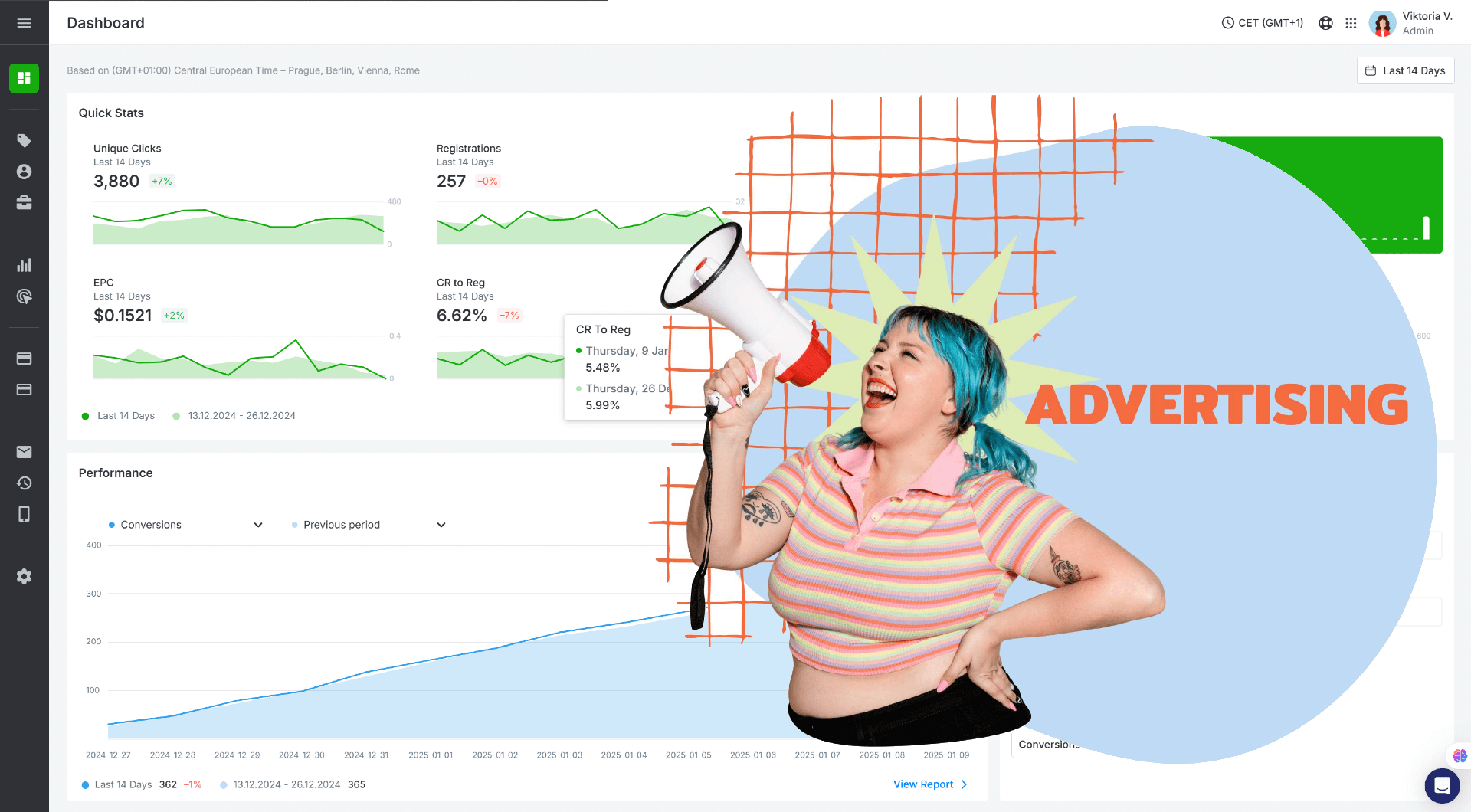
Channel Incentive Program Best Practices — a casino operator’s guide to affiliate success that shows you how to design incentives that actually move NGR, not just clicks.
Truth be told, a channel incentive program that aligns rewards with real player value will outperform generic “bonus blasts” every single quarter. Here’s the playbook I use when operators ask me to turn a sluggish affiliate channel into a dependable acquisition engine.
You’re operating in the most competitive corner of iGaming. Margins get squeezed, CPAs creep up, and partners juggle ten brands at once. If your incentives don’t signal clear priorities—and back them with accurate tracking—your best affiliates drift. I’ve seen it too many times.
Let’s fix it.

I’m an iGaming business analyst, and we at Scaleo spend our days building tools casino operators use to run high-trust, high-ROI partner programs. In this guide, I’ll walk you through channel incentive program best practices, concrete design patterns, live-ops tactics, and the reporting stack that proves—mathematically—why your structure works.
What is a Channel Incentive Program?
A channel incentive program is a structured set of rewards that motivates partners (affiliates, publishers, media buyers, influencers) to prioritize your casino brand and drive measurable outcomes—registrations, verified FTDs, and profitable NGR over time. It’s not just about “more traffic.” It’s about better traffic—players who deposit, retain, and don’t charge back. That distinction is everything.
Why now? Because the European gambling market topped €123.4B GGR in 2024, with online edging toward 40% share. Growth attracts more partners and more noise. Your incentives must cut through it—and reward the behavior you actually want.
Examples of Channel Incentive Programs (Casino-Focused)
I’ve implemented, audited, or rebuilt each of the models below. Use them as building blocks, not doctrine.
| Program Type | How It Works | Best For | Watchouts |
|---|---|---|---|
| Milestone Bonuses ✅ | Cash or % boost at 25/50/100 FTDs | Seasonal promos, new launches | Short-lived spikes if you ignore retention |
| Tiered Overrides ✅ | Bronze/Silver/Gold rates based on monthly results | Laddering performance, loyalty | Overpay if tiers set too low |
| Quality-Weighted Rewards ✅ | Bonus unlocks at >X% deposit rate, low chargebacks | Filtering for high-LTV cohorts | Requires robust fraud checks |
| Creative Challenges ✅ | Extra payout for new GEOs/formats (video, CTV, apps) | Breaking into new channels | Define “eligible” assets upfront |
| Exclusive Promotions ✅ | Unique codes/LPs per partner | Brand preference, attribution clarity | Coordinate CRM & bonus ops tightly |
Designing Channel Incentive Programs (Step-by-Step)
Design is where most programs win or fail. Don’t start by picking rewards; start by choosing outcomes. Then build the math backwards.
- Define one primary outcome (e.g., verified FTDs or NGR contribution) and 1–2 quality gates (deposit rate, chargeback ceiling).
- Segment partners (incumbents vs. challengers). Different thresholds unlock different ladders so everyone can realistically climb.
- Choose payout logic that stays predictable under volatility: percentage boosts on the partner’s payout (“override on payout”) rather than raw revenue share swings.
- Publish rules with examples: geo policy, brand bidding, KYC events, timelines, and edge-case math (clawbacks, self-exclusion, reversals).
- Instrument first-party tracking and S2S postbacks for signup → KYC → FTD → GGR/NGR. If you can’t see the funnel, you can’t reward it.
- Launch controlled: 10–20 partners, 30-day review, adjust thresholds, then scale.
iGaming Channel Incentive Best Practices (2026 Outlook)
Let’s be blunt. “Pay more and hope” isn’t a strategy. The operators winning in 2026 will combine data fidelity, granular roles, and automation to keep incentives fair and fast.
1) Value-Linked Rewards 📈
Reward qualified deposits, verified FTDs, or NGR contributions—not raw signups. If you still pay for registrations, you’ll optimize for the wrong behavior and invite incentive gaming. Here’s the bottom line: pay where you profit.
2) Tier Ladders That Don’t Break Margin
Bronze/Silver/Gold works—if thresholds are real. Anchor tiers to profitability, not vanity volume. Add a light cap on total overrides per player. No drama, no surprises.
| Design Choice | Pros | Cons | Verdict |
|---|---|---|---|
| Override on partner payout | Predictable, easy to audit | Needs clear examples | ✅ |
| Override on casino revenue | Direct tie to NGR | Volatile, dispute-prone | ❌ |
| Flat cash milestones | Simple, motivating | Quality can slip | ✅/❌ (use with gates) |
Affiliates sprint when they see progress bars move. Give them real-time funnel views—clicks, registrations, KYC, FTDs, earnings. If a partner is “10 FTDs away from Gold,” they’ll push. If they can’t see it, they won’t.
4) Fraud Controls as a Feature 🔐
Nothing torpedoes trust like paying for junk. Enforce unique click validation, device/IP intelligence, duplicate suppression, and smart clawbacks for bonus abuse. UK operators—document your partner controls and follow the UKGC advertising and marketing rules. Your best affiliates will thank you for strict standards.
Attribution Models: Avoiding Disputes
Have you considered the downstream impact of switching attribution models mid-quarter? I’ve watched last-touch defaults spark costly fights in multi-channel pushes. Pick a model, document it, and run it consistently—unless a campaign’s mechanics truly justify an alternate setting.
| Model | Definition | When to Use | Reality Check |
|---|---|---|---|
| Last Touch | Final eligible click gets credit | Most casino campaigns | Clear, but can ignore discovery |
| First Touch | First eligible click gets credit | Upper-funnel initiatives | Great for new GEOs |
| Linear | Split among all touches | Cross-channel, long journeys | Complex to explain/payout |
Here’s the bottom line when dealing with attribution disputes: audit with first-party IDs and S2S postbacks. If tracking is sound, conversations stay calm. If tracking is leaky, everything becomes “he said, she said.”
Live Ops: Running & Optimizing Incentives
- Kickoff energy: announce publicly, pin rules in your portal, add a 14-day “early bird” boost to prime momentum.
- Weekly QA: check deposit rates by partner, review fraud flags, and spot GEO-level anomalies fast.
- Creative refresh: rotate LPs and banners; stale creatives quietly crush CR.
- Recognition: leaderboards and monthly spotlights (simple emoji trophies work) keep it fun without feeling juvenile.
Hypothetical Scenario (and Fix)
Picture an affiliate manager juggling two big pushes: a new slot launch and a football season campaign. They run last-touch attribution, set easy Bronze/Silver/Gold thresholds, and dangle a fat milestone bonus at 100 FTDs. Everyone’s excited—until the results roll in. Registrations spike, deposit rate drops, chargebacks tick up, and finance raises an eyebrow. Sound familiar?
Here’s how I’d unwind it: switch milestone logic from registrations to verified FTDs; add a quality gate (≥25% deposit rate and <1.5% chargebacks); cap overrides per player; publish three worked examples of payout math inside the partner portal; and instrument the full funnel so affiliates see where leads stall. Within two cycles, you’ll see fewer disputes, steadier NGR, and happier top partners.
Scaleo Benefits for Channel Incentives
If you want the “ops” to run themselves (or close), the platform matters. Scaleo is affiliate program software for iGaming operators—built precisely for this job. Here’s what I lean on when I’m accountable for outcomes:
- Commission Constructor: flexible CPA/RevShare/Hybrid, rule-based overrides, caps, clawbacks. Configure in minutes—no engineering tickets.
- Dashboard & Reports: 30+ data points; custom widgets; real-time click → registration → deposit; cohort and partner views.
- Player Funnel Insights: spot drop-offs by stage; fix LP friction; reward partners for value, not volume.
- KPI & Player Reports: deposits, withdrawals, bonuses, bets, wins, GGR, NGR—so you can refocus budget on high-LTV sources.
- Multi-Brand Support: manage casino + sportsbook + other verticals in one place; granular brand-level controls.
- Affiliate Content Extensions: add promos, guides, tools, and links directly into the partner portal to keep everyone aligned.
- User Roles & Permissions: granular visibility for managers, affiliates, and advertisers; audit-ready governance.
- Invoicing & Payment Automation: scheduled invoices, batch processing, accurate line items; fewer disputes, faster cycles.
- Fraud Prevention: real-time risk scoring across IP/ISP/device/browser; automated flags and rule-based clawbacks.
- Scalable API: integrate CRM, BI, payment gateways, or proprietary platforms—clean data in, clean decisions out.
| Capability | Manual Spreadsheets | Generic Tracker | Scaleo |
|---|---|---|---|
| Funnel Report | ❌ | ❌ | ✅ |
| Quality Gates (deposit rate, CB%) | ❌ | ❌ | ✅ |
| Rule-Based Overrides & Caps | ❌ | ⚠️ Limited | ✅ |
| Anti-Fraud Logic | ❌ | ⚠️ Basic | ✅ |
| Multi-Brand Control | ❌ | ⚠️ Add-ons | ✅ |
| Automated Invoicing | ❌ | ⚠️ Partial | ✅ |
| Customizable Dashboards | ❌ | ⚠️ Limited | ✅ |
Want one more reason to keep incentives tight? Regulators are sharpening expectations for marketing governance and partner controls. Review your workflows against the UKGC’s guidance on affiliate marketing and advertising; it’s a useful yardstick even if you’re not UK-licensed: Advertising & Marketing Rules and Affiliates / Third Parties.
Measuring What Matters: KPIs & ROI
If you’re not measuring cohort-level profitability, you’re guessing. Track by partner and by player cohort: deposit rate, AFTD (average FTD value), early-life GGR/NGR, chargeback %, and dispute rate. Run a rolling 30-day ROI: (Incremental NGR – Incentive Cost) / Incentive Cost. Keep it boring. Boring wins.
For context on market momentum, Europe’s digital ad spend crossed €118.9B in 2024. Translation: partners have options. Your incentives and your ops—transparent, on-time, fraud-aware—decide whether they choose you.
What’s a “Good” Conversion Rate?
For casino affiliates, a healthy click→signup range I commonly see is 5–10%, with elite partners nudging higher in stable GEOs. If you’re under 5%, investigate LP speed, bonus clarity, KYC friction, and whether your creatives match the partner’s actual audience.


Operational Guardrails (So You Don’t Need Fire Drills)
- Documented payout math: show exactly how overrides, caps, and clawbacks compute—with numeric examples.
- Eligibility sanity: minimum activity windows, GEO allow/deny lists, brand bidding policy, and negative keywords published in-portal.
- Change control: no mid-month changes; announce upcoming adjustments 14 days in advance.
- Audit trails: keep partner-visible logs for offer edits, promo changes, and invoice runs.
Getting Started in Scaleo (Fast)
- Model your logic in Commission Constructor (base payout + override %, caps, and quality gates).
- Connect events via first-party click IDs and S2S postbacks (signup, KYC, FTD, GGR, NGR).
- Publish rules + examples on Additional Pages in your affiliate portal—promos, tools, and compliant copy.
- Automate finance with invoicing schedules, cool-off periods, and batch payments.
- Review monthly: funnel drop-offs, deposit rate by partner, override-to-revenue ratio, and dispute rate.
Honestly, once partners see accurate, real-time data and on-time payouts, they self-select into your brand. The rest—creative refreshes, targeted GEO pushes—is optimization, not triage.
Conclusion
Use value-linked rewards, not vanity metrics. Set tier ladders that won’t break margin. Share live data to fuel effort. Encode fraud controls so good partners aren’t penalized by bad actors. And keep attribution stable unless the campaign truly demands a different model. To be frank, this is critical—absolutely critical.
Curious whether your current structure silently bleeds margin or under-rewards high-LTV partners? Start a free 14-day trial of Scaleo and pressure-test your incentives with funnel analytics, Anti-Fraud Logic, and automated invoicing. If the numbers don’t change your approach, I’ll be surprised.
FAQ
What is a channel incentive program in iGaming?
A channel incentive program is a structured reward system for affiliates and media partners that ties payouts to verified outcomes like FTDs, deposits, and NGR. In casino operations, quality gates (deposit rate, chargebacks) and real-time tracking are essential to keep incentives aligned with profitability.
What are the channel incentive program best practices for casino operators?
Link rewards to value (deposits, NGR), use tier ladders with realistic thresholds, publish clear rules and examples, share real-time stats with partners, and enforce fraud controls. Review ROI monthly and cap overrides per player to protect margins.
How do I design a channel incentive program that scales without disputes?
Choose predictable payout math (override on partner payout), instrument first-party IDs and S2S postbacks, keep a single default attribution model, and document edge cases like clawbacks and self-exclusion. Launch with a small cohort, validate, then scale.
Where can I buy channel incentive program software built for casino affiliate programs?
Try Scaleo. It offers Commission Constructor for rules-based payouts, funnel and player KPIs, Anti-Fraud Logic, multi-brand support, and automated invoicing—purpose-built for iGaming operators.