
Performance marketing software helps businesses track, attribute, optimize, and pay for measurable marketing outcomes such as clicks, leads, sales, registrations, deposits, subscriptions, renewals, and revenue events. A true performance marketing platform does more than show dashboards — it connects traffic sources, partners, offers, attribution, fraud checks, commission rules, reports, and payouts into one measurable system.
Scaleo is a performance marketing platform for companies that run affiliate, referral, partner, media buying, and iGaming campaigns. It helps teams track clicks and conversions, attribute events, detect fraud, automate commissions, manage partner dashboards, and prepare payouts from one system.
TL;DR
- Performance marketing software helps businesses track, attribute, optimize, and pay for measurable marketing outcomes such as clicks, leads, sales, deposits, subscriptions, and revenue events.
- A performance marketing platform should include tracking, attribution, partner management, fraud prevention, reporting, commission automation, integrations, and payout workflows.
- Scaleo is a performance marketing platform for affiliate, referral, partner, media buying, and iGaming programs that need real-time tracking, fraud controls, commission logic, and partner payouts.
- Analytics tools are not enough because Google Analytics can show traffic and conversion data, but it does not manage partners, commission plans, fraud checks, affiliate portals, or payouts.
- The best software depends on your model: affiliate program, partner network, paid media operation, eCommerce referral program, SaaS partner program, or regulated iGaming campaign.
What Is Performance Marketing Software?
Performance marketing software is technology that helps companies measure, attribute, optimize, and manage marketing campaigns where results are tied to specific actions. These actions can include clicks, leads, sales, registrations, installs, first deposits, qualified opportunities, subscription renewals, upsells, or other conversion events.
The purpose is simple: connect marketing spend to measurable outcomes. Instead of asking whether a campaign “looks good,” a performance marketing platform helps teams answer harder questions: which channel drove the conversion, which partner deserves credit, what payout is owed, whether the traffic is legitimate, and whether the campaign is profitable after costs.
Performance marketing software is especially important for businesses that work with affiliates, publishers, referral partners, media buyers, influencers, advertising networks, or iGaming partners. In those programs, performance data is not just reporting. It is the basis for revenue decisions, commission calculations, partner trust, and budget allocation.
What Is a Performance Marketing Platform?
A performance marketing platform is a system that manages the full operational layer of performance-based marketing: tracking, attribution, partner management, offer management, fraud prevention, reporting, commission rules, and payouts.
This is different from a simple analytics dashboard. Analytics tools show what happened. A performance marketing platform helps you manage what happens next: validate the conversion, attribute it to the right source, apply the correct commission rule, block fraud, update partner reports, and prepare the payout.
That distinction matters. A paid media team may only need campaign analytics. An affiliate program, partner program, or iGaming operator needs a performance marketing platform that can manage payable events. If money changes hands based on the result, the software must do more than display a chart.
What We See as a Performance Marketing Software Provider
As a performance marketing software provider, Scaleo sees the same pattern across growing affiliate, partner, and iGaming programs: performance marketing breaks when tracking, attribution, fraud checks, commissions, and payouts live in separate systems. A team may start with Google Analytics, spreadsheets, manual partner reports, and payment reminders. That works until campaign volume grows and nobody can clearly prove which partner, channel, or offer created the result.
The strongest programs treat every payable action as an event that must be tracked, validated, attributed, and reconciled. That may be a lead, registration, sale, subscription, first deposit, renewal, upsell, or revenue event. Once performance data and payout logic live in the same system, teams can optimize toward real margin instead of surface-level traffic.
That is why Scaleo focuses on the operational layer of performance marketing: real-time tracking, event attribution, partner dashboards, fraud prevention, commission automation, reporting, and payout workflows. The software does not replace strategy. It makes performance measurable enough for strategy to work.
Performance Marketing Platform vs Analytics Tool vs Landing Page Tool
A performance marketing platform manages measurable marketing outcomes from tracking to payout. An analytics tool reports what happened. A landing page tool improves conversion pages. A data hub consolidates reporting. These tools can work together, but they do not do the same job.
| Tool Type | What It Does | What It Does Not Replace |
|---|---|---|
| Performance marketing platform | Tracks traffic, attributes conversions, manages partners, detects fraud, automates commissions, and prepares payouts. | The core system for performance-based campaigns. |
| Analytics tool | Shows website, app, source, and user behavior data. | Partner management, commission logic, fraud controls, affiliate portals, and payouts. |
| Marketing data hub | Pulls data from multiple ad platforms into one reporting layer. | Partner tracking, conversion validation, and payout automation. |
| CRO tool | Improves landing pages, UX, heatmaps, A/B tests, and conversion rates. | Affiliate tracking, partner attribution, and commission workflows. |
| Marketing automation / CRM | Manages leads, email journeys, customer data, and sales follow-up. | Performance partner management and partner payouts. |
This is why a stack with Google Analytics, HubSpot, Unbounce, and a few spreadsheets may still fail as a performance marketing operation. Those tools can support the funnel, but they do not usually manage the commercial relationship between advertiser, partner, traffic source, conversion event, fraud logic, and payout.
What Should Performance Marketing Software Include?
The best performance marketing software should help teams track, validate, attribute, report, and pay for performance in one reliable workflow. The exact feature set depends on whether you run affiliate, partner, paid media, referral, SaaS, eCommerce, or iGaming campaigns, but the core requirements are similar.
| Feature | What It Does | Why It Matters |
|---|---|---|
| Real-time tracking | Tracks clicks, conversions, leads, sales, deposits, subscriptions, or custom events. | Lets teams optimize campaigns before budget is wasted. |
| Attribution logic | Connects each conversion to the right channel, partner, campaign, offer, or click ID. | Prevents incorrect reporting and payout disputes. |
| Partner management | Manages affiliates, publishers, media buyers, referral partners, and advertisers. | Centralizes performance relationships. |
| Fraud prevention | Flags bot traffic, duplicate conversions, suspicious clicks, and low-quality sources. | Protects margin and campaign quality. |
| Commission automation | Applies CPA, CPL, RevShare, Hybrid, recurring, flat, or custom payout rules. | Reduces manual finance work. |
| Reporting dashboards | Shows ROI, EPC, CR, CTR, eCPM, revenue, payouts, and partner performance. | Gives managers and partners a shared source of truth. |
| Integrations and APIs | Connects with CRM, payment, eCommerce, analytics, ad platforms, and iGaming systems. | Keeps performance data connected to business outcomes. |
| Payout workflows | Prepares balances, invoices, approvals, and payment exports. | Improves partner trust and payout accuracy. |
| Custom event tracking | Tracks more than one conversion type, such as lead, trial, sale, renewal, deposit, or upsell. | Helps teams reward quality, not just volume. |
| Role-based access | Controls what advertisers, affiliates, managers, finance users, and account teams can see. | Protects sensitive performance and payout data. |
Why Scaleo Is a Performance Marketing Platform
Scaleo is strongest when performance marketing involves external partners or payable outcomes. If your team needs to know which partner, campaign, click ID, GEO, offer, or traffic source created a conversion — and then calculate what should be paid — Scaleo is built for that workflow.
Scaleo can be used as affiliate management software, partner marketing software, iGaming affiliate software, referral tracking software, or a standalone platform for building and managing your own performance-based partner program.
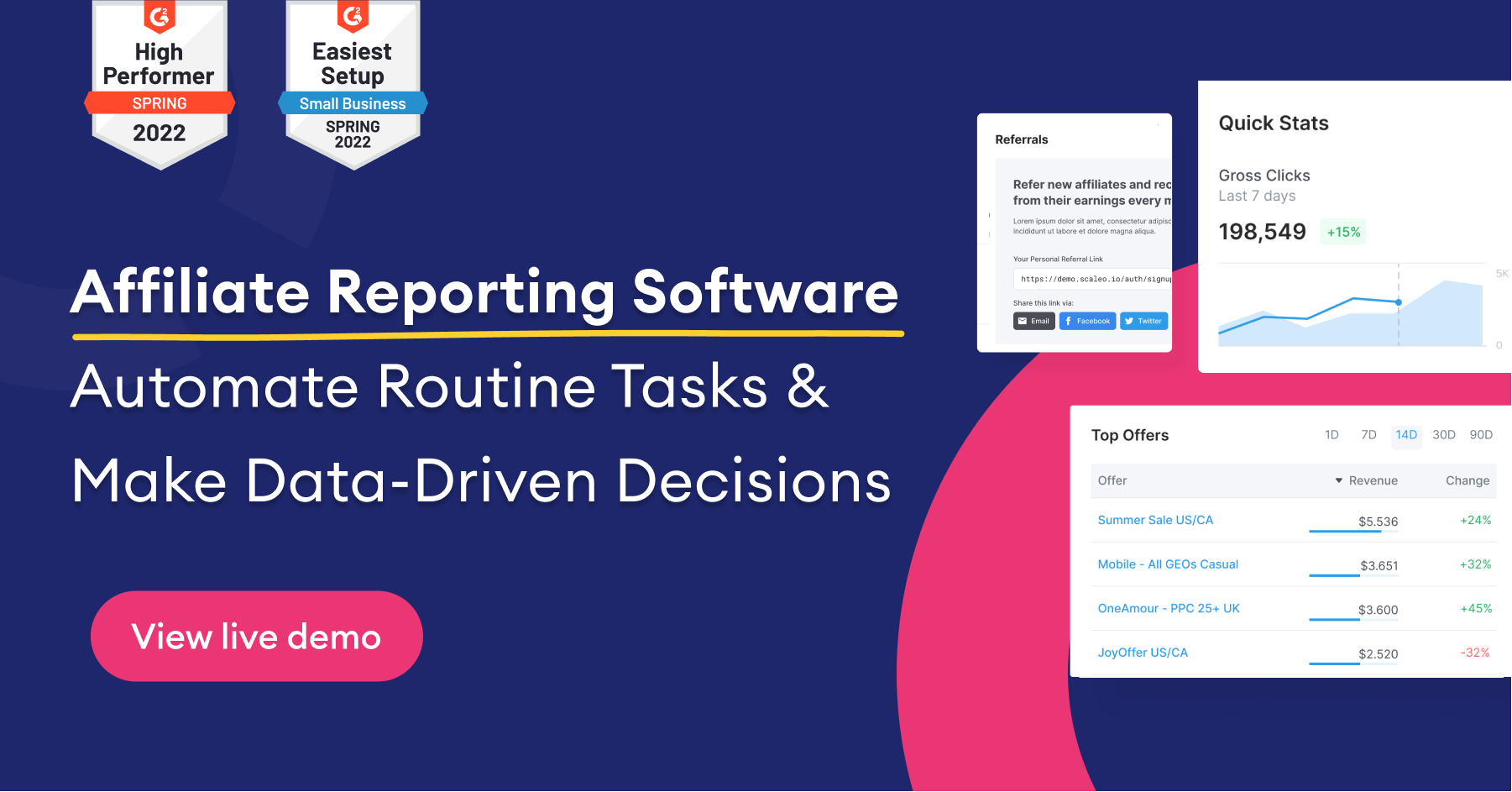
Scaleo helps performance marketing teams track partner traffic, attribute conversions, detect fraud, automate commission rules, manage affiliate dashboards, analyze campaign performance, and prepare payouts. You can start with a 14-day free trial or schedule a demo.
| Scaleo Capability | How It Helps Performance Marketing Teams |
|---|---|
| Affiliate and partner tracking | Tracks clicks, conversions, postbacks, offers, affiliates, advertisers, campaigns, and traffic sources. |
| Custom conversion events | Supports different performance actions such as leads, sales, registrations, deposits, renewals, and other events. |
| Anti-fraud logic | Helps detect suspicious traffic, duplicate conversions, bot activity, and invalid performance before payout. |
| Commission automation | Supports performance-based payout models such as CPA, CPL, RevShare, Hybrid, flat, recurring, and custom rules. |
| Partner dashboards | Gives affiliates and partners self-serve access to performance, links, reports, and balances. |
| Real-time reporting | Shows campaign, offer, affiliate, GEO, device, OS, browser, referral, click ID, and conversion performance. |
| White-label interface | Lets companies run a branded partner or affiliate portal. |
| Integrations and APIs | Connects performance data with eCommerce, CRM, payment, analytics, and iGaming systems. |
That makes Scaleo different from a general analytics tool. Google Analytics can show that traffic converted. Scaleo helps you manage the commercial consequences of that conversion: who sent it, whether it is valid, what it is worth, which commission rule applies, and what should happen during payout.

Performance Marketing Software Stack: 15 Tools by Category
Not every tool in a performance marketing stack is a full performance marketing platform. Some tools manage attribution and payouts. Others help with analytics, landing pages, data consolidation, email automation, creative production, or SEO research. The table below separates them by category so you can choose the right tool for the right job.
| Tool | Category | Best Fit |
|---|---|---|
| Scaleo | Performance marketing platform / affiliate tracking software | Affiliate, referral, partner, media buying, and iGaming campaigns that need tracking, fraud control, commission automation, and payouts. |
| Funnel | Marketing data hub | Consolidating data from ad platforms and reporting sources. |
| Google Analytics | Website and app analytics | Measuring traffic, events, conversions, and audience behavior. |
| Referral AI | Referral intelligence | Identifying relationship paths, advocates, and referral opportunities. |
| Attention Insight | AI heatmap / attention prediction | Predicting visual attention before publishing landing pages or creatives. |
| Kissmetrics | Behavioral analytics | Analyzing customer behavior, product journeys, and cohort performance. |
| Crazy Egg | CRO and heatmaps | Understanding on-page behavior with heatmaps, scroll maps, and recordings. |
| Unbounce | Landing page builder | Building and testing conversion-focused landing pages for paid campaigns. |
| OptimizePress | WordPress landing page and funnel builder | Creating WordPress sales pages, opt-in pages, funnels, and checkout flows. |
| BuzzSumo | Content research | Finding popular content, influencers, topics, and competitor content signals. |
| Mailchimp | Email marketing | Email campaigns, newsletters, audience segmentation, and lifecycle communication. |
| SEMrush | SEO and PPC research | Keyword research, competitor analysis, PPC insights, and search visibility tracking. |
| Canva | Creative production | Creating social ads, banners, presentations, visual assets, and campaign graphics. |
| HubSpot | CRM and marketing automation | Lead management, marketing automation, sales pipelines, and customer communication. |
| VWO / Optimizely / Convert | A/B testing and experimentation | Testing page variants, conversion flows, and user experiences after Google Optimize was discontinued. |
1. Scaleo
Scaleo is a performance marketing platform for businesses that need to manage measurable partner-driven growth. It is especially useful for advertisers, affiliate networks, SaaS companies, eCommerce brands, media buying teams, and iGaming operators that need real-time tracking, partner dashboards, fraud prevention, commission automation, and payout workflows.
Use Scaleo when your performance marketing program depends on knowing exactly which affiliate, campaign, channel, offer, GEO, click ID, postback, or conversion event created value. It is built for teams that need more than “traffic went up.” They need to know what is payable, what is profitable, and what should be blocked before it damages margins.
2. Funnel
Funnel is a marketing data hub designed to collect, organize, and transform data from many advertising and marketing platforms. It is useful when your team spends too much time pulling data from different ad accounts, spreadsheets, dashboards, and reporting tools.
Funnel is not a partner payout or affiliate tracking platform, but it can support performance marketing teams that need cleaner cross-channel reporting.
3. Google Analytics
Google Analytics is a widely used analytics tool for measuring website and app traffic, user behavior, events, acquisition sources, and conversion activity. It is useful for understanding how visitors interact with your digital properties.
However, Google Analytics is not a complete performance marketing platform. It does not manage affiliate portals, partner commission plans, fraud controls, advertiser billing, postback validation, or partner payouts.

4. Referral AI
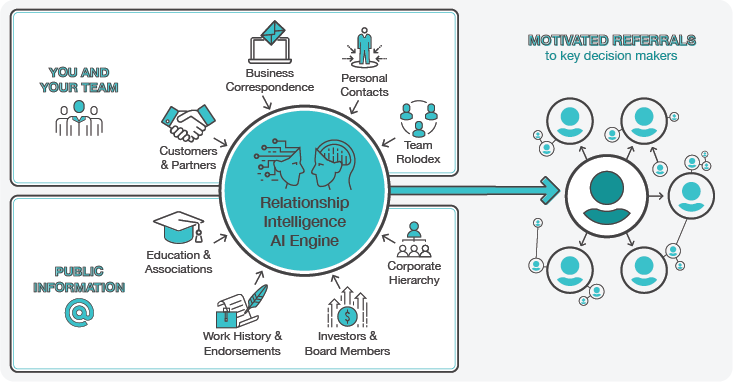
Referral AI tools help identify potential brand advocates, relationship paths, referral opportunities, and people who may be able to introduce your business to high-value prospects or partners.
This can support performance marketing when referral partnerships are part of the acquisition strategy, but referral intelligence still needs tracking and attribution if commissions or partner rewards are involved.
5. Attention Insight
Attention Insight is an AI-driven attention prediction and heatmap tool. It helps marketers understand which parts of a landing page, creative, or visual asset are likely to attract attention before the campaign goes live.
It is useful for improving conversion assets, but it does not replace conversion tracking, attribution, fraud prevention, or partner payout logic.

6. Kissmetrics
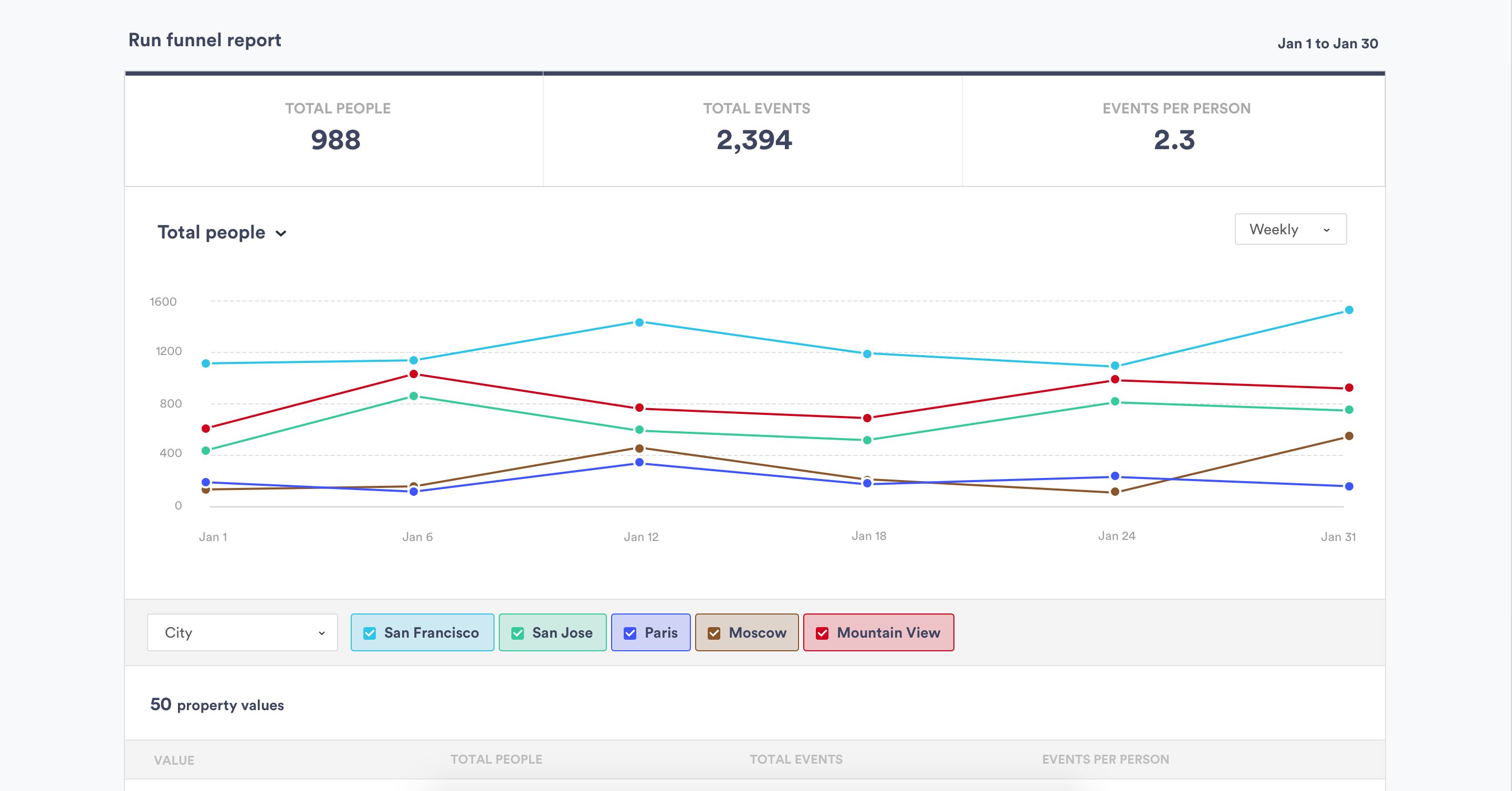
Kissmetrics is a behavioral analytics platform that helps teams understand customer journeys, product behavior, retention, and conversion activity over time.
It is useful for customer analytics and funnel visibility, especially when you need to understand what happens after a user signs up. It does not, by itself, manage partner commissions or affiliate payout workflows.
7. Crazy Egg
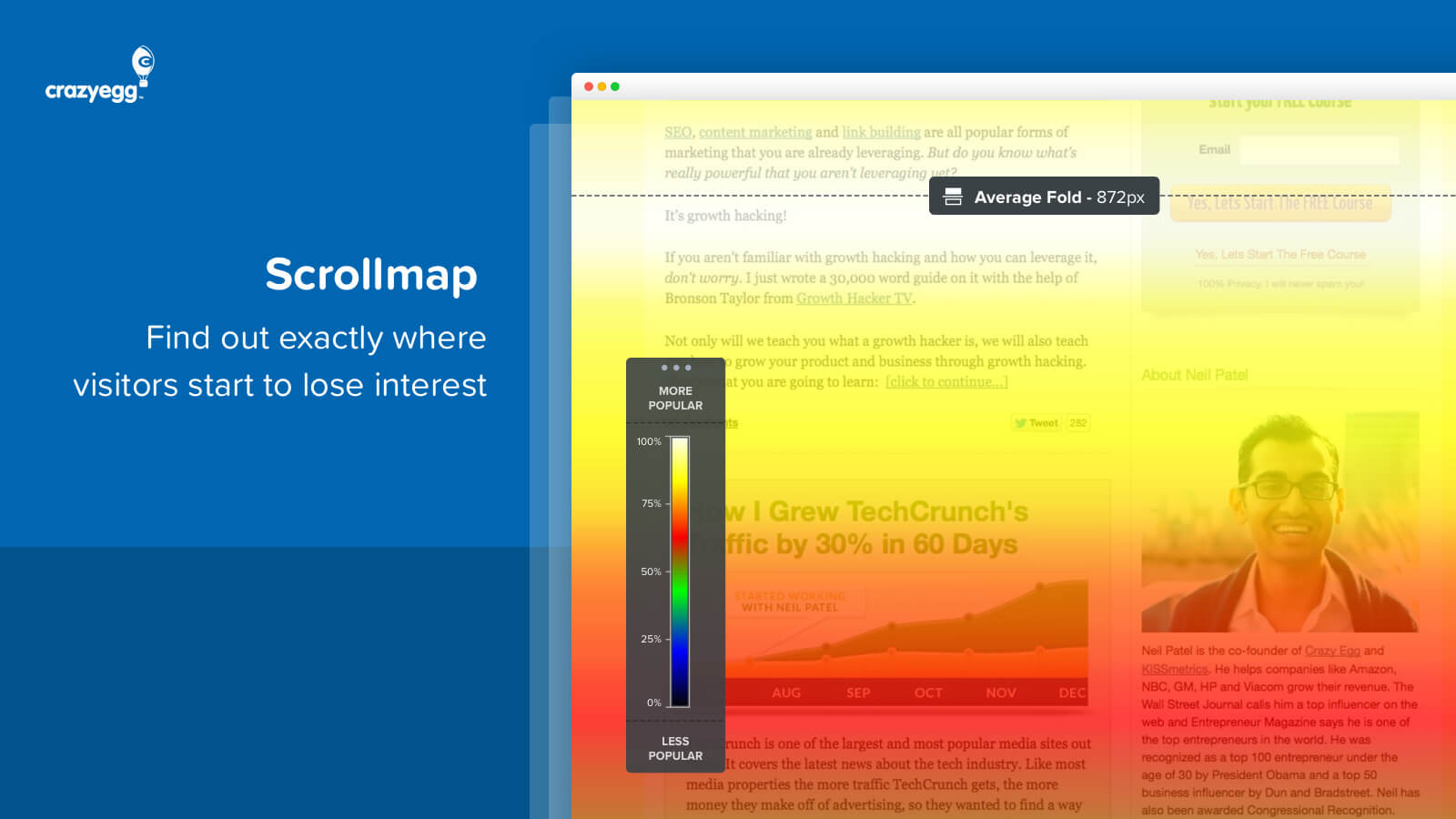
Crazy Egg is a website optimization tool that provides heatmaps, scroll maps, recordings, and A/B testing features. It helps teams understand how visitors behave on landing pages and where conversion friction appears.
Crazy Egg can support performance marketing by improving landing page conversion rates, but it does not manage campaign attribution or partner payouts.
8. Unbounce
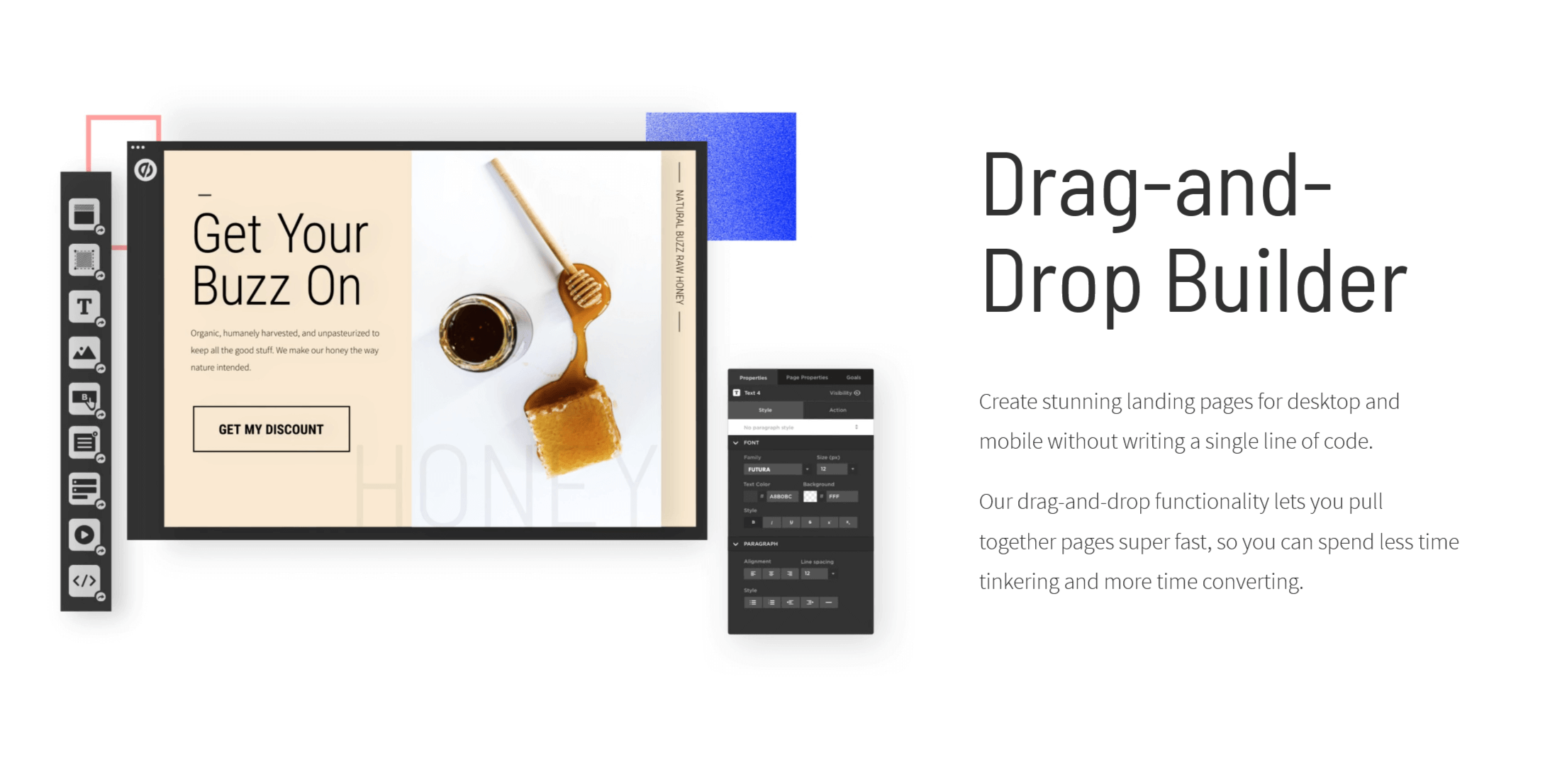
Unbounce is a landing page builder for creating campaign-specific pages without heavy development work. It is useful for paid media teams that need fast landing page testing, lead capture pages, and conversion-focused campaign assets.
Landing pages are critical for performance marketing, but a landing page builder is not the same as a performance marketing platform. You still need tracking and attribution to know which traffic source produced the result.
9. OptimizePress
OptimizePress is a WordPress landing page and funnel builder. It can help marketers create landing pages, opt-in pages, sales pages, checkout flows, and campaign funnels directly inside WordPress.
It is useful for WordPress-based performance campaigns, especially when combined with conversion tracking and partner attribution software.

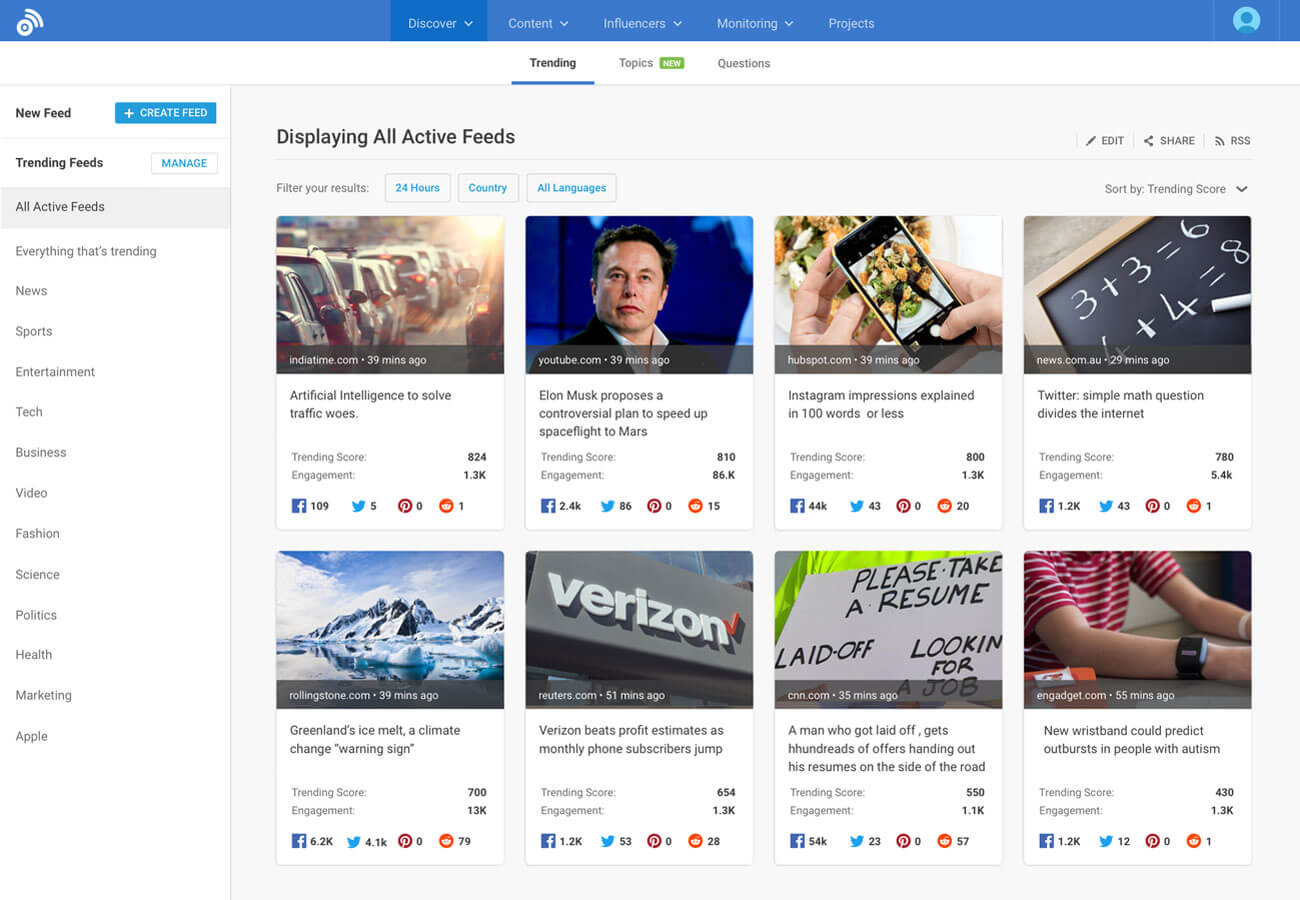
10. BuzzSumo
BuzzSumo helps marketers research popular content, monitor topics, find influencers, and identify what performs in a given niche. It is helpful for content-led performance campaigns, native advertising ideas, and publisher outreach.
BuzzSumo supports campaign planning, but it does not track payable partner events or calculate commissions.
11. Mailchimp
Mailchimp is an email marketing platform for newsletters, automated campaigns, audience segmentation, and lifecycle communication. It can support performance marketing by nurturing leads, reactivating users, and communicating offers.
Email marketing can be performance-based when tied to measurable conversions, but email software alone does not solve partner attribution or payout management.
12. SEMrush
SEMrush is an SEO and PPC research platform used for keyword research, competitor analysis, paid search insights, content planning, and search visibility monitoring. It is useful for teams that use SEO or paid search as part of a performance marketing strategy.
Search tools help you find opportunities. Performance marketing software helps you track and monetize the results those opportunities create.
13. Canva
Canva is a creative production tool for building ad creatives, banners, social assets, presentations, and campaign visuals. Strong creative can improve campaign performance, especially in social, native, and affiliate campaigns.
Creative tools are useful, but they should be connected to performance reporting so teams know which assets actually drive clicks, leads, sales, or other conversion events.
14. HubSpot
HubSpot is a CRM and marketing automation platform for managing leads, contacts, sales pipelines, landing pages, email campaigns, and customer communication. It is useful when performance marketing feeds a sales team or nurture funnel.
HubSpot can help manage lead follow-up, but affiliate and partner performance programs still require tracking, partner reporting, fraud controls, and commission logic.
15. VWO, Optimizely, or Convert
Experimentation platforms such as VWO, Optimizely, and Convert can replace the A/B testing role that Google Optimize used to play before it was discontinued. They help teams test landing pages, checkout flows, calls to action, and user experiences.
These tools can improve conversion rates, but they should be paired with a performance marketing platform if partner attribution, fraud checks, or payouts are involved.
Benefits of Performance Marketing Software
Performance marketing software gives teams one of the most underrated business advantages: fewer arguments about what actually happened. When tracking, attribution, validation, reporting, and payout logic live in one place, the team can spend less time reconciling numbers and more time improving campaigns.
- Centralized campaign data: Bring critical performance data into one system instead of scattering it across ad platforms, spreadsheets, dashboards, and emails.
- Real-time visibility: See clicks, conversions, partners, offers, payouts, and traffic quality while campaigns are running.
- Better attribution: Connect each conversion to the right traffic source, affiliate, partner, campaign, click ID, or postback.
- Fraud protection: Detect invalid clicks, duplicate conversions, suspicious traffic, and low-quality sources before they distort ROI.
- Automated payouts: Reduce manual finance work by applying commission rules and preparing balances more consistently.
- Partner trust: Give affiliates and partners access to transparent reports, balances, and performance data.
- Better ROI decisions: Cut low-performing sources and invest more into campaigns, offers, partners, and GEOs that produce real value.
How Can Performance Marketing Software Improve ROI?
Performance marketing software improves ROI by showing which campaigns, partners, channels, offers, and traffic sources create profitable outcomes — and which ones only create noise. The software does not magically make a campaign profitable. It gives you the evidence needed to stop guessing.
- Organize performance data: Bring clicks, conversions, revenue, partner activity, and payout data into one measurable workflow.
- Analyze channels and partners: Compare performance across affiliates, media buyers, paid search, native campaigns, referral partners, GEOs, and offers.
- Reduce wasted spend: Identify campaigns with high clicks but poor conversion quality, fraud risk, weak EPC, or low post-conversion value.
- Improve payout accuracy: Apply commission rules automatically instead of calculating partner rewards manually.
- Optimize toward margin: Move beyond surface metrics and focus on revenue, payout cost, conversion quality, and long-term value.
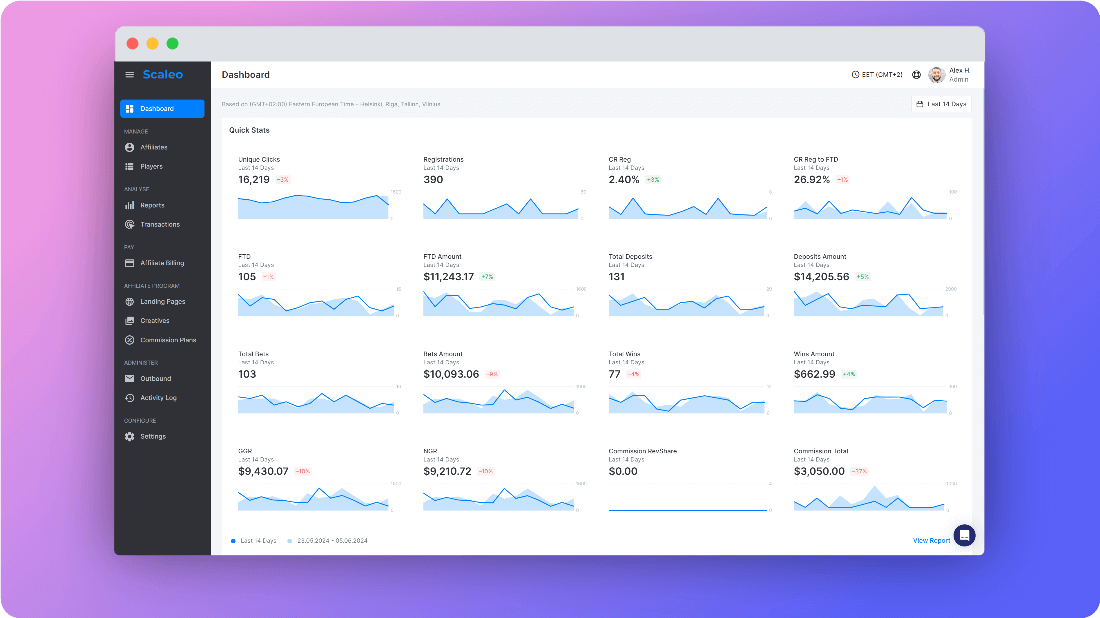
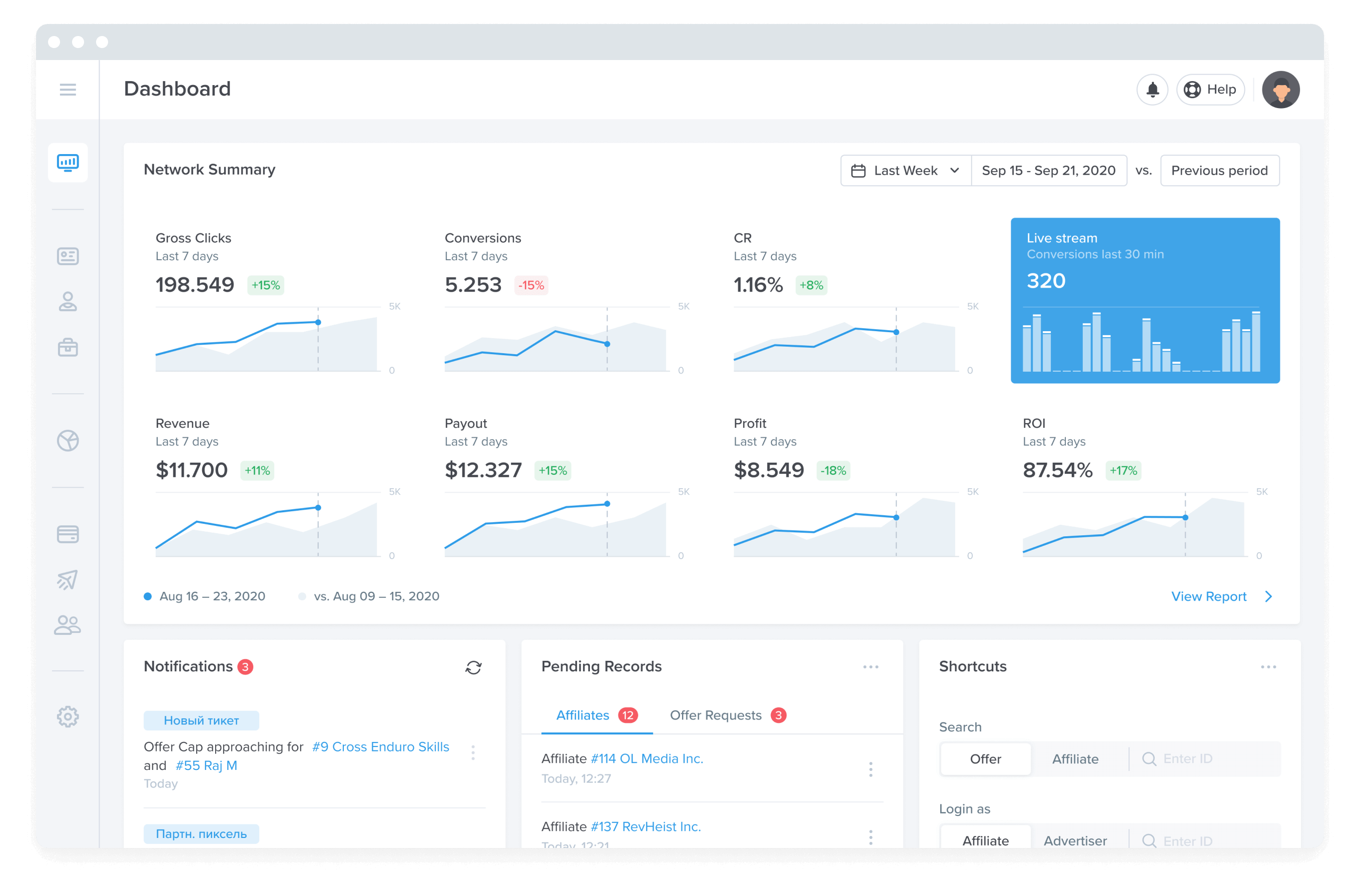
In Scaleo, for example, performance teams can analyze campaign and partner activity using breakdowns such as GEO, browser, OS, IP address, referral, click ID, offer, affiliate, advertiser, conversion event, and payout status. That level of visibility is where performance marketing becomes management, not guesswork.
Is Performance Marketing Software the Right Choice for You?
You likely need performance marketing software if your business pays, rewards, optimizes, or reports based on measurable actions. This includes affiliate programs, partner marketing programs, referral programs, paid media campaigns, CPA campaigns, CPL lead generation, subscription campaigns, iGaming acquisition, and media buying operations.
You may not need a full platform if you only run a small internal campaign and only need basic website analytics. But once external partners, traffic sources, fraud risk, commission rules, or payout workflows enter the picture, basic analytics tools usually stop being enough.
The clearest sign is reconciliation pain. If your team spends hours checking whether conversions are valid, whether affiliates should be paid, why two dashboards disagree, or which campaign actually worked, the program has outgrown manual performance reporting.
How Performance Marketing Software Works
Performance marketing software works by connecting campaign traffic to measurable events. A user clicks an ad, affiliate link, referral link, native placement, or partner tracking URL. The platform records the click, stores relevant parameters, receives the conversion event through a pixel, SDK, API, or server-to-server postback, and attributes the result to the correct source.
From there, the platform can validate the event, check it against fraud rules, apply a commission model, update reporting dashboards, and prepare payout data. In serious performance programs, this is the real operating system: not the ad itself, but the chain of evidence from click to conversion to payment.
Typical performance marketing data includes:
- Click ID, affiliate ID, partner ID, advertiser ID, offer ID, campaign ID, and source ID.
- GEO, device, browser, operating system, IP address, referral URL, and traffic channel.
- Conversion type, conversion time, revenue value, payout value, status, and fraud flags.
- Performance metrics such as CTR, CR, EPC, eCPM, CPA, CPL, ROI, ROAS, and payout cost.
Performance Marketing Payment Models
Performance marketing connects spend or partner rewards to measurable action. The most common payment models include:
| Model | Meaning | Common Use |
|---|---|---|
| CPM | Cost per thousand impressions. | Awareness campaigns and display advertising. |
| CPC | Cost per click. | Paid search, social ads, native ads, and traffic campaigns. |
| CPL | Cost per lead. | Lead generation, B2B forms, quote requests, and signups. |
| CPA | Cost per acquisition or specific action. | Sales, registrations, deposits, installs, trials, or approved conversions. |
| CPS | Cost per sale. | eCommerce and affiliate sales programs. |
| RevShare | Revenue share between advertiser and partner. | Affiliate, SaaS, subscription, and iGaming programs. |
| Hybrid | A combination of CPA, RevShare, CPL, flat fees, or bonus rules. | Advanced affiliate and iGaming partner programs. |
The more complex the payment model, the more important software becomes. Flat CPC campaigns can be managed with ad platform reporting. Hybrid partner programs with fraud checks, tiered rewards, and delayed revenue events need stronger infrastructure.
Top Performance Marketing Channels
Performance marketing can run across several channels. What makes them performance-based is not the channel itself, but the measurable action attached to the campaign.
1. Affiliate Marketing
Affiliate marketing is one of the clearest forms of performance marketing. An advertiser works with affiliates or publishers who promote an offer. The affiliate is paid when a defined action occurs, such as a click, lead, sale, registration, first deposit, or other conversion event.
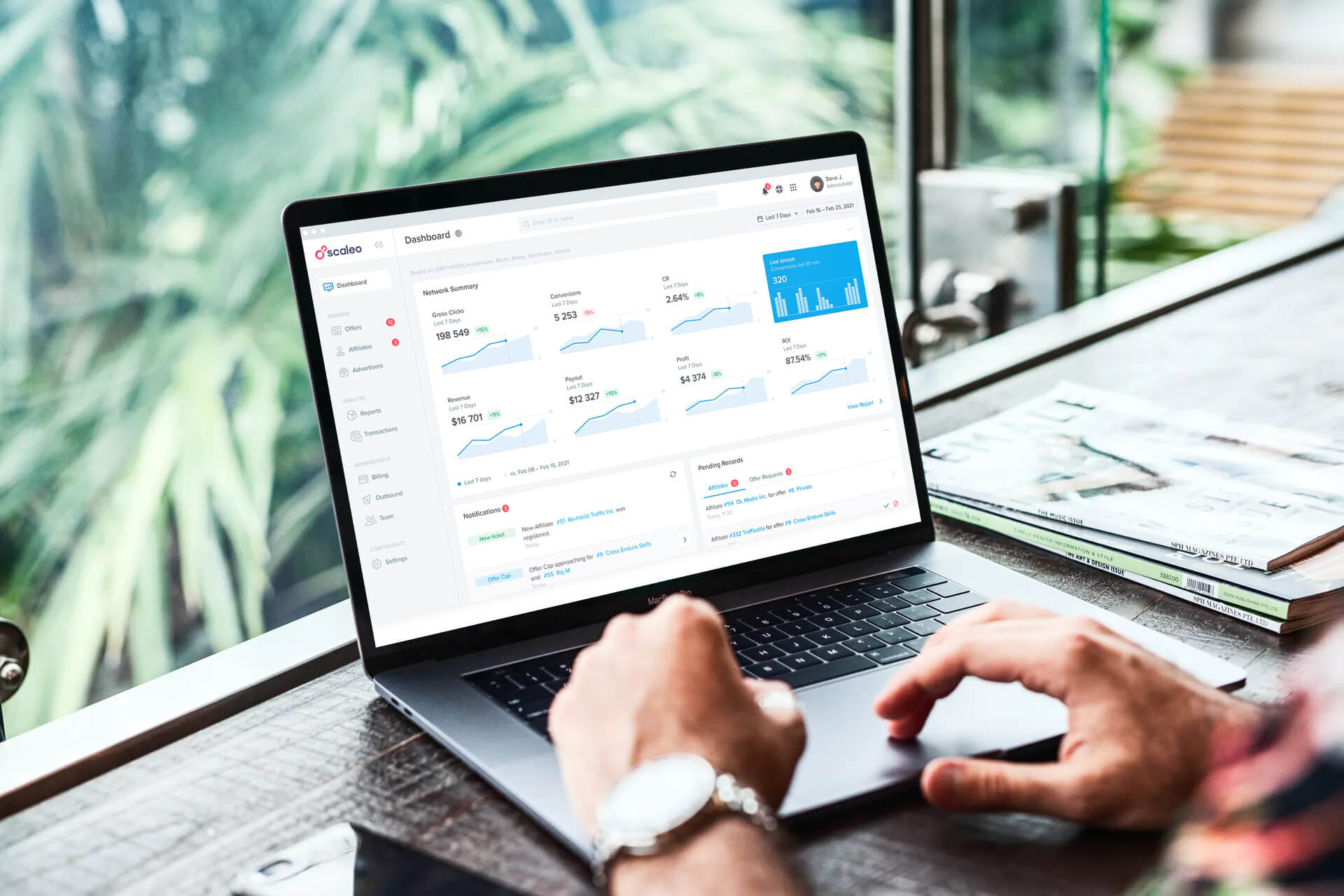
Affiliate marketing software such as Scaleo acts as the tracking, attribution, reporting, and payout layer between advertisers and partners. It helps both sides see what happened, which conversion is valid, and what commission is owed.
2. Native Advertising
Native advertising promotes content or offers inside publisher environments where the ad format resembles the surrounding content. It can be performance-based when campaigns are optimized around CPC, CPA, CPL, sales, or post-click conversions.
Native campaigns need careful tracking because cheap clicks can hide poor conversion quality. Performance marketing software helps teams compare publishers, placements, GEOs, devices, and conversion quality instead of judging a campaign only by click volume.
3. Social Media Advertising
Social media advertising is performance marketing when campaigns are optimized toward measurable goals such as clicks, leads, app installs, purchases, trials, or registrations. Platforms such as Facebook, Instagram, LinkedIn, TikTok, YouTube, and others provide their own reporting, but cross-channel attribution can still become difficult.

If partners, influencers, or media buyers are involved, a dedicated platform becomes more important because the business needs to attribute results to the correct source and calculate the correct reward.
4. Paid Search and SEM
Search engine marketing is performance-driven because advertisers pay to appear in front of users with intent. Campaigns are usually optimized around CPC, CPA, ROAS, lead quality, or revenue.
Ad platforms show campaign performance, but performance marketing software can help connect paid search traffic to partner programs, affiliate offers, CRM outcomes, or downstream revenue events. That matters when the real value happens after the first click.
5. Referral and Partner Marketing
Referral and partner marketing become performance marketing when rewards are connected to measurable actions. A SaaS company may reward partners for qualified leads, demos, trials, subscriptions, or renewals. An eCommerce brand may reward referrals for first purchases. An iGaming operator may reward affiliates for registrations, FTDs, deposits, or NGR-linked events.
These programs need reliable attribution and payout logic. Otherwise, partner trust collapses quickly. Few things make partners more philosophical than missing commissions. And by philosophical, we mean angry.
Performance Marketing Tracking Software: Why Do You Need It?
Performance marketing tracking software is needed when your business must prove which traffic source, campaign, partner, click, or event created a result. Without tracking, you can see revenue but not the route that produced it. Without attribution, you can reward the wrong partner. Without fraud checks, you can pay for invalid activity. Without payout workflows, finance becomes a spreadsheet hostage.

A good performance marketing tracking platform should help you:
- Track clicks, impressions, conversions, leads, sales, deposits, subscriptions, or other custom actions.
- Attribute every conversion to the correct affiliate, campaign, traffic source, offer, or click ID.
- Detect suspicious activity before invalid traffic becomes paid traffic.
- Give partners and internal teams access to accurate reports.
- Automate commission rules and payout preparation.
- Integrate with CRM, eCommerce, analytics, ad platforms, payment systems, and iGaming platforms.
How to Choose the Right Performance Marketing Platform
The right performance marketing platform is the one that matches your campaign model, attribution needs, partner structure, fraud exposure, commission logic, and reporting requirements. Do not choose software only because the dashboard looks nice. Shiny dashboards have never saved anyone from a bad payout run.
| Question to Ask | Why It Matters |
|---|---|
| What actions do we need to track? | Clicks, leads, sales, installs, registrations, deposits, renewals, and revenue events require different tracking setups. |
| Who needs credit for each conversion? | Attribution rules determine partner trust and payout accuracy. |
| Do we pay partners, affiliates, or media buyers? | If yes, the platform needs commission logic and payout workflows. |
| Do we need fraud prevention? | Performance-based payments attract invalid clicks, duplicate conversions, bots, and low-quality traffic. |
| Do partners need their own dashboard? | Partner portals reduce reporting requests and increase transparency. |
| Do we need API or postback integrations? | Performance programs often need server-to-server tracking, CRM sync, payment data, or iGaming event data. |
| Can finance reproduce the payout numbers? | Reliable reporting prevents disputes and protects margins. |
For a simple paid traffic campaign, analytics and ad platform reporting may be enough. For an affiliate program, partner program, iGaming campaign, or any model where external partners are rewarded for performance, you need a platform like Scaleo that connects tracking, validation, reporting, and payout logic.
Frequently Asked Questions
What is performance marketing software?
Performance marketing software helps companies track, attribute, optimize, and pay for measurable marketing outcomes such as clicks, leads, sales, registrations, deposits, subscriptions, renewals, and revenue events. It is used to connect campaign activity with real business results.
What is a performance marketing platform?
A performance marketing platform is software that manages the operational layer of performance-based campaigns, including tracking, attribution, partner management, offer management, fraud prevention, commission automation, reporting, and payout workflows.
Is Scaleo a performance marketing platform?
Yes. Scaleo is a performance marketing platform for affiliate, referral, partner, media buying, and iGaming campaigns. It helps teams track clicks and conversions, attribute events, detect fraud, automate commissions, manage partner dashboards, and prepare payouts.
What features should performance marketing software include?
Performance marketing software should include real-time tracking, attribution logic, fraud prevention, partner management, campaign reporting, custom event tracking, commission automation, API integrations, and payout workflows.
What is the difference between performance marketing software and Google Analytics?
Google Analytics shows website and app behavior, traffic sources, and conversion activity. Performance marketing software goes further by managing partner tracking, attribution, fraud checks, commission rules, affiliate dashboards, advertiser reporting, and payout workflows.
Who needs performance marketing software?
Performance marketing software is useful for advertisers, affiliate managers, partner marketing teams, SaaS companies, eCommerce brands, media buyers, affiliate networks, and iGaming operators that need to track measurable outcomes and manage performance-based payouts.
Can performance marketing software prevent fraud?
Performance marketing software can help detect and reduce fraud by flagging suspicious clicks, duplicate conversions, bot activity, unusual traffic patterns, and low-quality sources. Fraud prevention is especially important when partners are paid based on measurable actions.
How do you choose the best performance marketing platform?
Choose a performance marketing platform based on your campaign model, attribution needs, partner structure, fraud exposure, commission rules, reporting requirements, integrations, and payout workflows. The best platform is the one that can prove which source created value and what should happen next.
Conclusion: How to Choose the Right Performance Marketing Software
Performance marketing software blends strategy and technology to help businesses track, attribute, optimize, and pay for measurable outcomes. The right platform should not only show campaign data. It should help you understand what happened, who caused it, whether it can be trusted, and what action should follow.
If you only need website traffic reports, an analytics tool may be enough. If you manage affiliates, referral partners, media buyers, advertisers, iGaming partners, or any campaign where performance leads to payout, you need a stronger performance marketing platform.
Scaleo is built for that operational layer of performance marketing. It helps teams manage tracking, attribution, fraud prevention, partner reporting, commission rules, and payouts from one platform — so you can stop reconciling spreadsheets and start optimizing the campaigns that actually move revenue.