
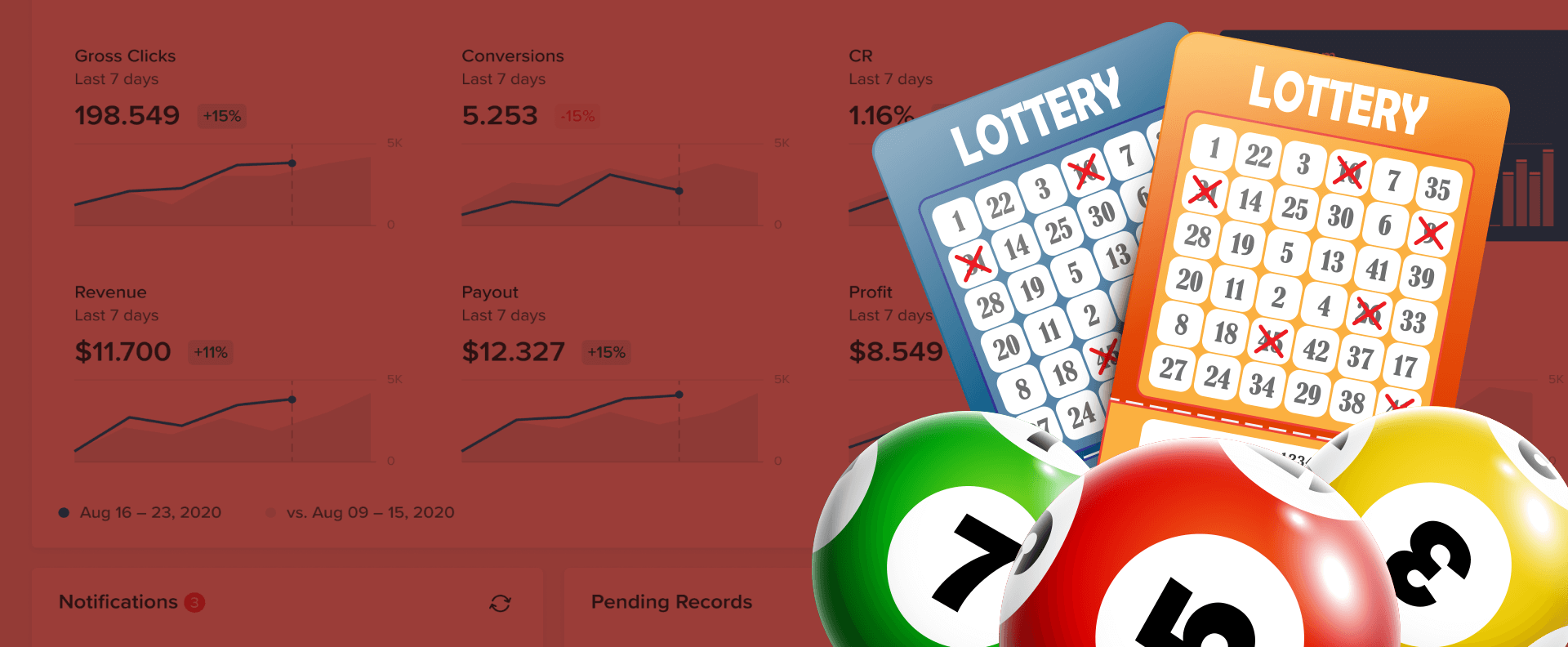
Lottery affiliate software is the control center for running a modern lottery affiliate program. It tracks referrals, attributes first ticket purchases correctly, calculates commissions, prevents fraud, and shows you—in real time—which partners and creatives actually move tickets. If you’re looking to add an efficient growth channel you pay for only when outcomes occur, this is where you start.

What lottery affiliate software actually does?
At its core, the platform connects three things: your traffic sources (affiliates), your storefront or app (where players buy tickets or subscriptions), and your finance/compliance workflow.
Every click, visit, signup, and paid action is stitched into a single, auditable journey so you can reward verified results and shut down anything that wastes budget. Think less “banner spreadsheet,” more “revenue-grade telemetry + payouts.”
Unlike generic tracking tools, lottery-focused stacks need to understand subscription plays (weekly draws, syndicates), bundles, recurring payments, and local rules around responsible play and advertising. The right software makes those realities boringly manageable.
Why a lottery affiliate program is worth it
Affiliates expand reach into audiences you won’t buy efficiently with standard ads: publisher lists, review portals, deal sites, communities, creators, and email databases that already trust the messenger. You set clear commercial terms (CPA for a first ticket or subscription start, RevShare for recurring orders, or a Hybrid), and you only pay when the player buys. Done right, it’s capital-efficient acquisition with compounding retention.
The other upside: reality. Because tracking is event-based and server-verified, your media decisions ride on outcomes, not hopes. If a partner’s cohort renews for months, they earn accordingly; if a channel sends low-quality one-timers, the economics self-correct.
The must-have capabilities (and why they matter)
| Capability | Why you need it | What “good” looks like |
|---|---|---|
| First-party IDs + S2S postbacks | Survive browser changes; pay on verified events | Your domain issues the click ID; purchases & renewals confirm server-to-server |
| Code/coupon attribution | Stop last-second steals and misattribution | Unique codes tied to partners; stacked discounts resolved by rules |
| Multi-currency + tax aware payouts | Pay fairly across markets | Local currencies, VAT/withholding support, invoice trails |
| Recurring order logic | Model subscriptions & syndicates | Commission on first order, renewal windows, and clawback policies |
| Fraud/risk scoring | Kill junk traffic early | IP/ASN/device checks, velocity flags, brand-bidding alerts |
| Creative & link hub | Enable partners fast | Deep links, localized assets, pre-approved claims |
| Real-time reporting | Adjust while it matters | Creative×GEO cohorts, first purchase density, D30 revenue |
| Role-based access | Keep the team sane | Affiliate portal, manager view, finance exports, compliance logs |
If any of these are missing, you’ll feel it—in disputes, delays, and dollars.
Commission models for lottery (and when to use them)
Commissioning is your risk dial. Choose what matches your unit economics and cash-flow reality.
- CPA (Cost Per Acquisition) pays a fixed amount when a referred player completes a qualified action (first ticket or subscription start). It’s simple, predictable, and great for testing new markets. Guard it with event rules—KYC passed, valid payment, no refunds in X days.
- RevShare pays a percentage of net revenue (or margin) over time. Perfect for subscription products, syndicates, and repeat ticket buyers where retention is the story. You’ll need clear definitions (what’s “net”?) and sensible negative carryover rules.
- Hybrid splits the difference: a smaller CPA plus RevShare for a set period. It stabilizes partner cash flow without untethering payouts from lifetime value.
- CPL (lead) is rarely the right choice in lottery unless your qualification and sales cycles are airtight. If you can’t validate lead quality quickly, don’t do it.
A clean program publishes these terms in plain language, enforces them in software, and pays on a calendar partners can set their watches by.
Tracking and attribution that finance will trust
Lottery funnels are deceptively simple: click → lander → account → KYC → first ticket → renewal(s). The devil is in identity and evidence.
Use first-party click IDs you control. Fire server-to-server postbacks for purchases, renewals, refunds, and chargebacks so your payout ledger matches your bank, not just your browser. Attribute codes and coupons to the right partner, and log brand-bidding violations automatically. With that spine in place, commission disputes plummet.
Data you’ll live by
Operators who scale this channel obsess over a short list of signals:
- Time-to-First-Purchase (TTFP)—median time from first click to first paid ticket; it exposes funnel friction.
- First Purchases per 1,000 impressions—connects media to money, not just clicks.
- Average Order Value (AOV) and plan mix—singles vs. bundles vs. subscriptions.
- D7/D30 net revenue per 100 signups—early LTV proxies that tell you who to fund.
- Renewal rate and churn window—your subscription health.
- Complaint/chargeback rate and responsible-play tool adoption—growth with guardrails.
Report these by creative×GEO×partner. That grain is where the useful truths hide.
Creatives, claims, and responsible messaging
Lottery advertising is regulated for a reason. Keep copy adult, transparent, and compliant with local rules. No youth cues, no life-changing promises, no “guaranteed wins,” ever. Lead with experience and service—licensed operator, transparent odds information, easy account tools, fast support—then present offers with clear terms and visible end dates. Localize properly; “Spanish” and “Portuguese” are families of dialects, not single switches.
Give affiliates a kit that makes good behavior easy: pre-approved headlines and images, legal footers by jurisdiction, deep links to localized landers, and a style guide that shows what’s in bounds. Your program reputation will thank you.
Fraud patterns to expect—and block
Most affiliate fraud is about stealing credit, not beating the game. Expect cookie stuffing, click spamming, brand bidding on your terms, code abuse, and fake signups. Block it with device/IP/ASN checks, velocity limits, coupon ownership rules, and quarantine queues when risk scores spike. Only verified server events should ever trigger a commission, and only within a sensible attribution window.
Payments and finance operations
Paying partners should be boring. Multi-currency invoicing, scheduled or on-request invoices, clear line items, and audit trails make it so. Decide upfront how you’ll handle refunds, chargebacks, and negative carryover—and publish it. If you plan for edge cases, month-end becomes math, not negotiation.
Launch plan: from zero to running in 90 days
Start with a tight pilot and widen as evidence accumulates. In the first month, wire first-party IDs and S2S postbacks, QA events end-to-end, and stand up an affiliate portal with a minimal creative kit and two commission templates (CPA + Hybrid).
In the second month, onboard a small, curated set of partners across two GEOs, enforce brand-bidding and coupon rules from day one, and review cohorts weekly at the creative×GEO level. In the third month, expand creatives, add subscription-aware RevShare where it fits, automate payouts on a fixed calendar, and publish a public rulebook (traffic types allowed, claims, brand terms, code usage, payout schedule, strike policy). Keep every change reversible and logged.
SaaS vs self-hosted vs homegrown
| Dimension | SaaS Platform | Self-Hosted | Homegrown Build |
|---|---|---|---|
| Time to launch | Fast | Medium | Slow |
| Upfront cost | Low–Medium | Medium | High |
| Maintenance | Vendor | You | You forever |
| Feature depth | Broad, battle-tested | Varies | Whatever you can fund |
| Compliance updates | Included | Your job | Your job |
| Risk & fraud features | Built-in | Add-ons or custom | Custom (costly) |
Teams choose SaaS when they want to spend time on growth, not plumbing. Self-hosting or building can make sense with very specific constraints, but be honest about total cost of ownership.
Working with affiliates (so they actually move tickets)
Good partners are busy. They promote what’s easy to promote and pays predictably. Give them clean links, localized landers, a small set of high-quality creatives, and a portal where they can see status in real time. Tell them exactly what’s allowed (and what isn’t), answer questions fast, and pay on time. If you gamify the program—leaderboards, tiers, short “quests”—segment by traffic type and GEO so comparisons are fair and morale stays high.
Where does Scaleo fit in your lottery stack?
When you’re ready to run lottery affiliates like an operating system, you want tracking you can defend, commissions you can express in software (CPA, RevShare, Hybrid, subscriptions, renewals), and fraud controls that act before money leaks.

That’s what we build. Scaleo gives you first-party click IDs, instant server-to-server postbacks for purchases and renewals, coupon/code attribution, brand-bidding protection, creative-level cohorts, audit-ready invoices, and a clean partner portal—so your team spends time growing the channel, not reconciling it.
If you already juggle multiple affiliate sources (SEO publishers, creators, comparison sites, email partners), we can consolidate those channels into one dashboard with uniform rules and payouts.
Conclusion
Launching lottery affiliate software isn’t about adding another tool; it’s about establishing a repeatable growth system you can defend to finance and regulators. Get the tracking spine right, choose commission models that match your cash-flow and retention realities, enable partners with compliant assets, and let real-time data guide who you fund and who you fix. The rest—payouts, fraud, audits—becomes predictable.
If you want an easier way to start—or to pull all your affiliate channels into one clean dashboard—try Scaleo.
We’re built for lottery and iGaming teams that want first-party tracking, server-verified payouts, code attribution, fraud controls, and creative-level cohorts without duct tape. Set up a pilot, plug in your storefront, invite a handful of partners, and see how quickly a disciplined affiliate program can start compounding.

What is artificial intelligence lottery software?
Artificial intelligence lottery software is a program that uses AI technology (algorithm) to analyze data and make predictions for lottery outcomes. Needless to say, AI lottery software is a dream scenario for players, but it’s unlikely ever to outsmart the chance of randomness.
Yes—if “net” is defined clearly, renewals are tracked server-side, and you publish carryover rules. Many lottery products are subscription-friendly; RevShare aligns incentives with retention.
How fast should I pay?
Pick a calendar and keep it. Weekly or monthly both work if your refund/chargeback windows and negative carryover policies are crystal-clear.
What about AI “prediction” for lottery outcomes?
Lotteries are random by design. No software can beat chance. Use analytics for marketing—propensity, churn, creative rotation—not to “predict draws.”
Do I need code attribution if I already track links?
Yes. Codes close the loop for offline or social placements and prevent last-minute steals. Tie each code to a partner and resolve conflicts the same way, every time.