

Affiliate models remain relatively unchanged over the years, but as the popularity of affiliate marketing grows, so does the need to understand the various new commission models available to both businesses and affiliates.
In this article, we’ll look at 10 different affiliate marketing commission models, including pay-per-sale, pay-per-lead, pay-per-click, pay-per-impression, two-tier commission, recurring commission, multi-level marketing, and cost-per-action.
By the end of this article, you’ll have a thorough understanding of each commission model and its distinct advantages and will be able to find the one that best suits your business.
This is a must-read for both companies looking to launch an affiliate marketing program and affiliates seeking to boost their earnings.
Let’s get this party started!
TL;DR
Based on all the affiliate programs we run and see in operations, in our opinion:
RevShare/Lifetime are amazing only if your reporting is transparent and your “net revenue” isn’t a mystery soup.
Most programs should start with PPS/CPA (clean math), then offer Hybrid to your best partners.
If you can’t define “qualified” conversions in one sentence, don’t run CPA/PPL yet—you’ll just pay for chaos.
10 Types of Affiliate Commission Models
| Type | Description |
|---|---|
| Cost Per Acquisition (CPA) | Commission paid when a specific action is completed, like a sale or sign-up. |
| Revenue Share | Earning a percentage of the revenue generated by the referred customer. |
| Pay Per Click (PPC) | Commission for each click generated from affiliate links. |
| Pay Per Lead (PPL) | Payment for each lead generated, like a user registration or form submission. |
| Pay Per Sale (PPS) | Commission for each sale made through the affiliate link. |
| Cost Per Mille (CPM) | Payment based on the number of impressions of an ad. |
| Tiered Commission | Different commission rates based on performance tiers or sales volumes. |
| Flat Fee | Fixed payment for each action, like a sponsored post or article. |
| Lifetime Commission | Continual earnings from customers referred by the affiliate. |
| Hybrid Models | Payment is based on the number of impressions of an ad. |
Affiliate Commissions From Business Owner’s Perspective
| Model | What you pay for (trigger) | Why owners like it | Why owners hate it | When it’s a smart default | When it’s a trap | Your risk level | Your ops + tracking burden | Your fraud exposure | Practical owner rules that prevent pain |
|---|---|---|---|---|---|---|---|---|---|
| CPA | A qualified acquisition (sale/FTD/signup/KYC/etc.) | Predictable CAC; easy budgeting; scales fast | Quality fights; “definition gaming”; can pay for junk if rules are soft | Clear conversion, clear LTV, you can qualify + hold payouts | If your funnel is leaky, KYC is slow, or you can’t reject bad conversions | Medium | Medium–High | High | Define “qualified” + hold period (7–30 days), dedupe, geo/device rules, caps, clawbacks for chargebacks/fraud |
| RevShare | % of revenue/margin over time | You only pay when you earn; aligns incentives; great for retention products | Reporting disputes (net vs gross); long-term liabilities; affiliates complain about volatility | Subscription, iGaming, anything with long LTV + cohorts | If your “net revenue” is messy or you change pricing/fees often | Low–Medium (per sale), Medium (long tail) | High | Medium | Publish a net revenue formula (deductions list), negative carryover policy, cohort reporting, lock terms for X months |
| PPC (CPC) | Clicks | Easy to buy traffic; great for testing creatives/landing pages | You can buy bot clicks all day; weak link to revenue | Only when you have strong anti-fraud + you’re doing controlled tests | If you’re “hoping clicks convert” without filters | High | Medium | Very high | vaildate clicks (bot filtering, IP/device patterns), tight caps, whitelist placements, optimize to downstream events ASAP |
| PPL | Leads (form submits/regs) | Fills pipeline; cheaper than CPA; scalable leadgen | Lead quality chaos; disputes; your sales ops become bottleneck | Sales-led funnels where lead value is known and measurable | If you can’t contact leads fast or don’t have acceptance rules | Medium | High | High | Acceptance criteria (unique, reachable, consent, geo), lead scoring, auto-dedupe, reject window, pay per qualified lead not raw lead |
| PPS | Completed sales | Directly tied to revenue; straightforward | Returns/chargebacks; coupon/attribution hijack; “last click” issues | Ecom / simple checkout / strong attribution setup | Heavy coupon ecosystem + weak attribution logic | Low–Medium | Medium | Medium | Return window holds, coupon policy, new vs existing customer rules, multi-touch or assist logic if needed |
| CPM | 1,000 impressions (ideally viewable) | Predictable spend; good for awareness/reach | Performance not guaranteed; can pay for invisible/bot inventory | Brand building, retargeting reach, big publishers | If you need direct response and buy cheap inventory | High | Medium | Medium–High | Require viewability (vCPM), frequency caps, placement reports, bot filtering, block low-quality sources fast |
| Tiered | Same trigger as base model, rate changes by tier | Motivates top partners; protects margins at low volume | Encourages spammy scaling; end-of-month “tier chasing” | You have a mix of small + big partners and want to reward growth | If you don’t include quality gates | Medium | Medium–High | Depends | Tier on qualified actions only; quality KPIs required (retention/refund rate); decide retroactive vs forward tiers |
| Flat fee | Placement/deliverable (post, newsletter slot, home page feature) | Zero attribution arguments; fast campaigns; guaranteed exposure | You carry all performance risk; overpriced audiences | Launches, PR, influencer/publisher buys, when you trust the channel | If you buy based on vanity metrics | High | Low | Low–Medium | Put minimums (views/clicks), UTM tracking, make-good clauses, audience proof, exclusivity/whitelisting terms |
| Lifetime | Ongoing commission for life of customer (often recurring) | Attracts serious partners; incentivizes quality | Long-term margin drag; messy upgrades/downgrades/refunds | Subscription/SaaS with strong unit economics | If churn is high or margins are thin | Medium (long-term) | High | Medium | Define “lifetime” (true vs 12–24 mo), rules for plan changes, pause on delinquent accounts, refund handling |
| Hybrid | Combination (e.g., CPA+RevShare, Flat+CPA) | Best of both: recruit partners + control risk | More complex; more edge cases/disputes | Competitive markets; top partners; when you need both scale + quality | If your tracking/reporting isn’t rock-solid | Medium | High | Depends | Keep it simple (2 components max), add caps/floors, clear waterfall rules, single source of truth reporting |
Affiliate Commissions From Partner’s Perspective
| Model | What triggers payout | Typical pricing & unit | Best for (merchant) | Best for (affiliate) | Benefits | Drawbacks | Risk distribution | Tracking + ops complexity | Fraud / abuse risk | Cashflow speed | Notes / gotchas |
|---|---|---|---|---|---|---|---|---|---|---|---|
| CPA (Cost Per Acquisition) | A defined conversion (FTD, purchase, app install, KYC, subscription start, etc.) | Fixed $/€ per acquisition | Clear performance buying; predictable CAC; scaling paid media | Affiliates who can convert consistently | Simple ROI math; easy budgeting; fast scaling when it works | Can attract low-quality “incent” traffic; quality vs quantity tension; can be expensive if definition is loose | Mostly merchant risk (pays per acquisition, but quality may be poor) | Medium–High (attribution rules, de-dupe, qualification windows) | High (fake leads, multi-accounts, bonus hunting) | Usually fast (once qualified) | Define “qualified” hard: deposits, retention, chargeback windows, KYC passed, etc. |
| Revenue Share (RevShare) | Ongoing % of net revenue from referred users | % of NGR / gross margin | LTV-driven products; long retention; aligns incentives | Affiliates with long-term traffic, SEO/content | Strong alignment; merchant pays only when earning; scales sustainably | Affiliates hate delays/negative carryover; complex reporting; disputes about “net” definitions | Mostly affiliate risk (earnings depend on retention) | High (revenue definitions, deductions, cohorts, currency, returns, chargebacks) | Medium (less incentive for pure fraud, but still possible) | Slow to ramp; long tail | “Net revenue” varies wildly (bonuses, fees, taxes, chargebacks). Put definitions in writing. |
| PPC (Pay Per Click) | Click recorded | $ per click | Brand awareness, traffic buying, top-of-funnel tests | Affiliates with high CTR placements | Easy to launch; quick volume; useful for testing creatives/placements | You can buy garbage clicks all day; weak tie to revenue | Merchant risk | Low–Medium (click validation, bot filtering, viewability checks) | Very high (click fraud, bots) | Fast | Requires strong anti-fraud + caps + geo/device rules + anomaly detection. |
| PPL (Pay Per Lead) | Lead captured (form submit, registration, email/phone capture) | $ per lead | Sales-led funnels; high AOV/LTV; call centers; B2B | Affiliates good at lead gen, paid social | Faster than RevShare; cheaper than CPA; fuels sales pipeline | Lead quality varies; high rejection disputes; needs follow-up ops | Mixed (merchant risk on quality; affiliate risk on rejection rules) | High (validation, dedupe, lead scoring, contactability) | High (fake leads, recycled lists) | Medium | Must define acceptance criteria: unique, reachable, geo, age, consent, KYC, etc. |
| PPS (Pay Per Sale) | Purchase completed | % per sale or fixed per sale | Ecommerce; simple checkout funnels | Content/review affiliates | Straightforward; aligns with sales; fewer disputes than leads | Sales can be attributed to other channels; returns/chargebacks hurt | Mostly affiliate risk (needs the sale to close) | Medium (cart attribution, refunds, coupon interactions) | Medium (coupon poaching, attribution gaming) | Medium | Watch “last click wins” + coupon sites hijacking the sale. |
| CPM (Cost Per Mille) | 1,000 impressions served (sometimes viewable CPM) | $ per 1,000 impressions | Awareness campaigns; large brands; retargeting reach | Publishers with big inventory | Predictable spend; scales with reach; easy to buy at volume | Weak performance guarantee; incentivizes low-quality impressions | Merchant risk | Medium (ad serving, viewability, frequency capping) | Medium–High (bot traffic) | Fast | Prefer vCPM (viewable) + strict inventory quality rules. |
| Tiered Commission | Same as CPA/PPS/etc., but rate increases by tier | e.g., 10 sales = 8%, 50 sales = 12% | Motivating volume; rewarding quality partners | Affiliates who can scale | Pushes partners to grow; merchant can protect margins at low volume | Can encourage spammy scaling; “tier chasing” at month-end | Usually shared | Medium–High (tier logic, retroactive vs forward-only rules) | Depends on base model | Medium | Decide: tier applies per-month? per-cohort? retroactive? plus quality gates. |
| Flat Fee | Delivery of an asset or placement (post, newsletter, featured slot) | Fixed fee per deliverable | Brand buys; launches; guaranteed placement | Influencers/publishers with audience | Predictable; no attribution arguments; fast execution | Merchant carries performance risk; can overpay for weak audience | Merchant risk | Low (contract + proof of placement) | Low–Medium (fake audience metrics) | Fast | Use with minimum guarantees: views, clicks, time on page, UTM tracking, make-good clauses. |
| Lifetime Commission | Ongoing commission for life of customer (often on subscription) | % recurring or $ recurring | Subscription/SaaS; membership sites | Affiliates building evergreen funnels | Powerful incentive; affiliates invest in quality traffic | Merchant margin pressure long-term; messy if terms change | More merchant risk over time | High (cohort tracking, churn, upgrades, refunds) | Medium | Slow, long tail | Define “lifetime” (true lifetime vs 12–24 months) and what happens on plan changes. |
| Hybrid Models | Combination (common: CPA + RevShare, or Flat fee + CPA, etc.) | Split structure | Balancing risk and motivation; competitive partner deals | Affiliates who want upfront + upside | Smooths cashflow; attracts top partners; mitigates risk for both | Complex to explain/admin; more edge cases and disputes | Shared | High (multi-ledger payouts, caps, rules) | Depends on components | Medium | Your provided description was off: hybrid ≠ impressions. Hybrid = mix of two+ models. |
Pay per sale (PPS)
Pay per sale (PPS) is the most common affiliate marketing commission model type. In this model, the affiliate earns a commission every time a customer purchases a product or service through their referral link. The affiliate is usually paid a percentage of the sale price, and the commission is only paid when the sale is completed. Businesses benefit from this commission model because they only pay for successful conversions.
Pay per lead (PPL)
Pay per lead (PPL) is a commission model in which the affiliate receives a commission for each lead generated for the company. In this model, the affiliate receives a commission for each customer who, among other things, fills out a form, signs up for a trial, or completes a survey. PPL commission rates may be lower than PPS commission rates because lead conversion rates are typically lower than sales.
Pay-per-click (PPC)
Pay-per-click (PPC) is a commission model in which the affiliate is paid every time a customer clicks on their referral link. The affiliate does not need to make a sale or generate a lead to earn a commission under this model. Because it is easier to click on a link than to complete a purchase or fill out a form, the commission rate for PPC is usually lower than that of PPS and PPL.
Pay per impression (PPI)
Pay per impression (PPI, also known as CPM—cost per mile) is a commission model in which the affiliate is paid for each impression generated by their referral link. To earn a commission under this model, the affiliate does not need to make a sale, generate a lead, or even receive a click. PPI commission rates are typically very low because impressions are easier to generate than clicks or conversions.
Two-tier commission
A two-tier commission model is one in which the affiliate earns a commission not only on their own sales but also on the sales of affiliates they recruit. The affiliate is incentivized to recruit other affiliates and help them succeed in this model because they earn a commission on their sales. Businesses can benefit from two-tier commission because it encourages affiliates to recruit new affiliates, which can result in more sales and leads.
The revenue sharing model, also known as RevShare, is a commission model in which the affiliate earns a percentage commission on user purchases. This model is widely used in sports betting websites, adult sites, relationships, stock investments, forex trading, and so on.
This commission model is particularly appealing because it is recurring, i.e., when an affiliate generates a user for a relationship site and that user purchases a subscription. The affiliate receives his commission whenever he renews the subscription. When a user cancels their subscription, the affiliate loses their commission.
Recurring commission
The affiliate earns a commission for each recurring payment made by the customer they referred under the recurring commission model. The affiliate can earn a commission under this model as long as the customer remains a paying customer. Recurring commission is advantageous for businesses that provide subscription-based services or products because it incentivizes affiliates to refer customers who will remain loyal and pay for the product or service.
Multi-level marketing (MLM)
MLM is a commission model in which the affiliate not only earns a commission on their own sales but also on the sales of the affiliates they recruit, the affiliates recruited by those affiliates, and so on. MLM is contentious because it can resemble a pyramid scheme if it emphasizes recruiting new affiliates rather than selling goods or services. Conversely, MLM can be a legitimate business model if the primary goal is to sell products or services rather than recruit new affiliates.
Cost per action (CPA)
CPA is an abbreviation for cost per action or cost per acquisition. It is an affiliate marketing commission model in which the affiliate is paid for a specific action taken by the customer they referred. The action can be a purchase, completing a form, signing up for a trial, or any other action deemed valuable by the company.
Because the action required is usually more valuable to the business, the commission rate for CPA can be higher than that of other commission models. CPA is also advantageous for affiliates because it does not require them to generate a sale or lead to earn a commission, which makes it easier than other commission models.
Why Do You Need Affiliate Marketing Software?
With the advancement of technology, new software solutions have emerged to assist businesses in streamlining their affiliate marketing efforts.
Scaleo is a software that offers a variety of features that can help businesses create and manage their affiliate programs more efficiently.
Let’s look at the advantages of using affiliate marketing software such as Scaleo, which allows advertisers to create offers with various commission structure models.
Flexibility in commission models
The flexibility it provides in commission models is one of the most significant advantages of using Scaleo. Advertisers can use Scaleo to create offers with various commission structures, such as pay-per-sale, pay-per-lead, pay-per-click, and many others. This enables companies to tailor their affiliate program to their specific needs and target audience, increasing the likelihood of success.

Not only that, but the ability to use different commission models gives affiliates more options, which can attract a broader range of potential partners.
Automated tracking and reporting
Another advantage of using Scaleo is its ability to track affiliate referrals and sales automatically. This eliminates the need for time-consuming and error-prone manual tracking.
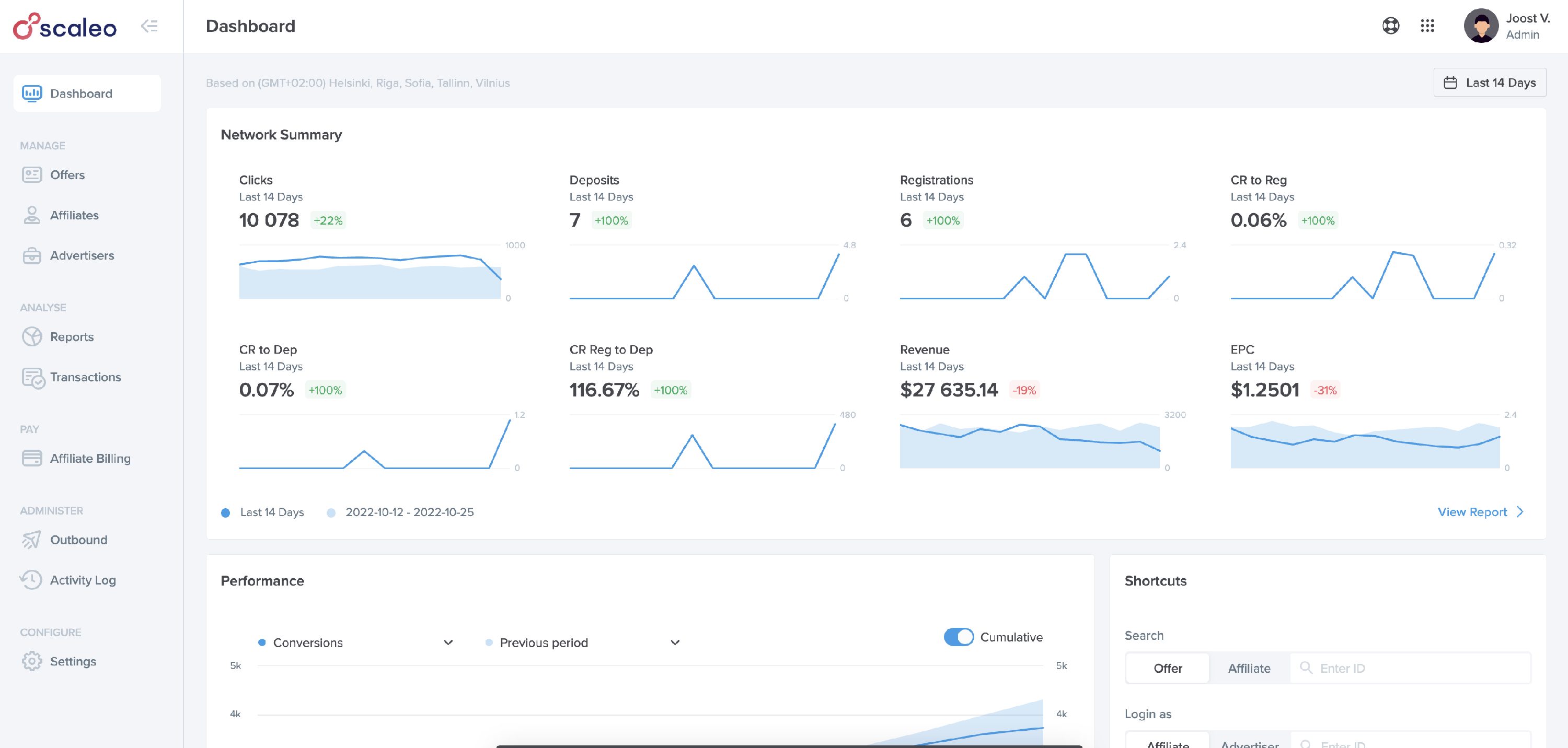
Scaleo provides advertisers with real-time reports on the performance of their affiliate program, including the number of clicks, conversions, and earnings. This enables advertisers to make data-driven decisions that continuously improve the performance of their affiliate programs.
Customizable tracking parameters
Scaleo enables advertisers to customize tracking parameters such as referral sources, sub-IDs, and cookies. This allows businesses to more accurately track affiliate performance and attribute sales to the appropriate affiliates. Even better, the ability to customize tracking parameters gives businesses more control over their affiliate program, which can increase affiliate trust and transparency.
Affiliate management tools
Scaleo provides a number of affiliate management tools, including affiliate approval, rejection, and blacklisting. This allows businesses to manage their affiliate program and weed out low-performing affiliates more efficiently. What’s more, the ability to blacklist affiliates who engage in fraudulent activities can protect businesses from financial losses and reputational harm.
Third-party tool integration
Scaleo’s integration with various third-party tools, such as payment gateways, email marketing platforms, and analytics tools, is another significant advantage.
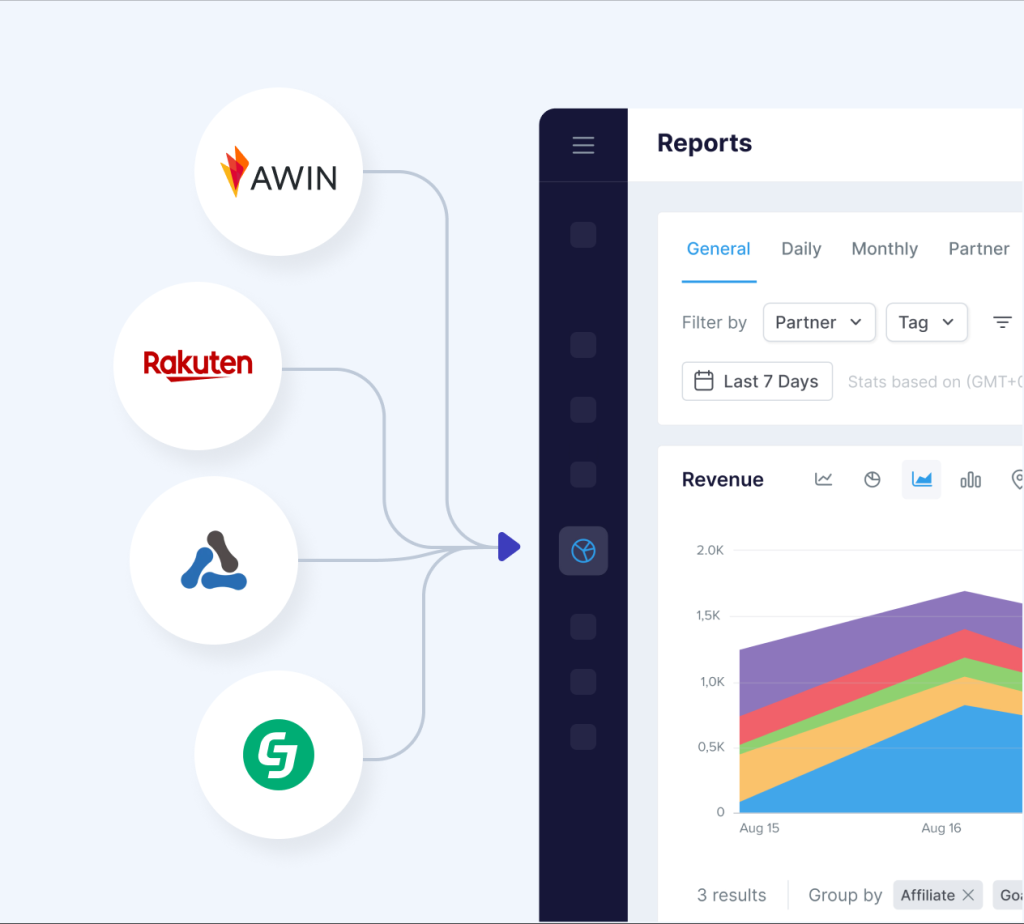
This gives businesses a one-stop shop for managing their affiliate program and streamlining their marketing efforts. Integration with third-party tools can also improve the affiliate program’s scalability and functionality.
Cost-effective solution
Scaleo is a cost-effective solution for businesses seeking to establish and manage an affiliate program. It provides a number of features found in more expensive affiliate marketing software solutions, making it an appealing option for small to medium-sized businesses. Not only that, but the ability to create offers with varying commission structures can help businesses improve their budget and allocate resources more efficiently.
Better reporting and analysis
Scaleo provides advanced reporting and analysis tools to businesses, allowing them to gain insights into the performance of their affiliate program. Advertisers can access detailed reports on clicks, conversions, earnings, and a variety of other metrics, which can assist them in making data-driven decisions to improve the performance of their affiliate program. What’s more, analyzing and tracking affiliate performance in real time allows businesses to identify and address potential issues as soon as they arise.
Affiliate marketing software solutions, such as Scaleo, can benefit businesses by offering flexibility in the commission model, automated tracking and reporting, customizable tracking parameters, affiliate management tools, seamless integration with third-party tools, cost-effectiveness, and enhanced reporting and analysis capabilities. Advertisers can use Scaleo to more efficiently create and manage their affiliate programs and improve their budgets.
Conclusion
Understanding the various affiliate marketing commission models is critical for businesses looking to establish a successful affiliate program and for affiliates looking to maximize their earnings. Pay-per-sale, pay-per-lead, pay-per-click, pay-per-impression, two-tier commission, recurring commission, multi-level marketing, and cost-per-action are all commission models with distinct characteristics and benefits.
Businesses can tailor their affiliate program to their specific needs and target audience by selecting the right commission model, increasing their chances of success. What’s more, the flexibility provided by different commission-based models can attract a broader range of potential partners, improving the affiliate program’s scalability and functionality.
Overall, understanding the various commission models available in affiliate marketing can help businesses and affiliates make informed decisions to improve the performance of their affiliate programs continually.