
The best AI tools for affiliate marketing help you create better content, find profitable keywords, generate ads, automate funnels, track conversions, detect fraud, and understand which partners actually drive revenue.
That last part matters more than most “AI tools” lists admit. Writing a faster product review is useful. But if your affiliate tracking is messy, your attribution is unreliable, and fake conversions slip into your payout reports, AI becomes decoration on top of a broken system.
Affiliate marketing in 2026 is not just about publishing more content. It is about building a smarter operating system: AI-assisted content, AI-powered SEO, automated outreach, predictive analytics, fraud detection, partner scoring, and real-time performance tracking.
👉 TL;DR: Best AI tools for affiliate marketing in 2026
- Best AI tool for affiliate tracking, fraud detection, and program analytics: Scaleo.
- Best AI tools for content creation: ChatGPT, Claude, Jasper, Copy.ai, Writesonic.
- Best AI tools for SEO optimization: Surfer SEO, Frase, Ahrefs, Semrush.
- Best AI tools for ad creatives: AdCreative.ai, Canva Magic Studio, Creatopy.
- Best AI tools for email and chatbot funnels: Mailchimp, Klaviyo, ManyChat, Intercom.
- Best AI tools for workflow automation: Make, Zapier, n8n.
- Best AI tools for link tracking and paid traffic attribution: RedTrack, Voluum, Scaleo.
Our operator-side view: if you manage an affiliate program, don’t stop at AI writing tools. The real money is in attribution accuracy, fraud prevention, partner scoring, commission logic, and knowing which affiliates deserve more budget.
What Are AI Tools for Affiliate Marketing?
AI tools for affiliate marketing are software platforms that use artificial intelligence, machine learning, automation, or predictive analytics to improve affiliate performance. They can help affiliates and affiliate managers create content, research keywords, generate ads, personalize funnels, track conversions, detect suspicious traffic, automate reporting, and optimize payouts.
The term is broad. A solo affiliate may use AI to write product comparisons and build landing pages. An affiliate manager may use AI to detect bad traffic, identify top-performing partners, and forecast campaign profitability. A casino, SaaS company, fintech brand, or ecommerce operator may use AI-powered affiliate software to manage the entire partner program from click to commission.
That is why the best AI affiliate marketing stack usually includes several categories of tools rather than one magic platform. Annoying, yes. True, also yes.
Best AI Tools for Affiliate Marketing: Quick Comparison
Here is the practical version: what each tool is best for, who should use it, and where it fits inside an affiliate marketing workflow.
| AI Tool | Best For | Affiliate Marketing Use Case | Best Fit |
|---|---|---|---|
| Scaleo | Affiliate tracking, fraud detection, analytics, partner management | Track clicks, conversions, commissions, traffic quality, partner performance, fraud patterns, and payouts in one platform | Affiliate managers, operators, networks, SaaS, iGaming, fintech, ecommerce |
| ChatGPT | Content ideation, outlines, drafts, email copy, scripts | Create article outlines, comparison tables, FAQs, ad copy, review drafts, outreach emails, and content briefs | Affiliates, content teams, affiliate managers |
| Claude | Long-form content, content analysis, rewriting | Analyze competitor pages, rewrite affiliate reviews, improve tone, summarize product documentation | Content affiliates, SEO teams, editorial teams |
| Jasper | Brand-safe AI copywriting | Create consistent product descriptions, ad copy, email campaigns, landing page copy, and social posts | Brands, agencies, affiliate content teams |
| Copy.ai | Sales copy and workflow automation | Generate affiliate outreach, campaign briefs, product positioning, and sales enablement copy | Affiliate managers, B2B teams, agencies |
| Writesonic | AI writing and fast content drafts | Create SEO articles, landing page text, social snippets, product descriptions, and ad variations | Solo affiliates, bloggers, small teams |
| Surfer SEO | SEO content optimization | Optimize affiliate reviews, “best tools” posts, comparison pages, and topical clusters | SEO affiliates, content sites, niche publishers |
| Frase | Content briefs and SERP research | Build SEO briefs, analyze competing articles, structure FAQ sections, and improve content coverage | Affiliate SEO teams, agencies |
| Ahrefs | Keyword research and backlink analysis | Find affiliate keywords, competitor pages, content gaps, link opportunities, and ranking drops | SEO affiliates, content marketers |
| Semrush | Keyword, competitor, and market research | Research commercial keywords, competitor traffic, PPC terms, and affiliate content opportunities | Affiliate SEOs, agencies, brands |
| AdCreative.ai | AI ad creatives | Generate ad images, headlines, social creatives, and performance-focused ad variations | Media buyers, paid traffic affiliates, agencies |
| Canva Magic Studio | Fast creative production | Create banners, comparison graphics, Pinterest pins, social images, thumbnails, and lead magnets | Affiliates, creators, social teams |
| ManyChat | Chatbot funnels | Automate affiliate conversations on Instagram, Messenger, WhatsApp, and landing pages | Influencers, ecommerce affiliates, lead-gen affiliates |
| Mailchimp | Email marketing automation | Segment subscribers, automate campaigns, test subject lines, and nurture affiliate leads | Affiliate publishers, ecommerce brands, creators |
| Make / Zapier / n8n | Workflow automation | Connect forms, CRMs, email tools, spreadsheets, reporting dashboards, Slack alerts, and affiliate tracking events | Operators, agencies, advanced affiliate teams |
| RedTrack | Paid traffic attribution | Track ads, funnels, conversions, ROAS, and campaign performance across paid channels | Media buyers, performance marketers |
| Voluum | Campaign tracking and optimization | Track paid traffic campaigns, optimize offers, and analyze traffic source performance | Advanced affiliates, media buyers |
| BuzzSumo | Content discovery and monitoring | Find trending topics, content angles, influencers, and content promotion opportunities | Content marketers, PR teams, affiliates |
Best AI Tools by Affiliate Marketing Use Case
Before choosing tools, decide what problem you are solving. “I need AI” is not a strategy. It is usually a symptom of too many tabs open.
| Affiliate Marketing Task | Best AI Tool Category | Recommended Tools | What to Measure |
|---|---|---|---|
| Writing affiliate content | AI writing assistant | ChatGPT, Claude, Jasper, Copy.ai, Writesonic | Publishing speed, rankings, conversions, content quality |
| SEO optimization | AI SEO/content optimization | Surfer SEO, Frase, Ahrefs, Semrush | Keyword rankings, impressions, CTR, organic conversions |
| Ad creatives | AI creative generation | AdCreative.ai, Canva Magic Studio, Creatopy | CTR, CPC, CPA, ROAS, creative fatigue |
| Email funnels | Email AI + automation | Mailchimp, Klaviyo, Brevo | Open rate, click rate, revenue per subscriber |
| Chatbot funnels | Conversational AI | ManyChat, Intercom, Tidio | Lead capture rate, click-through rate, assisted conversions |
| Affiliate tracking | Affiliate management platform | Scaleo, RedTrack, Voluum | Clicks, conversions, EPC, CR, payout, profit, ROI |
| Fraud detection | AI-assisted traffic quality analysis | Scaleo, fraud monitoring tools, tracking platforms with risk scoring | Rejected conversions, suspicious traffic, duplicate patterns, payout holds |
| Partner optimization | Partner analytics | Scaleo, BI dashboards, CRM-integrated reporting | Partner LTV, conversion quality, payout accuracy, revenue by partner |
| Workflow automation | No-code/low-code automation | Make, Zapier, n8n | Manual hours saved, failed workflows, reporting speed |
How We Evaluated the Best AI Affiliate Marketing Tools
We evaluated these tools by practical affiliate marketing value, not by how loudly they say “AI” on the homepage.
- Direct affiliate use case: Does the tool help with content, traffic, tracking, conversion, fraud prevention, partner management, or revenue optimization?
- Workflow fit: Can it fit into a real affiliate workflow without creating more manual work?
- Data usefulness: Does it help you make better decisions, or does it only produce more output?
- Scalability: Can it support a growing affiliate program, multiple offers, multiple partners, or multiple traffic sources?
- Risk control: Does it help prevent wasted spend, fake conversions, low-quality traffic, or bad payout decisions?
From our perspective as an affiliate software provider, the strongest AI stack is not the one that writes the most words. It is the one that helps you connect campaign activity to verified performance.
1. Scaleo — Best AI Affiliate Tracking and Management Software
Scaleo is affiliate management software for companies that need to track, manage, analyze, and optimize affiliate and partner programs in real time. It is not an AI writing tool. It is the performance layer that tells you whether all that AI-generated content, traffic, and outreach is actually producing profitable conversions.
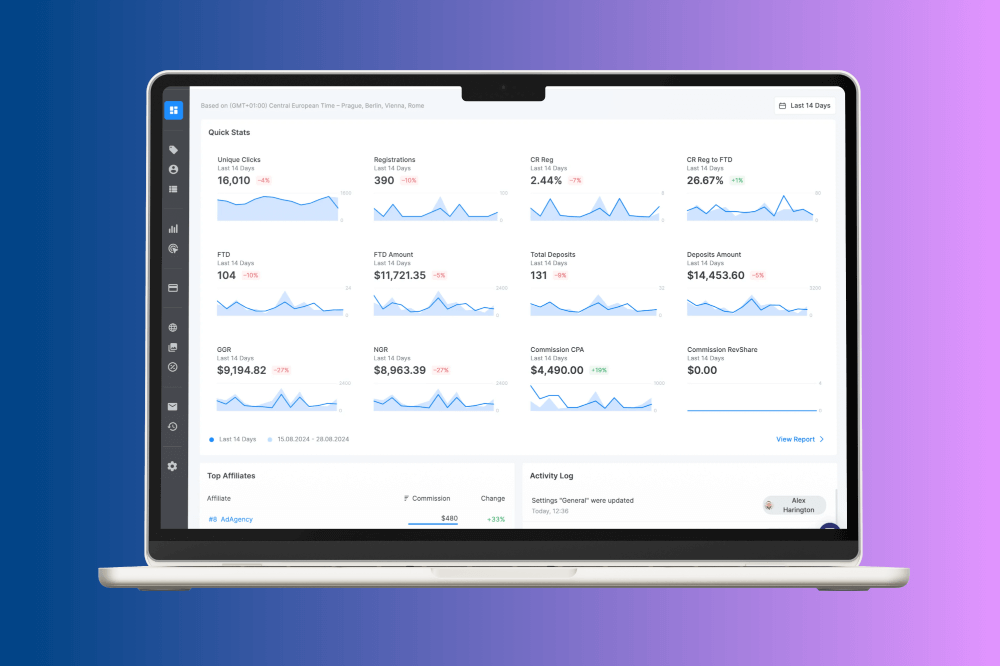
Scaleo is built for affiliate managers, operators, networks, SaaS companies, fintech brands, ecommerce companies, and iGaming businesses that need more than a spreadsheet of clicks. You can track partner performance, conversion quality, commission logic, fraud signals, payout status, traffic sources, and campaign profitability from one platform.
Where AI matters in Scaleo: affiliate programs do not fail because someone forgot to write another blog post. They fail because teams cannot quickly see which partners bring valuable traffic, which conversions are suspicious, which campaigns deserve more budget, and which payout rules are leaking money.
Across affiliate and partner programs running on Scaleo, we consistently see the same pattern: top-line click volume is a weak signal by itself. The useful signal comes later — registration quality, conversion path, deposit or purchase behavior, repeat value, rejected conversions, duplicate patterns, suspicious IP/device/ISP combinations, and partner-level profitability.
That is where AI-assisted analysis and rule-based automation become practical. Scaleo helps affiliate teams move from “who sent traffic?” to “who sent profitable, compliant, low-risk traffic?” That is the grown-up table. Slightly less glamorous than AI blog generators, but it pays the bills.
Best for: affiliate managers, performance marketing teams, iGaming operators, SaaS partner teams, fintech brands, ecommerce programs, and affiliate networks that need reliable tracking, fraud detection, reporting, and payout control.
Core affiliate use cases: tracking, attribution, affiliate onboarding, campaign analytics, fraud detection, partner segmentation, commission management, payout automation, custom reporting, and traffic quality analysis.
Why Scaleo belongs in an AI affiliate marketing stack
- Real-time affiliate tracking: monitor clicks, conversions, revenue, payouts, and campaign performance across offers and partners.
- Fraud detection and traffic quality control: evaluate suspicious patterns before they become payout disputes.
- Partner performance analytics: identify which affiliates, subIDs, campaigns, and traffic sources produce actual business value.
- Commission automation: manage CPA, CPL, RevShare, hybrid, flat, tiered, and custom commission structures.
- Operator-grade reporting: give affiliate managers, finance teams, and partners one version of the truth.
- API and integration options: connect your affiliate program with CRMs, BI tools, payment workflows, and internal dashboards.
Use Scaleo when: you are not just promoting someone else’s offer, but managing a real affiliate program where tracking accuracy, fraud prevention, partner transparency, and commission logic directly affect revenue.
Try Scaleo: Start a 14-day free trial or schedule a demo to see how AI-assisted affiliate tracking, fraud detection, and partner analytics can help you scale your program with fewer blind spots.
2. ChatGPT — Best AI Tool for Affiliate Content Ideation and Drafts
ChatGPT is one of the most useful AI tools for affiliate marketers because it can help with almost every content workflow: keyword clustering, article outlines, product review drafts, comparison tables, FAQ ideas, email sequences, ad copy, video scripts, social posts, and content updates.
The smart way to use ChatGPT is not to ask it to “write me an affiliate article” and publish the result like a sleepy content farm. Use it as an assistant, not a substitute for judgment.
Best affiliate marketing use cases:
- Create article briefs for “best X” and “X vs Y” affiliate posts.
- Turn product documentation into plain-English buying guides.
- Generate comparison tables, pros and cons, FAQs, and meta descriptions.
- Rewrite affiliate content for different audiences: beginners, operators, SaaS teams, casino managers, ecommerce buyers.
- Analyze user intent before writing affiliate landing pages.
Watch out for: hallucinated facts, invented product features, fake pricing, and generic intros. Every product claim should be checked before publishing.
3. Claude — Best AI Tool for Long-Form Affiliate Content
Claude is strong for long-form writing, rewriting, summarizing, and analyzing large chunks of text. Affiliate marketers can use it to review competitor pages, clean up rough drafts, rewrite old posts, summarize product documentation, and build more thoughtful comparison content.
It is particularly useful when you need nuance — for example, explaining why one software is better for operators while another is better for solo affiliates. That distinction matters because affiliate search intent is messy.
- Best for: long affiliate guides, product comparisons, content rewrites, editorial improvements.
- Useful for: updating old affiliate articles without making them sound like robotic soup.
- Watch out for: the same issue as every LLM — verify product facts, pricing, integrations, and screenshots.
4. Jasper — Best AI Copywriting Tool for Affiliate Brands
Jasper is useful for teams that need AI copywriting with brand consistency. While solo affiliates may prefer cheaper general-purpose AI tools, Jasper is a better fit for agencies, affiliate content teams, and brands that need repeatable copy frameworks.
Affiliate managers can use Jasper to create campaign briefs, partner enablement copy, landing pages, ad variations, social captions, and email sequences. The key advantage is consistency. If multiple people write affiliate assets, your brand voice can quickly become a small circus. Jasper helps keep it under control.
- Best for: branded copy, campaign assets, landing page copy, ad copy.
- Affiliate use case: create approved copy blocks that partners can adapt without destroying the message.
- Best fit: brands, agencies, affiliate programs with multiple campaigns.
5. Surfer SEO — Best AI Tool for Affiliate SEO Optimization
Surfer SEO helps affiliate marketers optimize content against the current SERP. This is especially useful for competitive affiliate keywords such as “best CRM software,” “best casino affiliate programs,” “top VPNs,” “best email marketing tools,” or “AI tools for affiliate marketing.”
It helps you understand what competing pages cover, which terms appear frequently, and where your article may be underdeveloped. Used well, it can improve topical coverage. Used badly, it turns your article into keyword porridge. Don’t do the porridge thing.
- Best for: affiliate SEO content optimization.
- Affiliate use case: improve “best tools,” “alternatives,” “reviews,” and “comparison” posts.
- What to measure: impressions, rankings, CTR, conversion rate, and affiliate revenue per page.
6. Frase — Best AI Tool for Affiliate Content Briefs
Frase is useful for building content briefs and identifying what your competitors cover. Affiliate marketers can use it to create structured outlines before writing, especially for high-intent comparison keywords.
For example, if you are writing a page about affiliate tracking software, Frase can help you identify repeated SERP themes: pricing, integrations, fraud detection, attribution models, reporting, customer support, and migration. You still need judgment, but it gives you a stronger starting map.
- Best for: content briefs, SERP analysis, outline building.
- Affiliate use case: plan articles before writing instead of retrofitting SEO after the post is already bloated.
- Best fit: SEO teams, affiliate publishers, content agencies.
7. AdCreative.ai — Best AI Tool for Affiliate Ad Creatives
AdCreative.ai helps generate performance-focused ad creatives, headlines, and variations. This is useful for affiliates running paid traffic because creative fatigue is real. One winning image can become yesterday’s oatmeal very quickly.
Affiliate marketers can use it to generate multiple ad concepts for Facebook, Instagram, Google Display, native ads, and retargeting campaigns. The value is speed: more variations, faster testing, and less time waiting for design resources.
- Best for: paid traffic affiliates and media buyers.
- Affiliate use case: generate and test creative angles for different offers, geos, and audiences.
- What to measure: CTR, CPC, CPA, ROAS, conversion rate, and creative fatigue.
8. Canva Magic Studio — Best AI Design Tool for Affiliates
Canva Magic Studio is useful for affiliates who need fast visuals: Pinterest pins, banners, social images, YouTube thumbnails, lead magnets, comparison graphics, carousel posts, and simple landing page assets.
It is not a replacement for a serious designer when brand quality matters, but for affiliate content production, it can speed things up dramatically. Visuals matter because affiliate pages are often dense. A clean comparison graphic can keep users from bouncing into the abyss.
- Best for: quick affiliate visuals and social creatives.
- Affiliate use case: create banners, thumbnails, product comparison visuals, social posts, and lead magnets.
- Best fit: bloggers, influencers, content teams, Pinterest affiliates.
9. ManyChat — Best AI Chatbot Tool for Affiliate Funnels
ManyChat helps affiliates and creators automate conversations across channels such as Instagram, Messenger, WhatsApp, and landing pages. This is useful when your affiliate funnel depends on education, lead capture, quiz flows, or personalized recommendations.
For example, a beauty affiliate can use a chatbot to recommend products by skin type. A SaaS affiliate can use it to qualify leads by company size. An iGaming operator can use chatbot workflows carefully for partner communication and support, while staying inside compliance rules.
- Best for: conversational affiliate funnels.
- Affiliate use case: answer FAQs, collect leads, recommend offers, segment users, and send follow-ups.
- What to measure: lead capture rate, click-through rate, assisted conversions, and unsubscribes.
10. Mailchimp — Best AI Email Automation Tool for Affiliate Marketers
Mailchimp remains useful for affiliate marketers who build email lists and need automated campaigns, segmentation, subject line testing, and performance reporting. It is not the newest shiny toy, but email still converts because it gives you an owned channel — and owned channels are precious when search and social algorithms get moody.
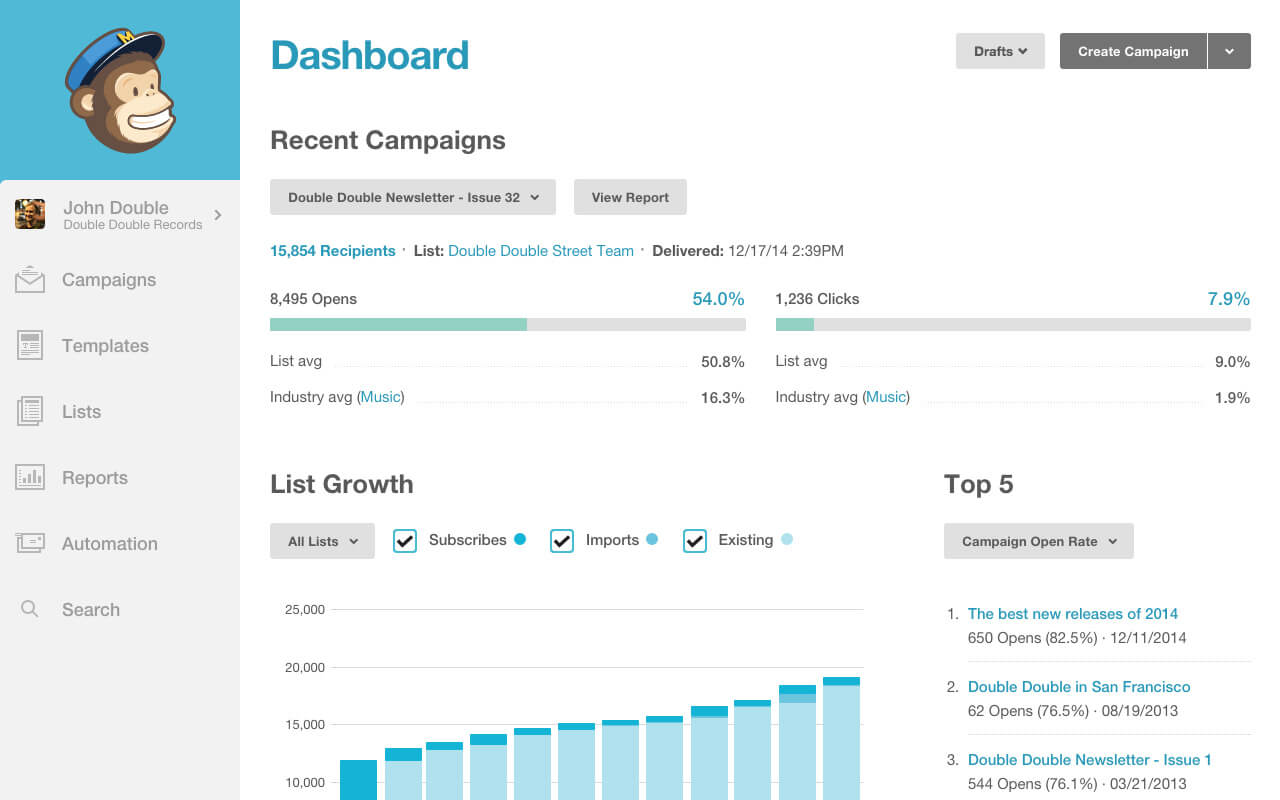
Affiliate marketers can use email AI features to improve subject lines, segment users, trigger follow-ups, and test variations. Affiliate managers can use email automation to nurture partners, announce new offers, share promo assets, and reactivate dormant affiliates.
- Best for: email automation and affiliate newsletters.
- Affiliate use case: nurture subscribers, promote offers, segment lists, and follow up with partner leads.
- What to measure: open rate, click rate, revenue per subscriber, unsubscribe rate, and conversion rate.
11. Make, Zapier, and n8n — Best AI Workflow Automation Tools
Make, Zapier, and n8n help affiliate teams connect the tools that do not naturally talk to each other. For affiliate marketing, this can be extremely useful because the average affiliate stack is usually a Frankenstein situation: forms, CRMs, spreadsheets, landing pages, email tools, Slack, analytics, payment systems, and tracking software.
With workflow automation, you can create internal alerts, update dashboards, sync leads, generate reports, route partner applications, and trigger follow-up tasks when important events happen.
Affiliate workflow examples:
- New affiliate application → Slack alert → CRM record → approval task.
- Suspicious traffic spike → notify affiliate manager → pause partner review.
- New high-performing partner → add to VIP segment → send custom email.
- Monthly performance report → generate summary → send to account manager.
- New conversion event → update dashboard → trigger finance workflow.
Best for: affiliate teams that want fewer manual tasks and faster operational response.
12. RedTrack — Best Tool for Paid Traffic Affiliate Attribution
RedTrack is useful for affiliates and performance marketers running paid campaigns. It helps track ad spend, conversions, traffic sources, campaign performance, and ROAS across channels.
For paid traffic affiliates, fast attribution is survival. You need to know which campaign, creative, landing page, traffic source, and offer combination is profitable before your budget quietly evaporates. RedTrack fits that paid-performance workflow well.
- Best for: paid traffic attribution and campaign optimization.
- Affiliate use case: track ad spend, offers, funnels, and ROAS.
- Best fit: media buyers, paid traffic affiliates, agencies.
13. Voluum — Best Campaign Tracker for Advanced Affiliates
Voluum is a well-known campaign tracking platform for affiliates and media buyers. It helps track traffic sources, offers, landers, conversions, and campaign performance.
It is especially relevant for affiliates who buy traffic and need fast campaign-level optimization. The main question is whether you need campaign tracking as an affiliate, or full affiliate program management as an operator. For the first case, tools like Voluum can fit well. For the second, platforms like Scaleo become more relevant.
- Best for: advanced affiliates and media buyers.
- Affiliate use case: track and optimize traffic campaigns across offers and landing pages.
- Watch out for: campaign tracking is not the same as managing a full affiliate program with partner onboarding, payout logic, fraud controls, and advertiser-side reporting.
14. Ahrefs and Semrush — Best AI-Assisted SEO Research Tools
Ahrefs and Semrush are not “AI writing tools,” but they are essential for affiliate SEO. They help you find keywords, analyze competitors, monitor rankings, inspect backlinks, and identify content gaps.
For affiliate marketers, these tools are often more important than another AI writer. Why? Because the money is in choosing the right keyword before writing the article. A beautiful AI-generated post targeting a worthless keyword is still a beautiful waste of time.
- Best for: keyword research, competitor analysis, backlink research, and ranking monitoring.
- Affiliate use case: find commercial keywords, competitor content gaps, and link-building opportunities.
- What to measure: keyword rankings, traffic potential, backlink growth, revenue per page, and SERP movement.
15. BuzzSumo — Best Tool for Content Research and Promotion Angles
BuzzSumo helps affiliate marketers discover content ideas, trending topics, influencers, and content promotion opportunities. It is useful when you need to understand what people already share, cite, and discuss.
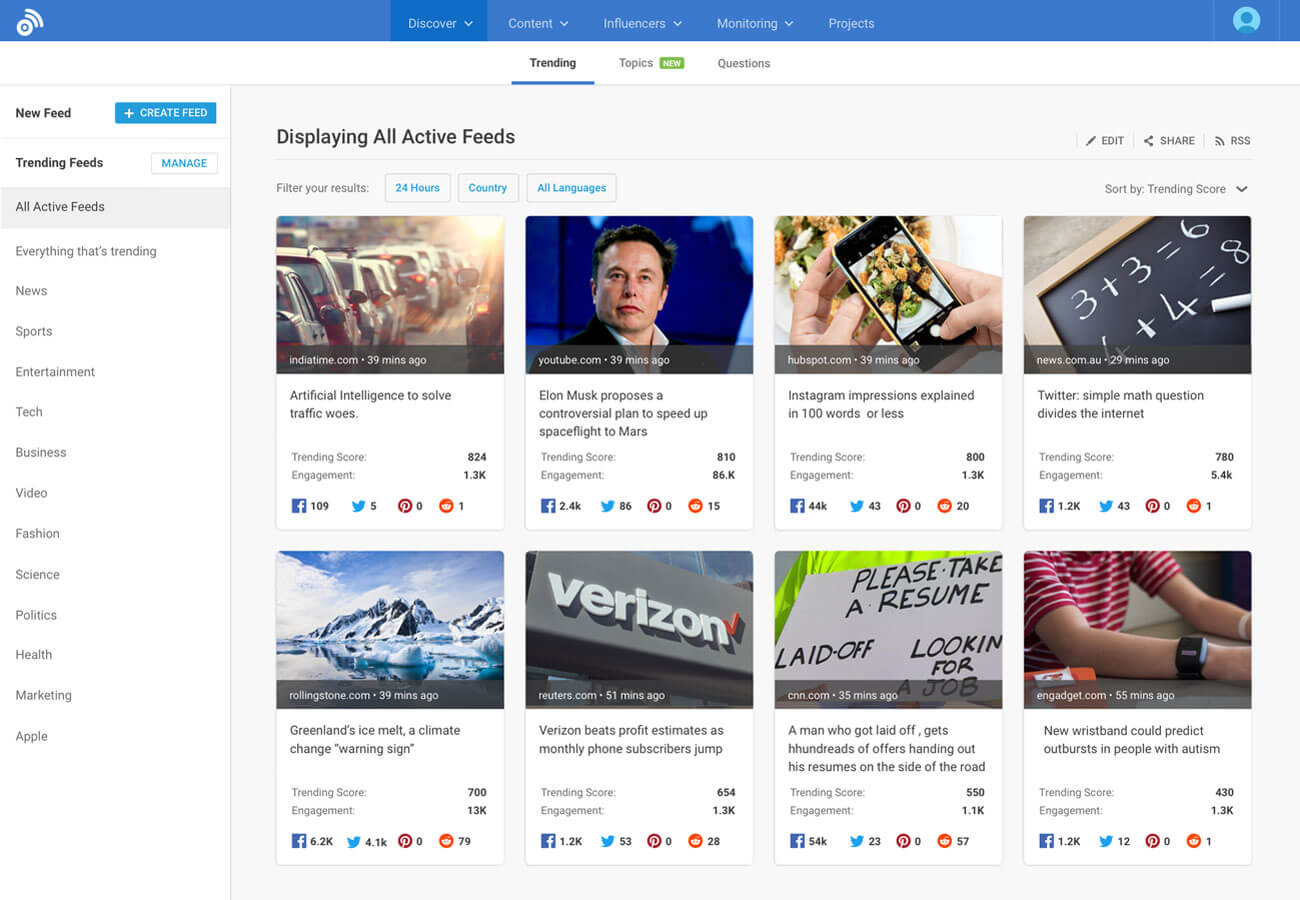
Affiliate marketers can use BuzzSumo to find proven angles before creating a new post. Affiliate managers can use it to identify publisher trends, potential partners, and content themes that attract links and social attention.
- Best for: content research, influencer discovery, content promotion angles.
- Affiliate use case: find topics and formats that already earn attention.
- Best fit: content affiliates, SEO teams, PR teams, and partnership managers.
How AI Is Transforming Affiliate Marketing
AI is transforming affiliate marketing in six practical ways: content production, SEO research, creative testing, personalization, fraud detection, and partner performance analysis.
The important distinction: AI does not make affiliate marketing “automatic.” It makes good systems faster and bad systems noisier. If your tracking is weak, AI will help you generate more traffic you still cannot properly evaluate. That is not growth. That is chaos with better formatting.
1. Faster Affiliate Content Production
AI tools can help affiliates create content briefs, product comparisons, review drafts, FAQs, email sequences, landing pages, video scripts, and social posts faster. This is useful for affiliate sites that need to cover many products, categories, and buyer-intent keywords.
However, AI content still needs human editing. Affiliate content must be accurate, useful, and based on real product understanding. Search engines and users are increasingly allergic to generic “best product” pages that say nothing specific. As they should be.
2. Smarter SEO and Keyword Research
AI-assisted SEO tools help affiliate marketers identify search intent, cluster topics, compare SERP competitors, and optimize content structure. This is especially valuable for affiliate keywords where small differences in intent matter.
For example, “best affiliate marketing tools” and “best affiliate tracking software” are not the same keyword. One attracts creators looking for content and productivity tools. The other attracts operators and affiliate managers looking for infrastructure. If you mix those intents badly, the page becomes mush.
3. Better Ad Creative Testing
AI creative tools help media buyers produce more ad variations faster. This matters because paid affiliate campaigns often depend on testing angles, hooks, visuals, and landing pages until the numbers work.
The danger is overproducing creatives without a testing framework. More ads do not automatically mean better results. You still need clean tracking, controlled testing, and reliable conversion data.
4. Personalized Affiliate Funnels
AI can help personalize landing pages, email campaigns, product recommendations, chatbot flows, and follow-up sequences. Instead of sending everyone to the same offer page, affiliates can segment users by intent, niche, location, previous actions, or lead quality.
This is useful in ecommerce, SaaS, fintech, education, and iGaming, where different users need different levels of education before converting.
5. Fraud Detection and Traffic Quality Analysis
Fraud detection is where AI becomes much more than a writing assistant. Affiliate programs need to detect suspicious patterns such as repeated device/browser combinations, abnormal click-to-conversion timing, bot-like behavior, proxy/VPN patterns, duplicate conversions, low-quality leads, and suspicious traffic sources.

This is one of the reasons affiliate tracking software matters. If you only use AI for content creation but still rely on weak attribution and manual fraud review, you are optimizing the easy part while ignoring the expensive part.
Scaleo’s Anti-Fraud Logic™ helps affiliate managers evaluate traffic signals, detect suspicious behavior, and reduce the risk of paying for invalid conversions.
6. Partner Scoring and Performance Optimization
AI-assisted reporting can help affiliate managers separate volume from value. A partner who sends many clicks is not necessarily a good partner. A partner who sends fewer but higher-quality conversions may be far more profitable.
The useful questions are:
- Which partners generate profitable conversions?
- Which traffic sources show suspicious patterns?
- Which affiliates deserve better commission tiers?
- Which campaigns convert but do not retain value?
- Which partners need support, better assets, or closer review?
That is where affiliate software, analytics, and AI-assisted decision-making meet.
The Best AI Affiliate Marketing Stack for Different Users
Not everyone needs the same tools. A blogger, media buyer, affiliate manager, and casino operator have different problems. Here is how the stack changes by role.
| User Type | Recommended AI Stack | Main Goal |
|---|---|---|
| Solo affiliate blogger | ChatGPT or Claude + Surfer SEO or Frase + Canva + Ahrefs | Publish better SEO content faster |
| Affiliate SEO team | Claude + Surfer SEO + Frase + Ahrefs/Semrush + BuzzSumo | Build topical authority and improve rankings |
| Paid traffic affiliate | AdCreative.ai + RedTrack or Voluum + Canva + ChatGPT | Test creatives, landing pages, and offers profitably |
| Influencer affiliate | ManyChat + Canva + ChatGPT + Mailchimp | Convert social attention into affiliate revenue |
| Affiliate manager | Scaleo + Mailchimp + Make/Zapier/n8n + ChatGPT | Recruit, manage, monitor, and optimize partners |
| Operator or affiliate network | Scaleo + BI/CRM integrations + workflow automation + anti-fraud controls | Track performance, reduce fraud, automate payouts, and scale safely |
How to Use AI for Affiliate Marketing Without Creating Junk
AI makes it very easy to create more. That is not always good. More average content, more average ads, and more average emails are not an advantage. They are just noise wearing a productivity hat.
Use this workflow instead:
- Start with search intent. Identify whether the user wants a tool list, tutorial, comparison, review, template, or buying guide.
- Use AI to build the brief. Ask AI to outline the article, identify missing angles, suggest FAQs, and structure comparison tables.
- Verify every product claim. Do not trust AI for pricing, features, integrations, availability, compliance claims, or screenshots.
- Add first-hand experience. Include what you have tested, what your team sees in campaigns, screenshots, workflows, examples, and operational lessons.
- Track the outcome. Use affiliate tracking software to see which content, campaign, partner, and traffic source actually converts.
- Optimize based on revenue, not vibes. Rankings and clicks are useful, but affiliate marketing is ultimately about profitable actions.
What We See From Affiliate Programs Running on Scaleo
From the operator side, AI changes affiliate marketing most when it improves decision-making. The biggest gains rarely come from generating another article. They come from seeing the patterns humans miss when programs scale.
In affiliate programs running on Scaleo, teams usually want answers to questions like:
- Which affiliates are bringing real customers, not just cheap clicks?
- Which traffic sources show fraud signals before payout day?
- Which partners need better creatives or a different offer?
- Which campaigns convert at registration but collapse later in the funnel?
- Which commission rules reward the right behavior?
- Which partners should be promoted, paused, reviewed, or moved to a different tier?
That is why AI affiliate marketing should not be reduced to “write faster blogs.” For serious programs, AI belongs inside tracking, analytics, anti-fraud, partner scoring, attribution, and reporting. Content gets attention. Clean performance data protects the money.
AI Tools for Affiliate Managers vs. Affiliates
There is a big difference between tools for affiliates and tools for affiliate managers.
| Need | Affiliate / Publisher | Affiliate Manager / Operator |
|---|---|---|
| Content creation | ChatGPT, Claude, Jasper, Writesonic | Campaign briefs, partner copy packs, approved messaging |
| SEO growth | Surfer SEO, Frase, Ahrefs, Semrush | Partner content audits, keyword opportunities, brand visibility |
| Creative production | Canva, AdCreative.ai | Partner-ready banners, localized creatives, campaign kits |
| Tracking | RedTrack, Voluum, affiliate dashboard access | Scaleo for program-wide tracking and attribution |
| Fraud detection | Basic traffic checks | Scaleo anti-fraud controls, validation rules, payout review |
| Reporting | Clicks, EPC, conversions | Partner profitability, fraud signals, commission accuracy, finance-ready reports |
| Automation | Zapier, Make, n8n | Partner onboarding, payout alerts, review workflows, CRM/BI sync |
If you are an affiliate, AI helps you produce and optimize. If you are an operator, AI helps you govern and scale. Different game. Different headaches.
How to Choose the Best AI Tool for Affiliate Marketing
Choose based on bottleneck, not hype. The best AI tool is the one that removes the most expensive constraint in your affiliate workflow.
If your bottleneck is content speed
Use ChatGPT, Claude, Jasper, Copy.ai, or Writesonic. Pair them with SEO tools so you are not publishing content nobody asked for.
If your bottleneck is SEO visibility
Use Surfer SEO, Frase, Ahrefs, or Semrush. Focus on commercial keywords, comparison pages, alternatives pages, and high-intent problem searches.
If your bottleneck is creative testing
Use AdCreative.ai and Canva Magic Studio to generate more ad variations. Then test them with proper tracking instead of guessing which one “feels premium.”
If your bottleneck is partner performance
Use Scaleo to track conversions, commissions, fraud signals, traffic sources, and affiliate-level performance. This is where affiliate marketing becomes measurable rather than hopeful.
If your bottleneck is manual operations
Use Make, Zapier, or n8n to connect your tools and automate repetitive tasks: partner applications, alerts, reports, CRM updates, Slack notifications, and approval workflows.
Common Mistakes When Using AI for Affiliate Marketing
- Publishing generic AI content. If your review could apply to any product in the category, it is not a review. It is filler.
- Trusting AI with product facts. AI can invent pricing, features, integrations, and limitations. Verify everything.
- Ignoring tracking. AI can increase output, but without tracking you will not know what actually converts.
- Optimizing for clicks instead of profit. High traffic with low conversion quality is not success. It is a vanity metric with a marketing budget.
- Skipping fraud controls. Affiliate fraud does not disappear because your content workflow got smarter.
- Using too many tools too soon. Start with one bottleneck, fix it, then expand the stack.
A Practical AI Affiliate Marketing Workflow
Here is a simple workflow that works for affiliates, agencies, and affiliate program managers.
- Research: Use Ahrefs, Semrush, Frase, or Surfer SEO to identify commercial keywords and SERP gaps.
- Plan: Use ChatGPT or Claude to create outlines, briefs, comparison tables, and FAQs.
- Create: Draft the content with AI, then edit with real product knowledge and first-hand examples.
- Design: Use Canva Magic Studio or AdCreative.ai to create visuals, ads, banners, and lead magnets.
- Publish: Build landing pages, comparison posts, email campaigns, and chatbot flows.
- Track: Use Scaleo, RedTrack, or Voluum depending on whether you manage a program or buy traffic as an affiliate.
- Analyze: Review traffic quality, conversions, partner performance, EPC, CR, CPA, revenue, payout, and profit.
- Optimize: Improve the winners, cut the weak traffic, review suspicious conversions, and update content based on actual performance.
Final Verdict: What Are the Best AI Tools for Affiliate Marketing?
The best AI tools for affiliate marketing depend on your role.
If you are a solo affiliate, start with ChatGPT or Claude for content, Surfer SEO or Frase for optimization, Canva for visuals, and Ahrefs or Semrush for keyword research.
If you buy traffic, add AdCreative.ai, RedTrack, or Voluum so you can test creatives and track paid campaigns properly.
If you manage an affiliate program, add Scaleo. This is where AI and automation move beyond content production and into the parts of affiliate marketing that directly affect revenue: tracking, attribution, fraud detection, partner performance, commission logic, reporting, and payout control.
AI can help you publish faster. But affiliate marketing only becomes profitable when you know which traffic, partner, content, offer, and campaign actually creates value. That is why the best AI affiliate stack starts with content — but ends with tracking.
Want to manage affiliate tracking, fraud detection, analytics, and payouts in one platform? Try Scaleo free for 14 days and see how much cleaner your affiliate program looks when every click, conversion, partner, and payout is connected.
AI Tools for Affiliate Marketing: FAQ
What are AI tools for affiliate marketing?
AI tools for affiliate marketing are software applications that use artificial intelligence, machine learning, automation, or predictive analytics to improve affiliate workflows. They can help with content creation, SEO research, ad creatives, email automation, chatbot funnels, affiliate tracking, fraud detection, performance reporting, and partner optimization.
What are the best AI tools for affiliate marketing?
The best AI tools for affiliate marketing depend on the task. ChatGPT and Claude are strong for content creation, Surfer SEO and Frase are useful for SEO optimization, AdCreative.ai helps with ad creatives, Canva Magic Studio helps with visuals, ManyChat helps with chatbot funnels, and Scaleo is best for affiliate tracking, fraud detection, partner management, and performance analytics.
Can AI do affiliate marketing for you?
AI can help with many affiliate marketing tasks, but it cannot fully run a profitable affiliate business by itself. You still need strategy, product knowledge, traffic quality control, compliance awareness, human editing, and reliable tracking. AI can speed up execution, but tracking and optimization decide whether the work makes money.
How can affiliate marketers use ChatGPT?
Affiliate marketers can use ChatGPT to create content briefs, product comparison outlines, FAQ sections, email sequences, ad copy, video scripts, social posts, landing page copy, and content refreshes. However, all product claims, pricing, features, and recommendations should be checked before publishing.
What is the best AI tool for affiliate tracking?
Scaleo is one of the best AI-assisted affiliate tracking tools for businesses that manage affiliate programs. It helps track clicks, conversions, partners, traffic sources, commissions, payouts, fraud signals, and campaign performance in real time.
What is the best AI tool for affiliate fraud detection?
For affiliate program owners, Scaleo is built to help detect suspicious traffic patterns, analyze partner performance, flag risky conversions, and reduce the risk of paying for low-quality or fraudulent traffic. Fraud detection is especially important for high-value affiliate programs, iGaming, fintech, SaaS, and performance marketing networks.
Can AI help with affiliate SEO?
Yes. AI can help with affiliate SEO by generating content briefs, clustering keywords, analyzing search intent, suggesting headings, improving topical coverage, and updating old content. Tools such as Surfer SEO, Frase, Ahrefs, Semrush, ChatGPT, and Claude can all support affiliate SEO workflows.
Are free AI tools enough for affiliate marketing?
Free AI tools can help beginners create drafts, outlines, and ideas, but serious affiliate marketing usually requires paid tools for SEO research, tracking, analytics, automation, and fraud detection. Free tools are useful for starting; paid infrastructure becomes important when revenue, partners, and payouts are involved.
What AI tools do affiliate managers need?
Affiliate managers usually need tools for tracking, partner analytics, fraud detection, email communication, workflow automation, and reporting. A practical stack might include Scaleo for affiliate management and tracking, Mailchimp or Klaviyo for partner emails, Make or Zapier for automation, and ChatGPT or Claude for campaign briefs and communication templates.
How do operators use AI in affiliate programs?
Operators use AI and automation to analyze partner performance, detect suspicious traffic, segment affiliates, optimize commission rules, automate reports, review conversion quality, and identify which partners deserve more budget or closer monitoring. For operators, AI is most valuable when connected to reliable tracking and financial reporting.