
Launch Roadmap Executive Summary:
Starting a sports betting website in 2026 requires a four-step framework: Legal Licensing (Curacao/Malta), Modular Software Stack (Sportsbook Engine + PAM), Odds Feed Integration (Real-time data), and Payment Gateway Routing. Initial setup costs average $35,000–$250,000, with a focus on mobile-first UI and assistive AI for live betting tips.
- Launch Marketing: Focus on affiliate-driven player acquisition.
- Acquire License: Choose based on target market (e.g., LatAm vs. EU).
- Pick Platform: Ensure it supports a “Single Wallet” for casino/sports.
- Integrate Feeds: Secure low-latency data for live in-play markets.
How do you start a sports betting website in 2026? We’ve all thought about starting our own business at some point. For those with an entrepreneurial spirit, a sufficient budget, and a passion for sports, launching their own sports betting website can be the ultimate new venture.
Starting a sportsbook in 2026 is an exercise in risk engineering, not a tribute to your favorite football club. If your business plan leans on “passion for the game” or “unlocking potential,” you have already been out-competed by data-driven syndicates and algorithmic operators.
In the current B2B climate, a sportsbook is a high-concurrency event-processing engine that must reconcile player acquisition costs with net gaming revenue (NGR) in sub-second intervals.
In our experience at Scaleo, managing the data logic for hundreds of Tier-1 deployments, the failure point is almost never the front-end aesthetics; it is the structural inability to reconcile player payouts with NGR-true data.
If you cannot audit your traffic with deterministic attribution, your seed capital will disappear into a vacuum of incentivized traffic injections and bonus-abuse leakage before you conclude your first month of operation.
How to Start a Sports Betting Website in 2026
Here’s a simple table outlining the core things you need to start a sports betting website. It’s scoped to 2026 realities—regulation, risk, infra, and acquisition.
| Category | What You Need | Why It Matters |
|---|---|---|
| Licensing & Legal | Gambling license (jurisdiction-specific), KYC/AML compliance tools, data protection compliance (GDPR/CCPA), responsible gambling framework | Legitimacy, payment processing approval, ad network approval, prevents shutdowns & fines |
| Platform Technology | Sportsbook software (odds engine, risk management), bet settlement engine, live odds feeds (API), user account system, wallet system, betslip system | Core functionality—no odds, no bets. Also determines latency, uptime, and profit margins |
| Payment & Banking | Payment gateway w/ high-risk support, crypto support (optional), multi-currency wallet, AML checks, payout automation | Deposits/withdrawals drive conversion & trust. Chargeback and fraud control essential |
| Data & Odds Providers | Live sports data feeds (In-Play & Pre-Match), trading desk or outsourced odds management | Accurate odds = lower liability + competitive margins |
| Security Infrastructure | DDoS protection, WAF, anti-fraud system, multi-factor auth, device fingerprinting | Protects bankroll + customer data. Critical in betting where bots & arbitrage attacks are real |
| UX & Front-End | Responsive UI/UX, multilingual interface, event navigation, live betting dashboard, fast betslip | Direct impact on session time, bet frequency, and churn |
| Backend & DevOps | Cloud hosting, CDN, autoscaling, monitoring, API integrations, CI/CD | Keeps the platform online during peak events (World Cup, Super Bowl, etc.) |
| Affiliate & Marketing Tech | Affiliate tracking platform (CPA/RevShare), SEO-optimized CMS, CRM for retention, bonus/loyalty systems | iGaming acquisition is partner-driven; tracking tech determines ROI |
| Compliance & Risk | Age verification, geolocation blocking, transaction monitoring, self-exclusion, fair play certificates | Required for license, payment processors, and ad platforms |
| Customer Support | 24/7 live chat, multilingual support, ticketing system, dispute resolution process | Betting has disputes by nature; fast support = trust & retention |
| Business Ops | Bank account (high-risk friendly), merchant services, accounting, fraud insurance, risk management policies | Keeps operations legally clean and financially stable |
| Marketing & Acquisition | SEO, PPC (where permitted), affiliate programs, influencer deals, sponsorships, social media | Customer acquisition in iGaming is expensive; channels need diversification |
| Content & Engagement | Blog & odds insights, match previews, tips, live score widgets | Boosts SEO + user retention without constant ad spend |
| Analytics | BI dashboards, player LTV tracking, churn modelling, bonus abuse identification | Controls profitability—especially bonuses and sharp bettors |
| Partner Ecosystem | Game providers for virtuals, esports feeds, casino add-ons (optional), payment aggregators | Expands offering & cross-sell opportunities |
💰Budget Tiers — MVP vs Full-Stack
| Area | MVP (Bare Bones) | Full-Stack (Scalable) |
|---|---|---|
| Platform | White-label sportsbook / basic betting engine | Custom sportsbook + risk engine + live in-play |
| Cost Estimate (dev) | Roughly $8k–$50k for white-label | Roughly $75k–$500k+ for custom |
| Hosting & Infra | Shared or managed hosting | Cloud autoscaling + CDN + DDoS protection |
| Odds & Feeds | Single odds API | Multiple feeds + in-house trading desk |
| Payments | One payment gateway + basic wallets | Full PSP stack + multi-currency + crypto |
| Compliance | Basic KYC/AML plug-ins | Full compliance suite & audits |
| Marketing | Basic affiliate + SEO | CRM, bonus engines, retargeting, automation |
| Support | Email support | 24/7 multilingual live support |
| Risk Tools | Vendor risk management | Proprietary risk & fraud stack |
| Time to Launch | 2–8 weeks | 6–12+ months |
Summary: MVP = fast and cheap to validate an idea. Full-stack = ownership, flexibility, and better margins.
Takeaway:
• Curaçao = quickest and cheapest entry
• Malta = strongest credibility and EU footprint
• Ontario = narrow but highly regulated and reputable
The 2026 Reality Check: Infrastructure Integrity vs. Operational Failure
By 2026, the delta between Gross Gaming Revenue (GGR) and Net Gaming Revenue (NGR) will be the absolute metric of survival.
Professional bonus-hunting syndicates now use sophisticated AI to exploit platform-side latency, effectively creating arbitrage opportunities between your live odds and the actual event outcomes. Most new operators fail because they treat their platform as a static website.
In reality, you are managing a real-time data spine. Your infrastructure must handle thousands of API calls per second from odds providers like Sportradar or Genius Sports while simultaneously running complex anti-fraud logic on incoming traffic. If your “logic layer” is decoupled or latent, you are essentially subsidizing the winnings of professional bettors.
Licensing & Jurisdictional Strategy: The Arbitrage of 2026
The historical move to simply apply for a Malta Gaming Authority (MGA) license is a strategic error for most 2026 startups.
While the MGA offers high prestige, the 18-month lead time and the refusal of Tier-1 banks to handle iGaming flows create a liquidity trap for new operators. Operators now focus on Licensing Arbitrage.
This involves utilizing more agile jurisdictions like the Anjouan Gaming License or the modernized Curacao LOK framework. These jurisdictions allow for rapid deployment and, crucially, are a lot more compatible with fiat-to-crypto on-ramps.
| Jurisdiction | Lead Time | Regulatory Focus | Banking/PSP Viability | Estimated CAPEX |
|---|---|---|---|---|
| Anjouan | 3–5 Weeks | Technical Stability | High (Crypto-First) | $15k – $25k |
| Curacao (LOK) | 4–6 Months | AML/KYC Rigor | Moderate (Hybrid) | $30k – $50k |
| Malta (MGA) | 14–18 Months | Financial Audits | Extreme Difficulty | $150k+ |
| Isle of Man | 8–12 Months | Player Protection | High (Tier-2 Banks) | $80k – $120k |
The real bottleneck in 2026 is the banking rails. Traditional banking is no longer the target; instead, operators must secure EMI (Electronic Money Institution) liquidity pools and segregated player accounts that support instant stablecoin settlement. Without these rails, your payout latency will destroy your player lifetime value (LTV).
The Tech Stack: Decoupling and Headless Architecture
If your technical architect suggests a monolithic “all-in-one” sportsbook solution, they are out of touch with modern scaling requirements. A competitive sportsbook in 2026 must utilize a headless architecture.
This decouples the presentation layer (what the player sees) from the betting core and the affiliate logic layer.
API Latency for Live-Odds Delivery
Live betting now accounts for over 75% of sportsbook handle. To be profitable, your odds propagation delay must be under 200ms.
This requires an API-first stack that consumes real-time telemetry from providers like Sportradar. If your system has high platform-side latency, sharp bettors will “court-side” your platform, placing bets on events that have already technically occurred but haven’t updated in your system.
SaaS vs.On-Premise
SaaS (Software as a Service) is the standard for speed-to-market, but it often creates “Data Silos.” For long-term viability, you need a hybrid model that allows you to own your data while utilizing cloud-native scaling for traffic spikes.
| Component | Requirement | Critical Metric | Risk of Failure |
|---|---|---|---|
| Frontend | React / Next.js (Headless) | Sub-2s Page Load | High Bounce Rate |
| Betting Engine | High-Concurrency Microservices | <100ms Bet Processing | Arbitrage Leakage |
| Odds Feed | Websocket Persistence | Sub-200ms Refresh | Stale Lines |
| Affiliate Layer | Deterministic S2S Postbacks | 100% Attribution Accuracy | Marketing Budget Waste |
Payment Logic & Anti-Fraud: Defending the Margin
A sportsbook is only as good as its attribution layer. In 2026, fraud has evolved beyond simple identity theft; the primary threat is now incentivized traffic spoofing and click-injection fraud.
Botnets simulate high-value player behavior—navigating the site, clicking on odds, and reading blog posts—only to trigger a CPA-qualified deposit with no intention of further play.
Scaleo Integration: This is where Scaleo functions as the “Logic Layer” of your operation. Scaleo’s Anti-Fraud Logic™ is engineered to identify these patterns in real-time.
When analyzing click-level metadata and server-side events, Scaleo can flag non-genuine traffic before it impacts your NGR calculations.
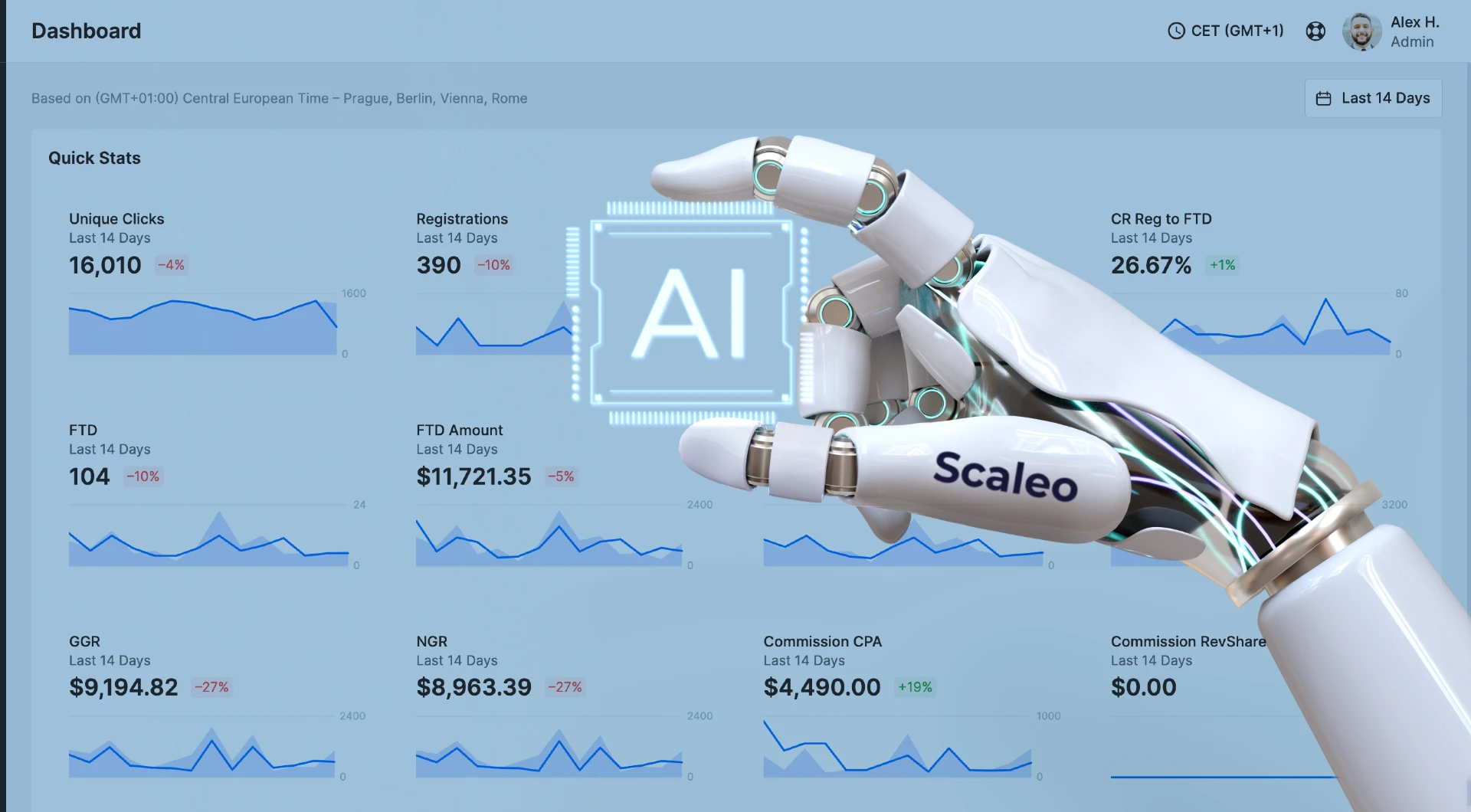
Without a dedicated anti-fraud spine, you will find yourself paying thousands in commissions to affiliates who are effectively “recycling” players or using incentivized traffic. Scaleo allows you to set automated thresholds for KYC/AML latency, ensuring that a partner is only credited when a player passes specific verification and activity hurdles.
The Affiliate-First Acquisition Model
Traditional ad platforms like Google and Meta are virtually useless for new sportsbooks due to restrictive compliance and hyper-saturated bidding environments. Growth in 2026 is driven by the micro-influencer and streamer ecosystem (Twitch, Kick, and Telegram).
This ecosystem demands real-time telemetry. Influencers and high-volume affiliates will not wait for weekly reports; they require sub-second S2S (Server-to-Server) postback confirmations to fine-tune their own traffic buy.
If your platform relies on client-side pixels, you will lose 15-20% of your attribution data to cookie deprecation and browser privacy blocks.
S2S is the only professional standard.
Scaleo: The Affiliate Data Spine for Enterprise Sportsbooks
When launching a sportsbook, Scaleo provides the “infrastructure spine” that connects your marketing spend to your technical performance.
Our platform is designed to handle the high-concurrency event handling required during global sporting events. The Commission Constructor: Modern affiliate deals are rarely simple revenue shares.

They are complex hybrids (CPA + RevShare + Baseline Requirements).
Scaleo’s Commission Constructor allows CFOs to automate these payouts based on NGR-true data, accounting for admin fees, bonus costs, and chargebacks automatically.
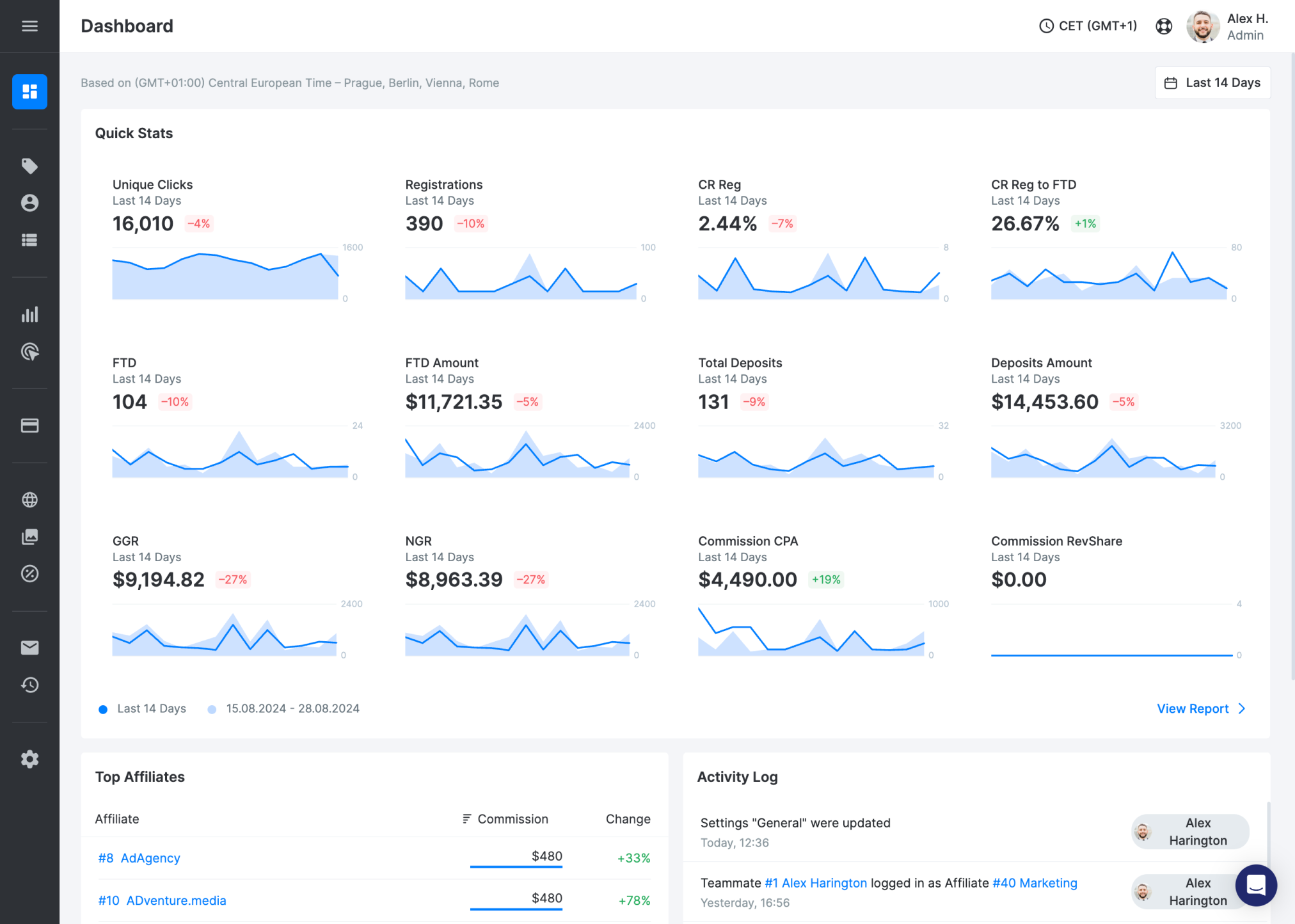
What’s more, Scaleo’s multi-brand control allows you to manage cross-vertical traffic (e.g., migrating a sportsbook user to a white-label casino offer) while maintaining deterministic attribution across both. This maximizes your player LTV by ensuring your retention efforts are tracked and credited accurately.
| Acquisition Channel | Tracking Requirement | Primary Metric | Scaleo Benefit |
|---|---|---|---|
| Twitch/Kick Streamers | S2S Postback URLs | First Deposit Count | Real-time Telemetry |
| Telegram Communities | Direct API Integration | NGR per User | Deterministic Attribution |
| SEO Review Sites | Multi-Touch Logic | Organic Search Lift | LTV Modeling |
| Media Buying | Dynamic Sub-IDs | CPA Efficiency | Anti-Fraud Logic™ |
Conclusion: Why Attribution Integrity is the #1 KPI
The sports betting industry continues to grow rapidly, and by creating a stellar customer experience, investing in marketing, and offering competitive odds and promotions, you’ll put yourself in a great position to grab your share of this booming market. Starting any business is challenging, but for sports fans, operating in an industry you’re genuinely passionate about makes it that much more worthwhile.
In 2026, your “gut feeling” about a marketing campaign is irrelevant. Success is found in attribution integrity.
If your tracking logic is probabilistic, your revenue is a hallucination. You need a system that offers sub-second postback firing, automated fraud detection, and the flexibility to manage complex, hybrid commission structures at scale.
Infrastructure is not a “later” problem; it is a “Day 1” requirement. If you launch without a dedicated logic layer like Scaleo, you are essentially gambling with your own acquisition budget.
Best of luck—now make it happen!
Need a steady stream of new players for your betting website?
Ready to Unlock the full potential of your gambling business?
Try Scaleo – a complete affiliate management platform for iGaming, offering flexible commission setups, deep player analytics, fraud prevention, multi-brand control, customization, and automation—all with real-time reporting and API scalability.
You have learned how to create a gambling website for sports betting games, but if you are making a betting website, you already know that you will need affiliate software to power your partner marketing efforts. If you are serious about building a trustworthy betting business, give Scaleo a try—our affiliate marketing software was designed specifically for the betting and gambling industry, offering deep reporting and industry-specific terminology.
How to start a sports betting business?
To start a sports betting business online, you will need to get all the required licenses in your county or other places where you will be operating. You will also need a big budget to get started, live betting software, betting affiliate software to acquire new players regularly, and a team of dedicated staff to run the business.
How to create a bookie website?
Creating a bookie website is a giant task, but you can always break it down into small chunks. You will need bookie software to power your bet-placing activity; you will need a website and a blog, a marketing and advertising department, and managers.
What is B2B sports betting (and why is it essential)?
B2B sports betting refers to businesses that provide sports betting solutions, platforms, and services to other companies, rather than directly to consumers. If you’re launching your sportsbook, partnering with a B2B sports betting provider can fast-track your success by giving you ready-made technology, odds feeds, risk management, and compliance support—saving you years of development time and regulatory headaches. Choosing the right B2B partner can significantly impact your sportsbook’s long-term profitability.